Peaches on the Pavement, Apples in the Grass
Notes on fruit, neighbors, and the habit of ignoring what’s right in front of us
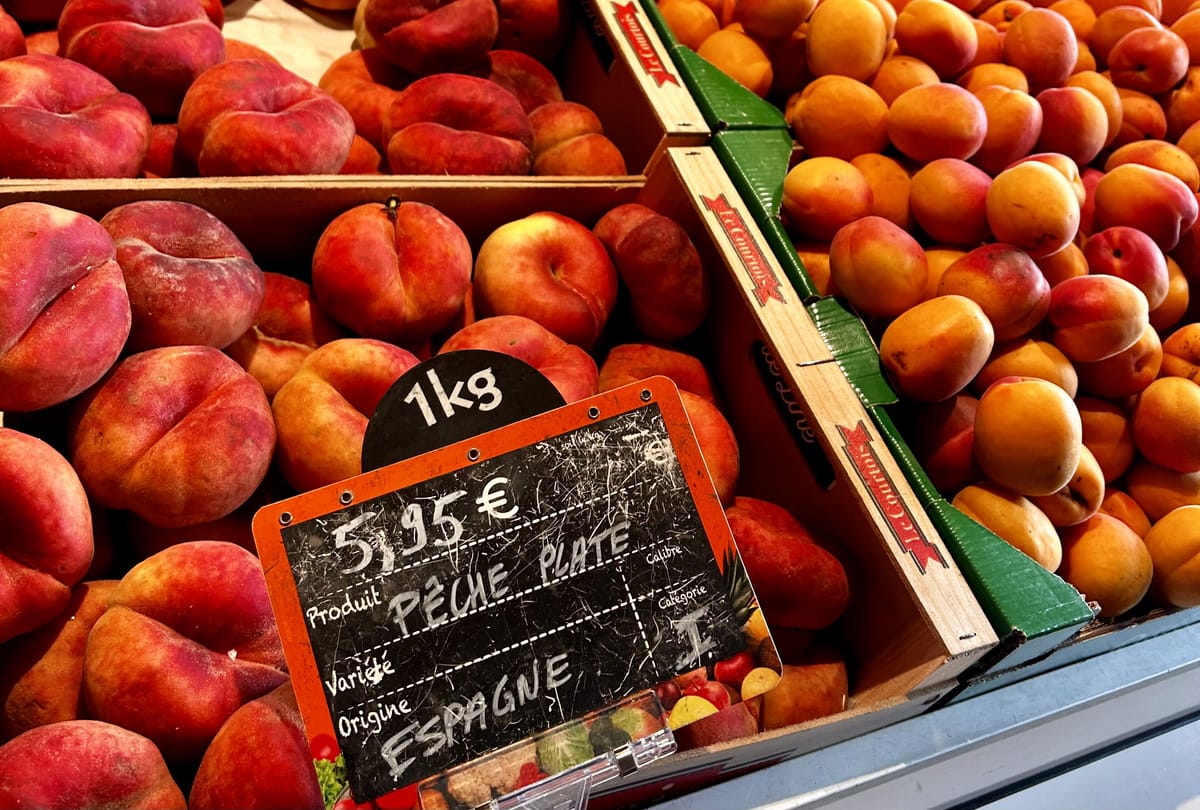
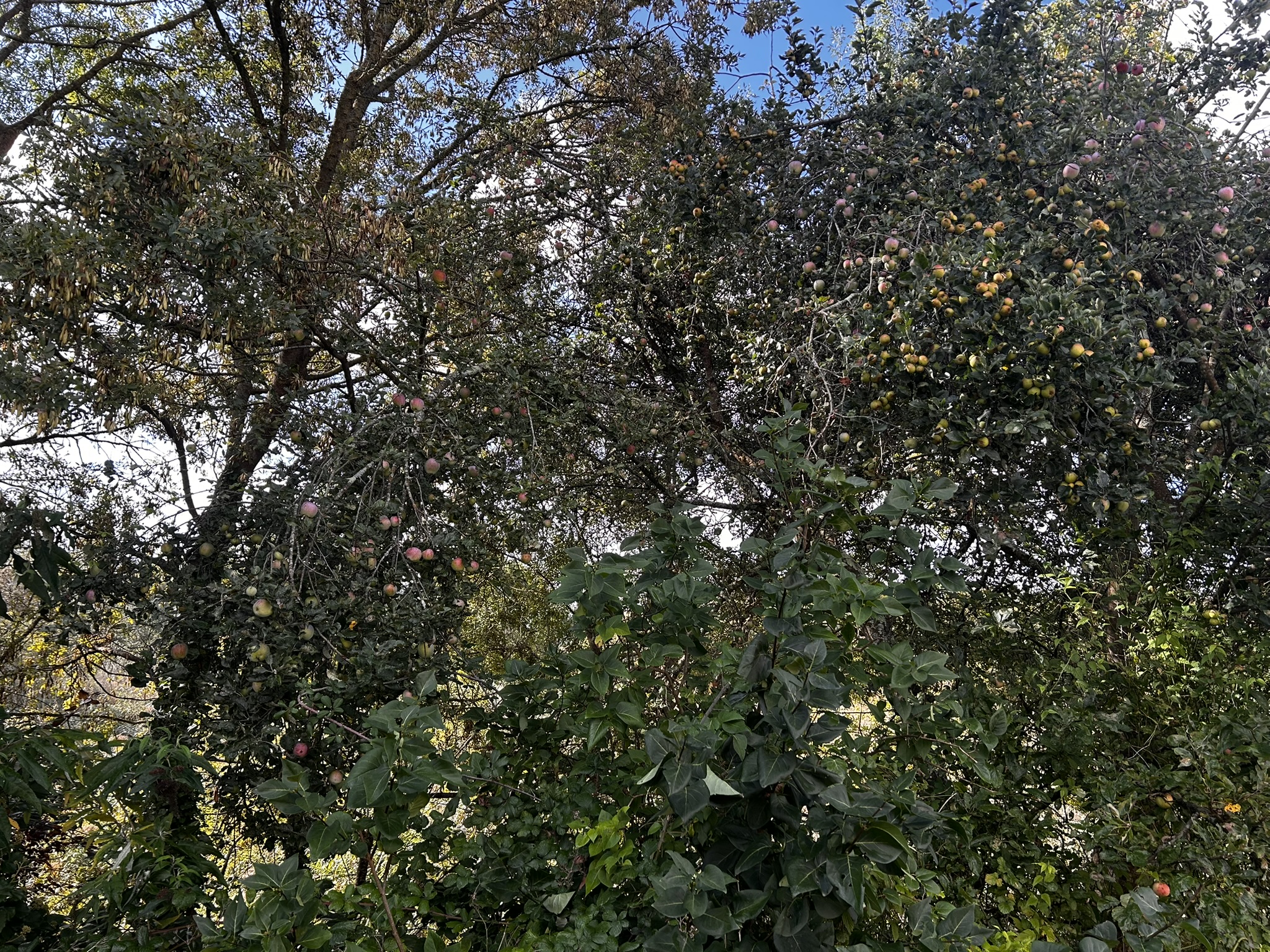
Parts of the world walks past free food every day. A branch heavy with peaches, an apple rolling into the gutter, a hillside gone gold with pears—and no one bothers to stop.
TL;DR:
Perfect fruit falls at our feet, ignored, while we trust supermarkets and screens instead of our own senses. This piece is about noticing what’s nearby—peaches, apples, pears—and turning them into something simple, eaten or preserved before they’re gone.
Fruits, windfalls, and what we notice
Occasionally you bite into a piece of fruit and remember it was once a flower.
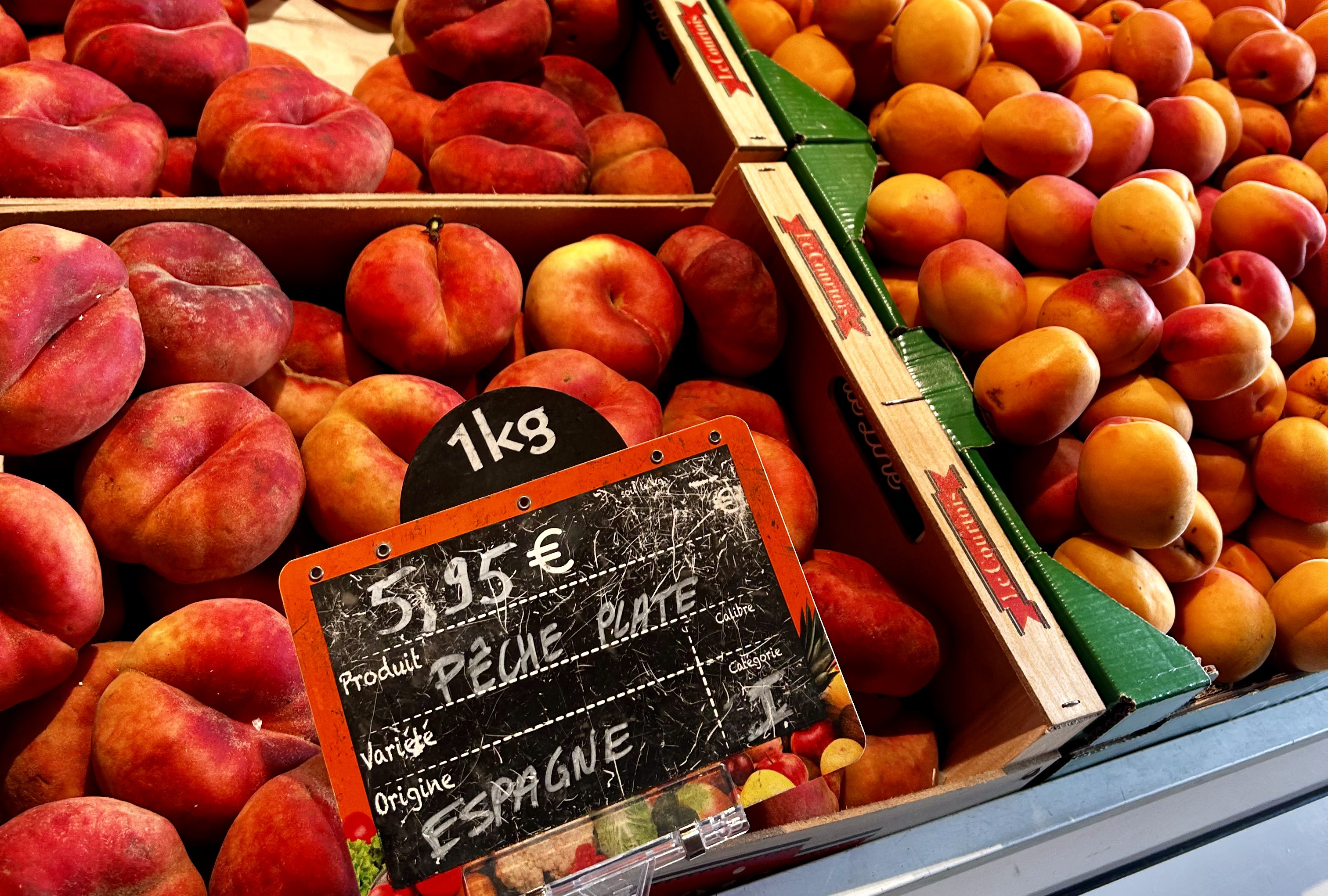
That’s something I love about wild fruit: the taste is sharper, more complex, better than cultivated varieties. France has wonderful fruit in markets, but even here, nothing beats pulling something straight off a tree.
People don’t do it. Not in the U.S., not in France, not where we were in the UK. Somewhere along the way, that instinct was taught out of us.
Process
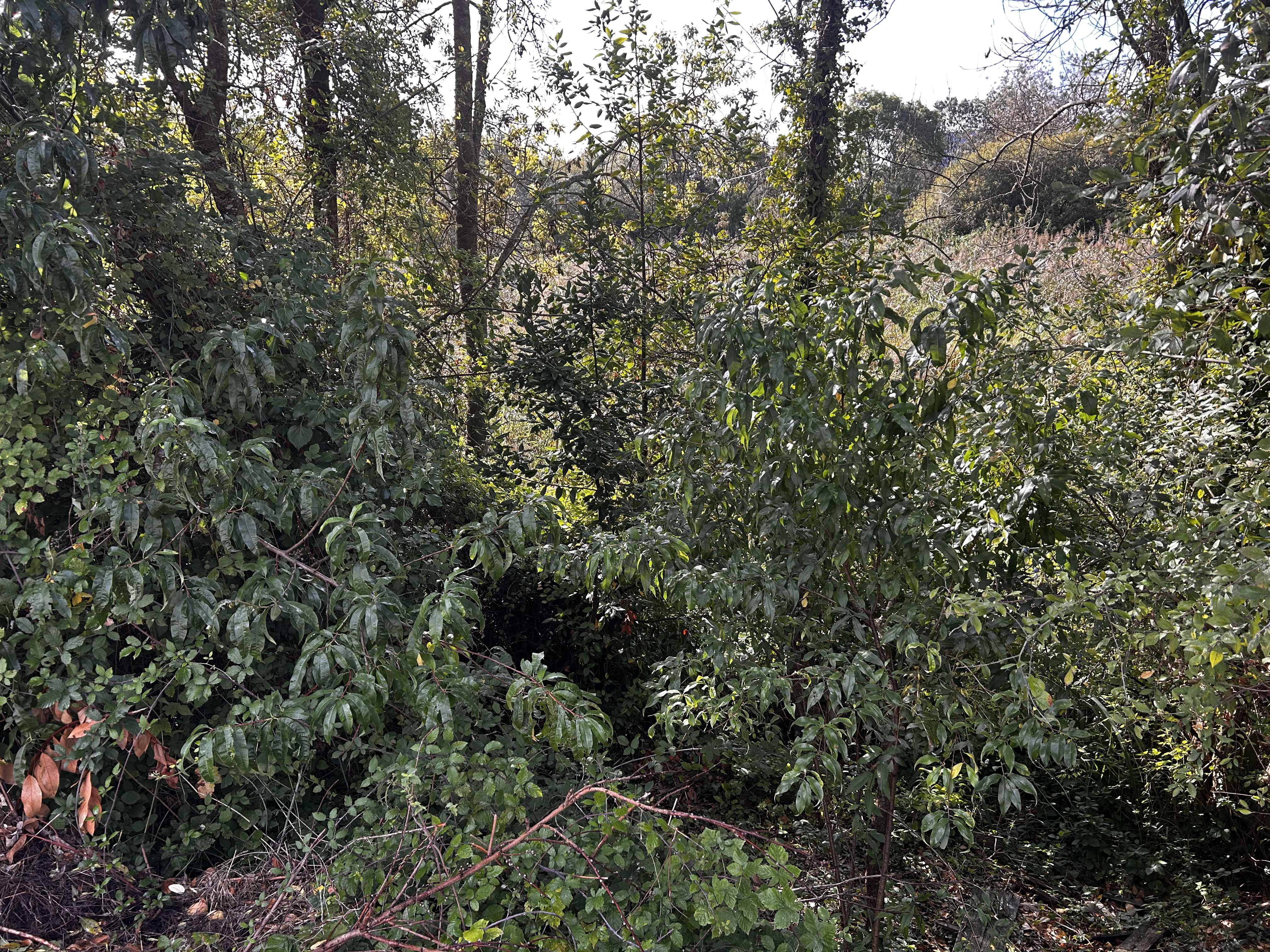
This morning before I got to my notes, I walked a few houses down to the peach tree I’ve been eyeing for weeks.
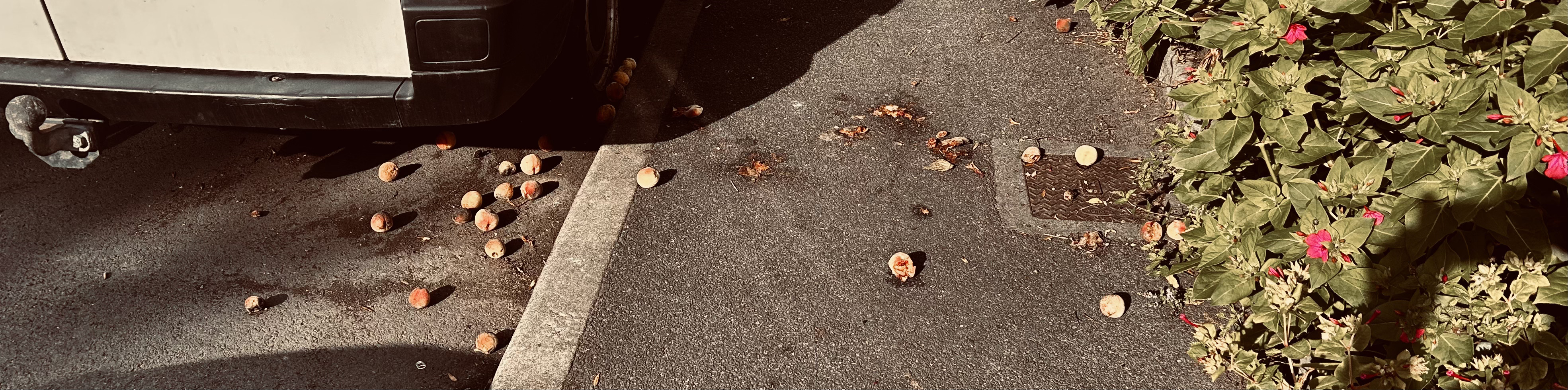
It’s been heavy with fruit, much of it dropping to the ground only to be stomped on by passersby or crushed by parked cars. They’re perfect peaches.
I asked neighbors about it and everyone agreed—nobody bothers to pick them. Go ahead.
Alley-z.
I will, thanks…
Maybe people don’t trust what they see, maybe the taste is different than they expect, or maybe they just don’t know what to do with them.
Survival
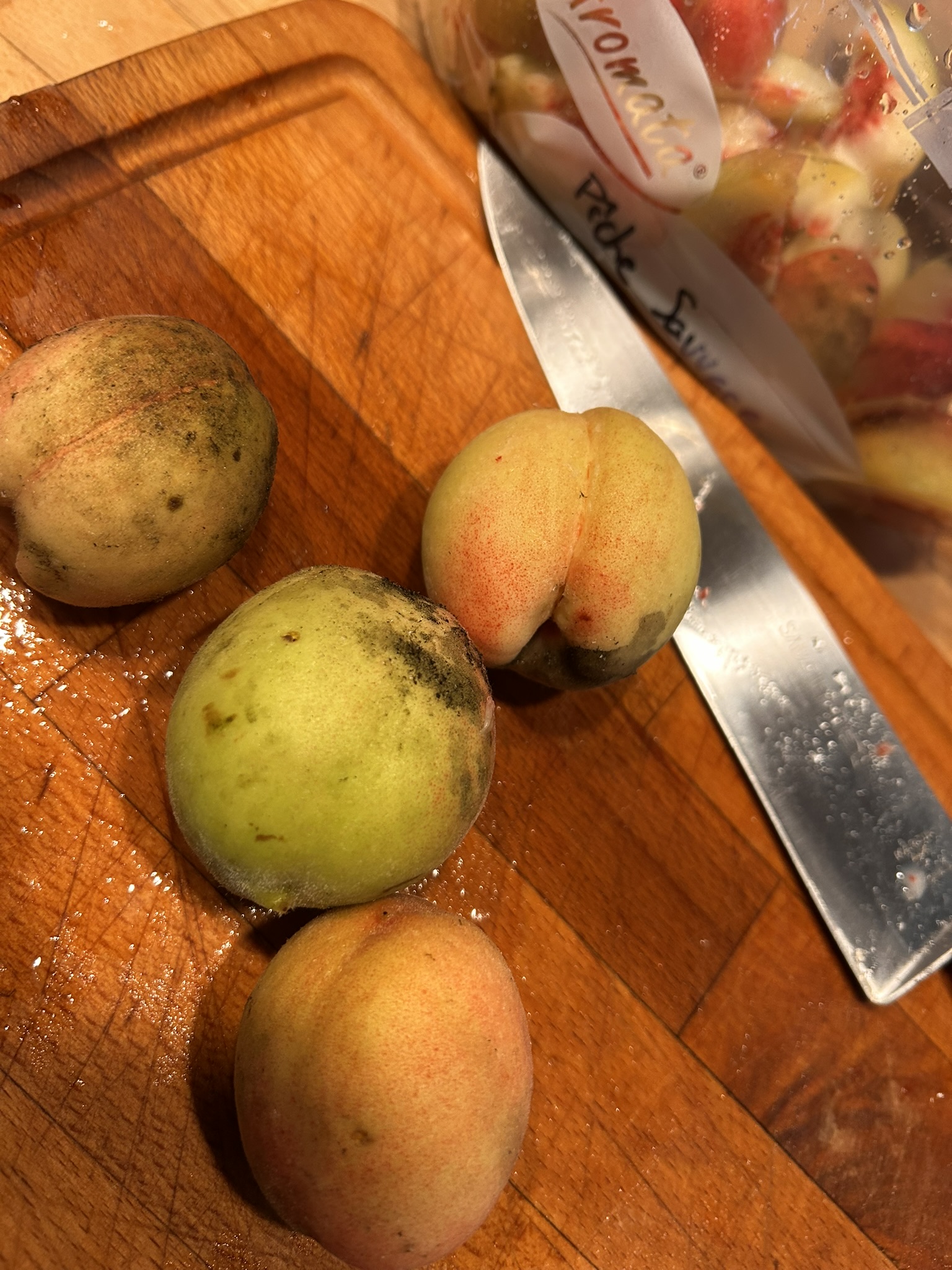
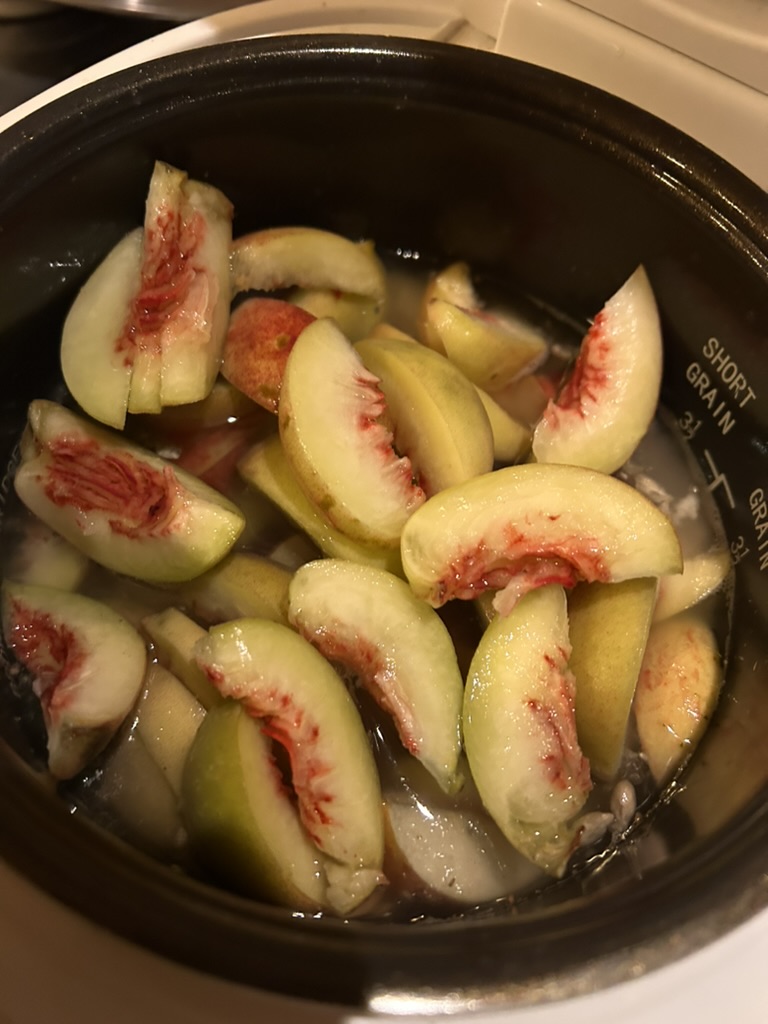
I rinsed and scrubbed them, and then sliced eight into our oatmeal.
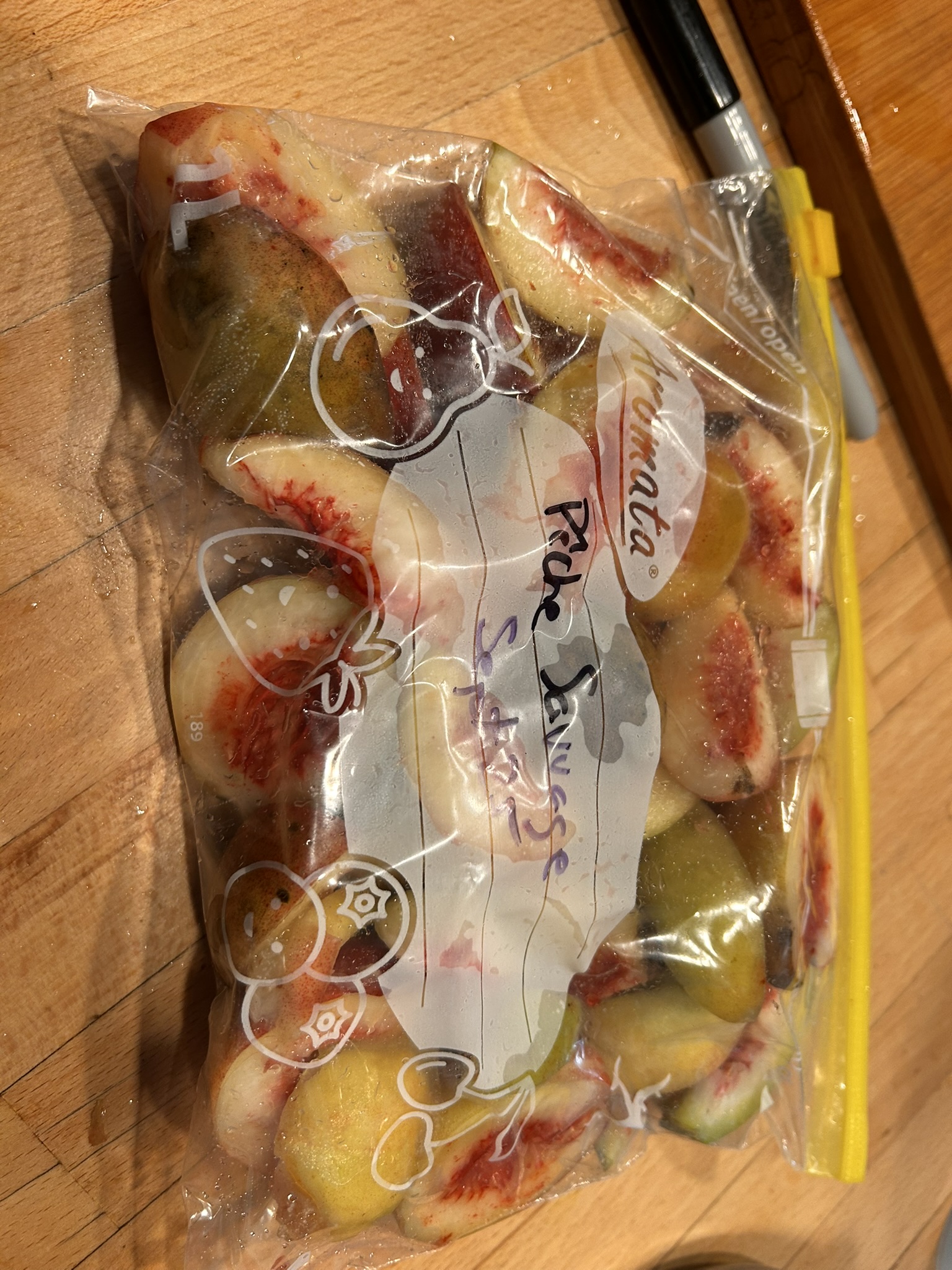
Another bag went into the freezer with nectarines from over the road. Later I’ll turn them into confiture or just blend them into smoothies. My wife sometimes mentions cobblers. The first French answer to what to do with a lot of fruit is clafoutis.
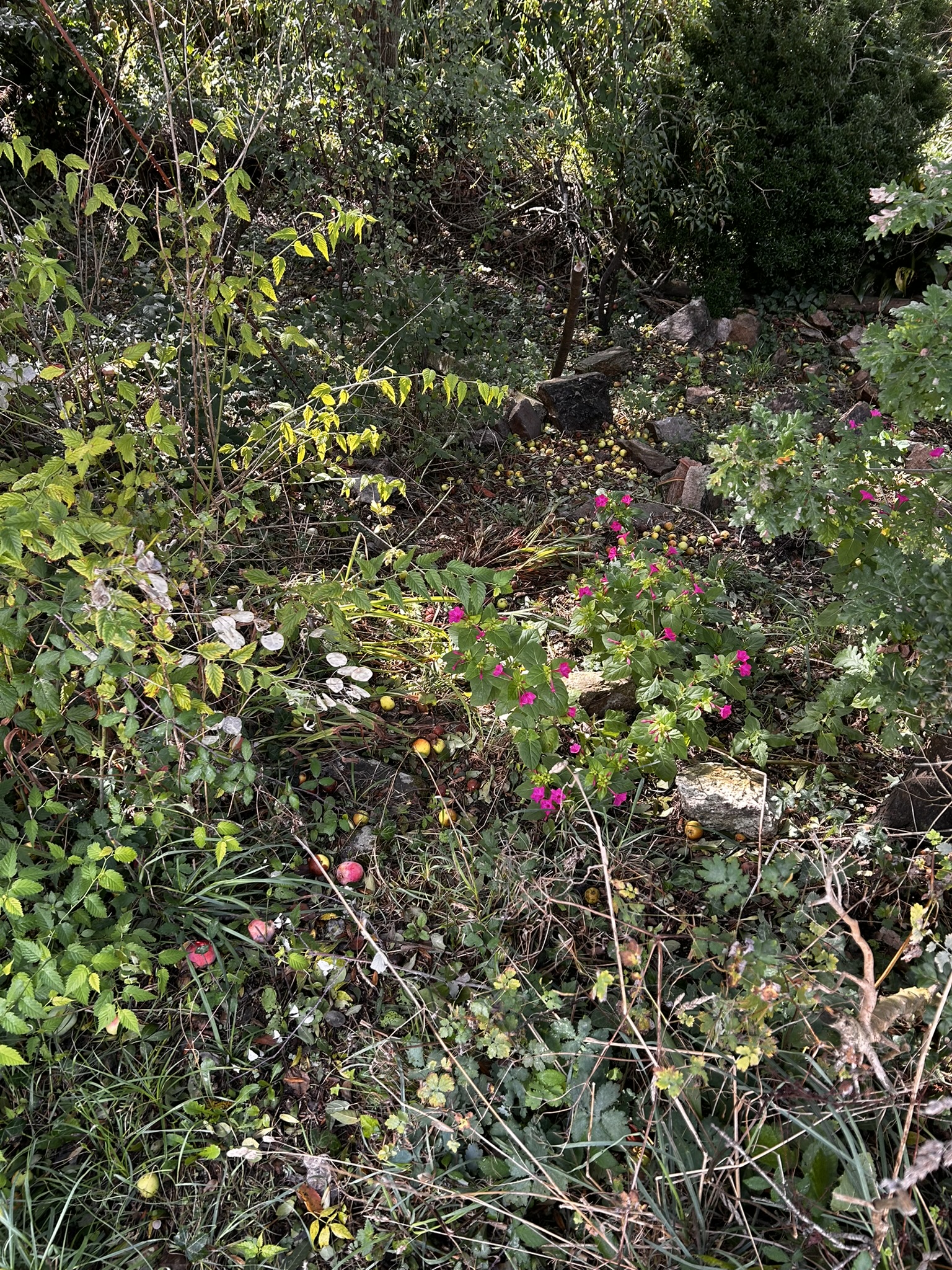
Breakfast then got a topping of chopped apples and a pear I found under a neighbor’s tree.
I always slice foraged fruit before eating—better to catch any surprise insects before they’re in your bowl. These pieces are local, organic, perfectly ripe, and, yes, other creatures want them too.
Preserving
If you’d planted the tree, you’d be careful with every peach. Farmers have to be—growing fruit takes water, soil, time, energy, fuel.
So much work, and yet so much ends up wasted (that’s another post). These trees keep producing. Through drought and heat, they keep going. It’s hard to say how long they’ll be able to go. Sometimes, dropping a lot of fruit is a response to stress: to keep the species going.
And yet the fruit is mostly ignored and these peaches are sweeter, ripening on the tree until the last possible second.
Use
It doesn’t have to be either/or. I buy fruit from the market every week and have a lot of respect for farmers.
But I also want to know what’s in my own neighborhood. A tree in a fifteen-square-foot patch of dirt near us flowers in spring and drops its fruit in late summer. I like to watch the cycle
Somebody planted it years ago. Maybe they’re gone now, maybe no one remembers, but the tree remains, doing what it was meant to do. Considering where and how this tree was planted, this was someone else’s thinking ahead.
Old Ideas
We’ve been trained to ignore these things.
In France, the U.S., the U.K.—it’s the same. Better to buy from the chain, or so we’re told. It’s strange to pick fruit from near you, it’s normal to get it in the market from another country - or another continent. But that’s part of a longer mistrust: of land, of farmers, of our own senses.
We’ve destroyed some of that trust over generations, maybe more from convenience than anything. But some of these trees have just kept growing.
People turn away from the ground and toward the Internet, trusting strangers they’ll never meet over the evidence of a fruit tree they see every day. It’s nature blindness.
New Knowledge—or Lack of It
The Internet has many good uses but mostly relies on two senses: sight and sound. Smell, touch, taste—those are sidelined.
Those are the senses that connect us most directly to the world. You need them to forage. Training ourselves away from them is dangerous.
Nothing replaces analog. To doubt fruits in front of you but trust whatever scrolls across your feed is a strange way to live.
Recipes and Suggestions
This is why I keep cutting fruit, freezing it, cooking it down, stirring it into oatmeal, whatever.
It’s not about perfect recipes—it’s using what’s right there.
Roasted peaches with apples and gochujang pork chops is dinner tonight – with a savory fruit sauté. A cobbler later, maybe some will get fruit thrown into the wine. The point is using what’s at hand.
Preserving it, eating it, trusting it.
Musical interlude
Lose You Peaches (2009)
Probably Peaches’ closest thing to a mainstream pop hit, built on a sparse synth line and with almost tender vocals. In the middle of singing F*ck the Pain Away, you can forget she’s got a nice singing voice. Lose You is sleek and danceable, but she never lets it go ordinary —her delivery, the odd video, and the slightly off-kilter production keep it rooted in her signature strangeness. It’s the track where she proved she could brush up against pop without losing her weird edge. I love what she does.
If you want better audio quality.
Recipe: Poêlée de fruits (French pan-fried fruit)
Depending on what you do, this is a side or a dessert - or both. If you want to “make it a little more French,” just dump more wine in, although setting Calvados on fire is fun.
What you need (serves 2–3):
- 3–4 ripe fruits (peaches, apples, pears, nectarines — a mix is best)
- 25 g butter (about 2 tbsp)
- 1–2 tbsp sugar (white or brown, use what you’ve got)
- Optional: splash of cider, white wine, or calvados
- Optional: pinch of cinnamon, nutmeg, or grated ginger
- Optional: a squeeze of lemon or a drizzle of honey at the end
How to do it:
- Wash and slice the fruit. Peel if you want, but not necessary — the skins add flavor. Remove cores/pits. Cut into wedges.
- Heat the butter in a wide pan over medium heat until foaming.
- Add the fruit and cook 3–4 minutes, stirring gently so it doesn’t turn to mush.
- Sprinkle with sugar. Let it caramelize lightly, maybe another 3–4 minutes.
- If using, add a splash of cider, wine, or calvados and let it bubble down to a syrup. You can also flambé the calvados if you want. It’s fun.
- Taste. Adjust with lemon juice for brightness or honey for sweetness.
How to eat it:
- Spoon over oatmeal, yogurt, or ice cream.
- Use as a side with pork chops, roast chicken, or duck.
- Eat straight from the pan while hot, with a piece of bread to mop up the juices.
Sweet vs. Savory
If you want dessert, keep it simple: butter, sugar, a squeeze of lemon, a pinch of cinnamon. Serve warm over ice cream, yogurt, or cake. Or bread. This is great over a well-toasted slice of wonder bread.
Again, if you don’t have it, don’t use it.
If you want it alongside pork or duck, skip the cinnamon and add a splash of cider, white wine, or calvados. Let it cook down so it’s more sauce than syrup. A crack of black pepper or a few thyme leaves works – I like a bay leaf at the finish (and they grow everywhere here as well).
Same fruit, two directions.
Bonus pictures and activities!