Ordering Steak in France: A Vocabulary Lesson
A lot of these preparations are very similar, but I still get confused with menus
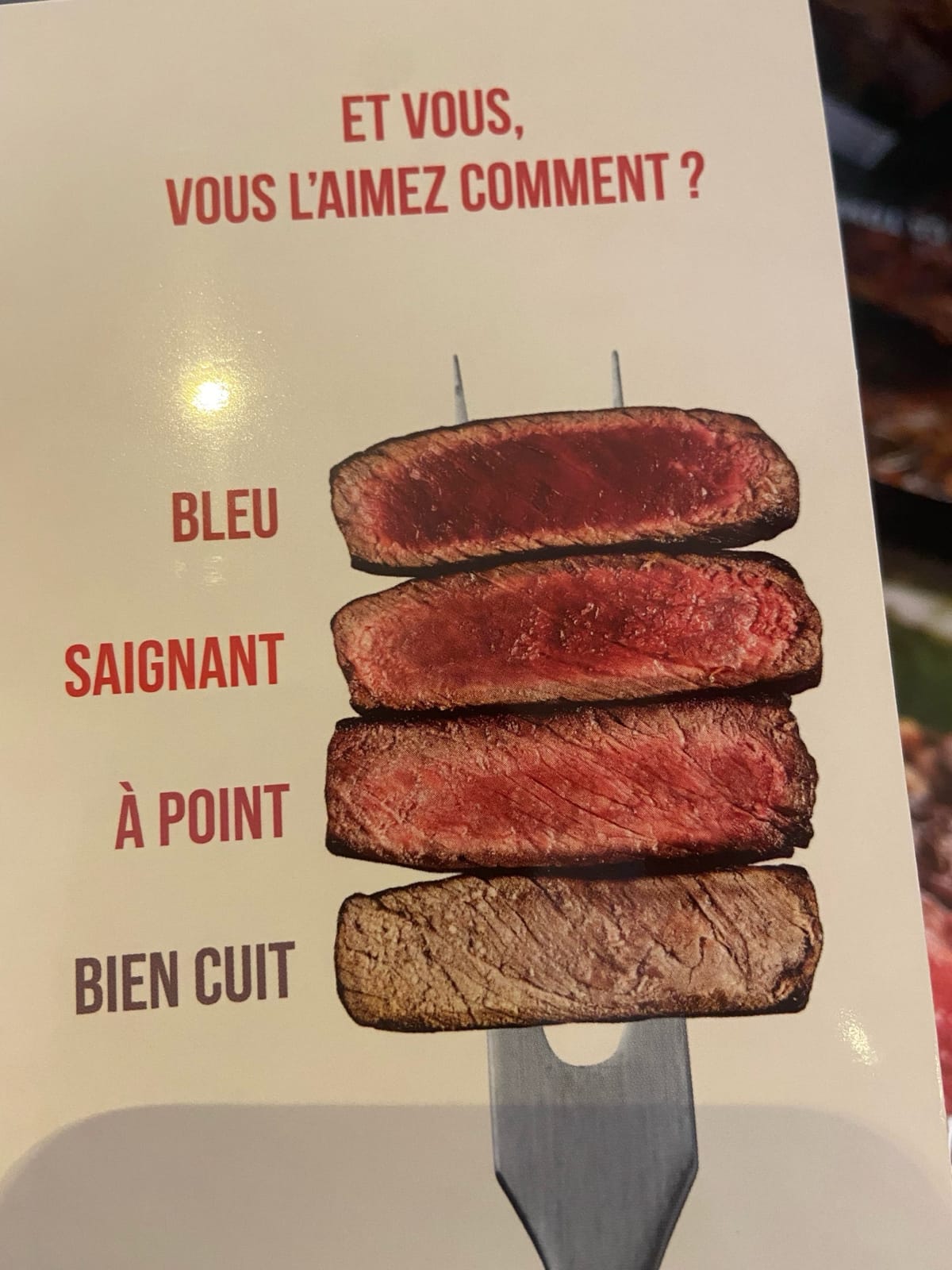
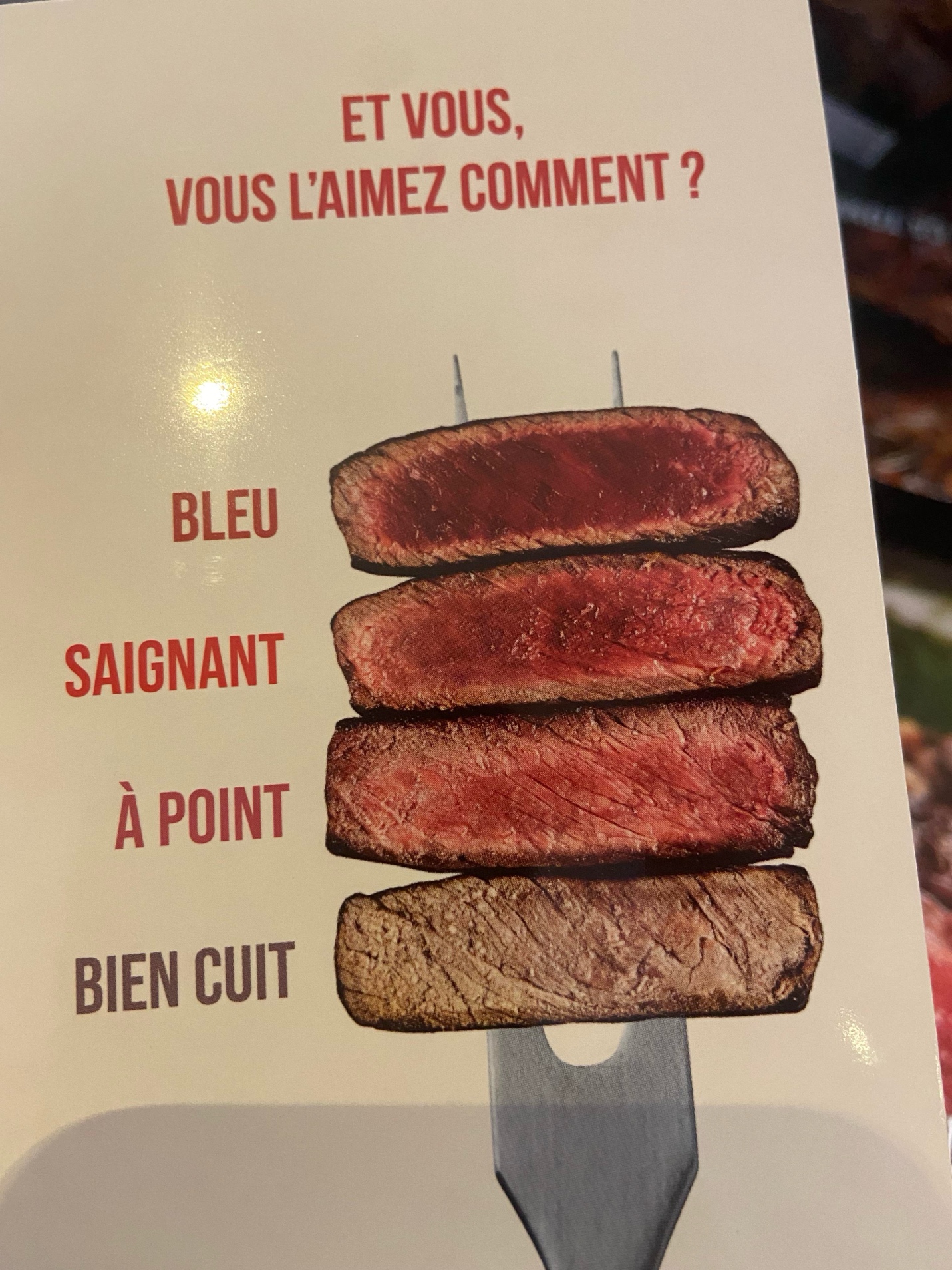
The typical steak here is served very, very rare. Every "saignant" (bloody) steak I’ve ordered arrived just about "blue" or very rare: a high heat sear and a bluish red middle. This applies to all red meats here, be it burgers, duck or lamb. If it is a cut of meat that can be cooked less, then it will be.
Cooking temperatures
Consider that most French places tend to err on the less-done side for the steaks listed below:
Bleu = blue
Saignant = “Bloody” rare
À point = medium rare
Bien cuit = well done, gray middle
If you’re looking for a good & simple way to cook a steak, I like this one, which modernizes Julia Child’s classic version a bit.
Cuts of meat
As American butchers and French butchers seem to do things slightly differently, ordering a steak is really more of a vocabulary lesson. It’s also really remarkable just how little of the overall meat of a cow is used for these cuts.
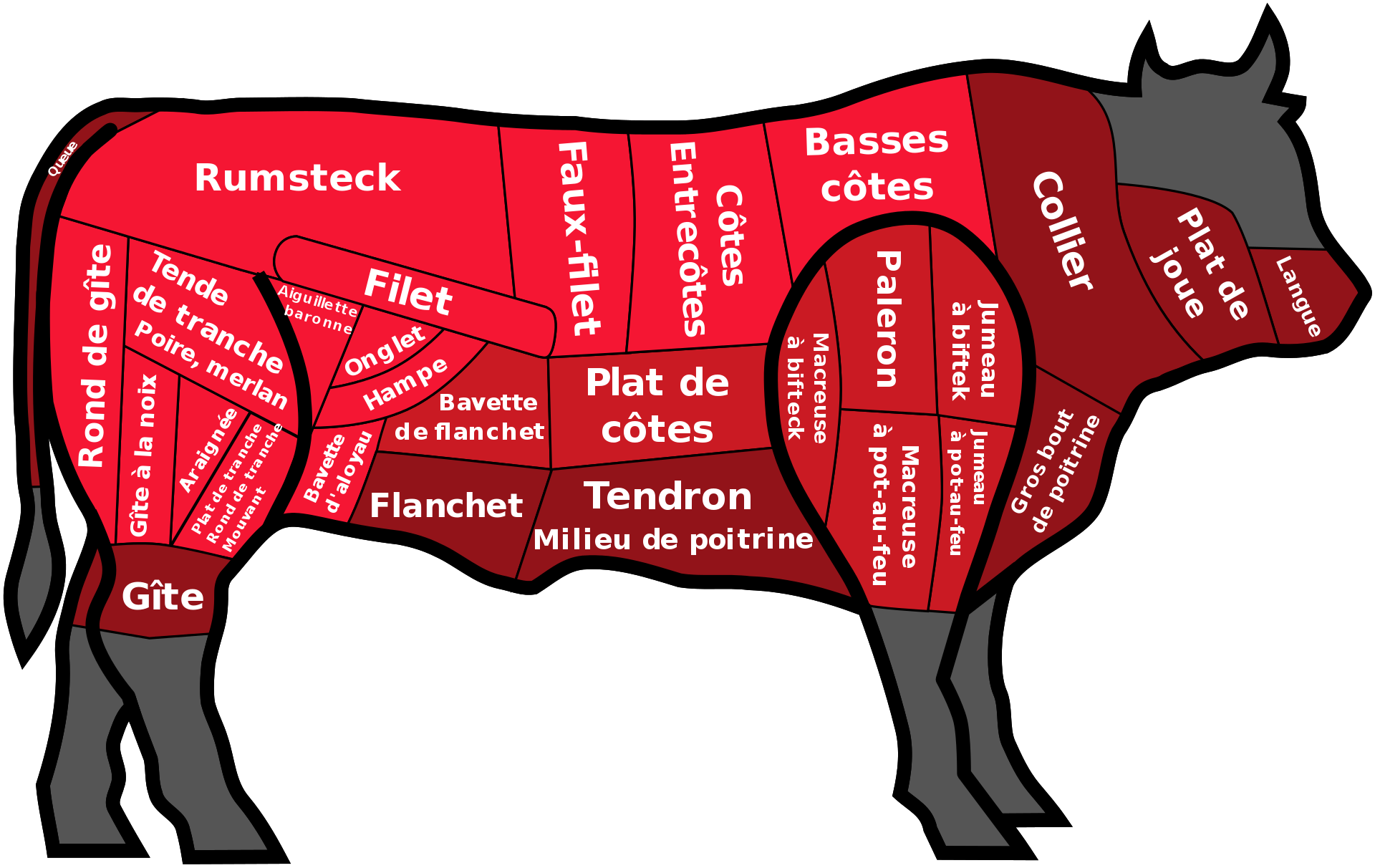
Cuts that can be served medium rare, in French and American butchery terms:
1. Filet Mignon (Tenderloin)
- French: Filet de bœuf
- American: Tenderloin
2. Entrecôte (Ribeye)
- French: Entrecôte
- American: Ribeye
3. Chateaubriand
- French: Chateaubriand
- American: Center-cut Tenderloin; the term Chateaubriand is used primarily for the preparation rather than the cut of meat.
4. Bavette (Flank Steak)
- French: Bavette
- American: Flank Steak
5. Onglet (Hanger Steak)
- French: Onglet
- American: Hanger Steak
6. Tournedos
- French: Tournedos (specific small round cuts from the tenderloin)
- American: Filet Mignon or Medallions (often used interchangeably, though technically tournedos is a specific preparation of filet mignon, tied with bacon and usually thicker)