On Bureaucracy and the Quiet Art of Belonging
why French paperwork always feels a bit personal
The short version of this whole thing is that you may simply not have ever had to explain yourself on paper so completely to anyone before in your life, but now you do. And it’s okay.
I have said that getting your paperwork sorted when you emigrate is like cramming every bureaucratic event of your adult life into one exhausting year - but it’s longer than a year. You’re dealing with everything from immigration papers, health records, social security numbers, banking, cell phones, DMV stuff, college transcripts, grad school forms, and so on. If you can think of it, you’re going to need a new one. Then all of it in a language you’re still figuring out, for a system that basically requires that you prove every aspect of your life in a way that you have likely never done before.
K
TL;DR (this needs one):
- Immigration is endless adult homework, but now in legal French.
- Even old paperwork, like a ‘90s divorce, can resurface.
- Bureaucracy here is intimate, precise, and slow.
- You’re not just proving facts. You’re proving you belong.
…this is all told as a story, so if you just want some help with the paperwork, send me a message.
.
Bureaucratic Intimacy
There’s a strange intimacy in all of this. You start off thinking it’s just paperwork—names, dates, proofs, but in between the confusion of making everything happen, of working out wjust what an apostille is and the ways that they need your paperwork to be, between the photocopies and the signatures, it starts to feel like you’re handing over pieces of yourself to be judged.
Because you are, which is fair enough.
Springtime in Limbo
Spring has arrived in the tentative way it always does here. The daffodils are pushing through last year’s compost. And somewhere as the days start warming up, when it is suddenly hot in the sun again, then the next week, it’s pretty chilly again.
Then it hits me: our titre de séjour renewal is coming. months away, but already perched on the edge of thought, an unread email, yet another piece of news about changing visa terms, and so on.
You kind of need to plan for it a bit. Plan around it. Last year, we were away when they said we should get our cards. It was easy enough to reschedule, but when they push it back a month at a time, it can be a lot.
This will be our fourth round. You’d think I’d feel concerned about it by now, but at the same time, a lot has changed in the world in the last several months. The stakes feeling higher.
I know the drill. I’ve scanned documents, checked the lists again, I have multiple digital dossiers. But no matter how many times I do it, assembling a visa renewal file still feels like a confession. We’ve started to think about it again and it’s 5 months out.
A list of receipts that say: I belong. I swear. Whatever I told you I was going to do last year? Here I am, still doing it.
But things change too, even while they stay put.
This time last year, I might not have been thinking about the end of the US as I knew it. The move seemed to have lower stakes.
If there is anyone out there that is more relaxed about the process, I haven’t met them yet.
Becoming Known
For all of the paperwork that we have to deal with in the US, I still think it’s less paperwork and actual time on the phone and filling out paperwork than I had to do when I had foot surgery in New York a few years ago. And it winds up costing less as well.
But it’s all a bit unknown, which is what makes it difficult.
In the U.S., you can type in a Social Security number and unlock half your life without thinking. In France, that shortcut doesn’t exist, at least it didn’t exist for me when I showed up.
I remember getting my social security card with my father. I still have the card somewhere, a little bureaucratic keepsake that never seems useful, but I worry about losing it. It’s not the card itself that is so important, but that number is everywhere in my life in the US.
I tell stories about my life in France. Sometimes, it’s funny. Get some every week!
Deep dives in the personal archives & a cameo from my ex-wife
My current wife (I never call her that) and I are a married couple living in France and preparing to update our residency paperwork. It’s still months away, but planning early matters—France is many things, but spontaneous in its bureaucracy isn’t one of them.
And “bureaucracy” is a French word, as people are fond of reminding me.
I was talking to a friend in New York about it recently. The guy has never lived outside of the country. I am not sure if he’s ever left Brooklyn. He might need a visa to leave the state.
The Other Guy: “So basically, immigration’s like adult homework that never ends?”
Me: “Yeah. With surprise tests. In legal French. I recently realized that I might need to find paperwork form my divorce from ’96.”
The Other Guy: “You’re joking.”
Me: “Nope. They’ll want the decree—apostilled, translated, certified.
My ex-wife and I haven’t talked in years—not in a bad way, just life. I don’t think she even needs to be involved, but I’ve got to get it from the States, and right now?
Bureaucratically, the US just turned itself into Bolivia. It’ll take forever to get these things done.
But yeah, she’s part of my visa file now. Who knows? Maybe it’s a good excuse to say hi.”
The Other Guy: “That’s wild.”
Me: “It’s just admin, I guess. But it scrapes up your whole past with some stuff.”

Ghosts of Albany
Honestly, I don’t think they’ll need it. But then you hear rumors—people getting fined for missing documents no one asked for. And sure, I doubt there’s someone in the prefecture combing the Albany archives for my 1996 divorce, but what if there is?
I don’t want to get fined. But more than that, I don’t want to worry about getting fined.
So I’ll pay the thirty bucks, file the request, wait anywhere from two minutes to two months (or maybe three years, depending on which bored clerk picks it up). Then I’ll get it apostilled—another €20 or €30 and a few more steps.
And in the end, with any luck, someone in a French office will glance at it, shrug, and slide it into my file. No comment. No acknowledgment. Just quiet approval that the ghost of my marriage has been properly notarized.
All of that work so that, ideally, nothing happens.
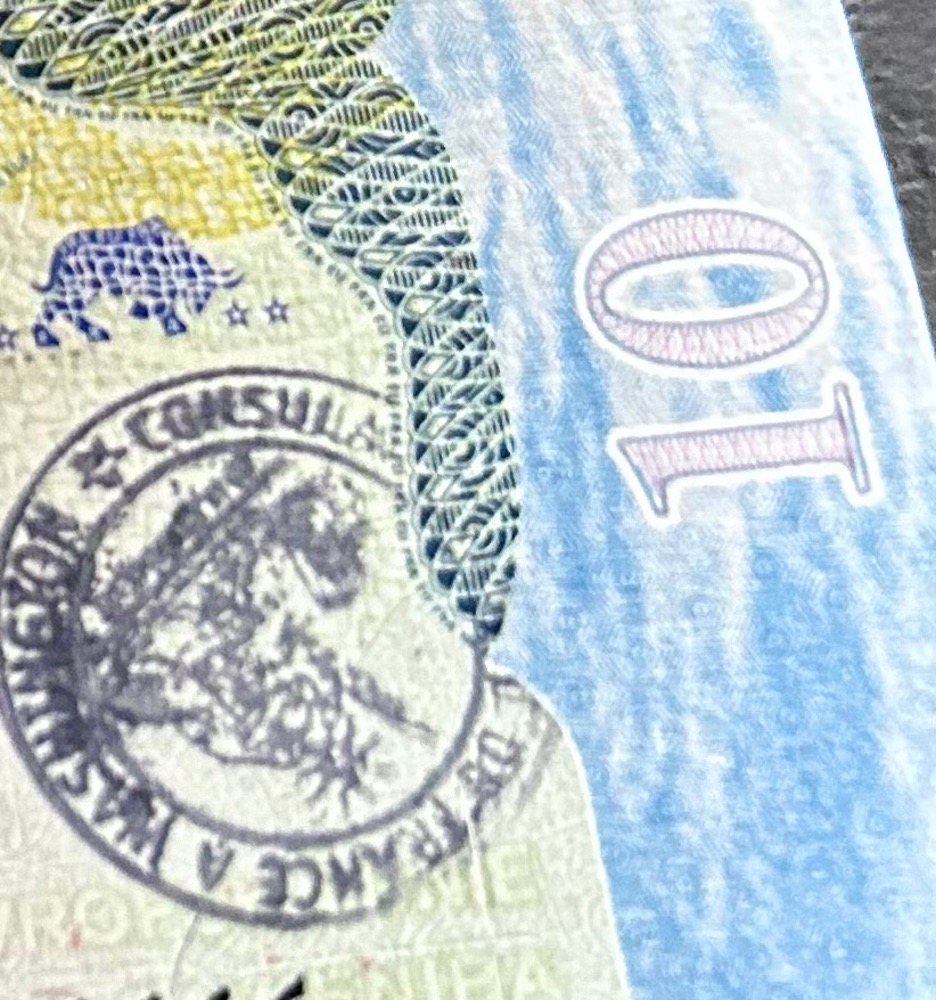
proof & performance
French bureaucracy is a kind of worldview.
I'm often struck by how some people behind desks genuinely light up at the sight of a well-organized dossier. For them, it’s might be more than paperwork—it’s a kind of quiet beauty, like the curated oddness of a museum dedicated to bottles or underwear.
Somewhere—if only in the imagination—there exists the Ideal Dossier. I have seen the moment of panic that this might be an Awkward Moment due to an Incomplete Dossier.
The French state doesn’t really trust you. It’s not personal. It just doesn’t. It wants proof. That you live where you say you do. That you earn what you claim. That your marriage is real and your electricity is on.
Never mind the fact that people are, in actual fact, very pleasant about the whole process. it’s my own guilt feelings, my sense of needing to justify why, of all places, I am in France.
Bureaucracy as biography
You’re expected—really, required—to reconstruct your history by hand. A full bureaucratic brain dump of every adult milestone, often more than once, with requisite paperwork attached.
It’s your job to present an organized, unimpeachable version of yourself—proof so thorough it silences questions. In that way, navigating French bureaucracy becomes a kind of rite of passage.
And I’ll admit, I am also starting to take some satisfaction in producing these odd documents on request.
I come in with a folder of papers. I press a button on an electronic kiosk.
I wait until my number is called.
The beep ticks off numbers, A43 or B434 or C30, D65, E88, etc., slowly like one of those experimental music pieces supposed to be played over several lifetimes.
B646!
I go to the counter.
I am calm, I am pleasant.
I have the paperwork to prove that I am the right person, in the right place at the right time. This starts off a short game Go Fish, or perhaps even Battleship, that is my dossier interacting with the Prefecture.
Except, if I have to Go Fish for any of my cards, I need to go away for at least a month until I can play again.
Stakes are high.
Do you have ID?
I do.
Do you have this form for your request?
I do.
Do you have that form?
I do.
Do you have the other form?
I do.
Do you have a payment?
I do.
Do you have a document that proves that you have been divorced from someone you haven’t spoken to in 10 years, longer than your entire relationship, really, but that document is then approved by the Department of State then sent to be translated and confirmed by one of France’s courts?
Yes, I do!
But hey - do you need anything that says I was married to her in the first place?
No, we don’t.
A small bureaucratic smile from across the desk.
Please sign.
This is all over in minutes, if done correctly. if not, it can be weeks or even months of bureaucratic limbo.
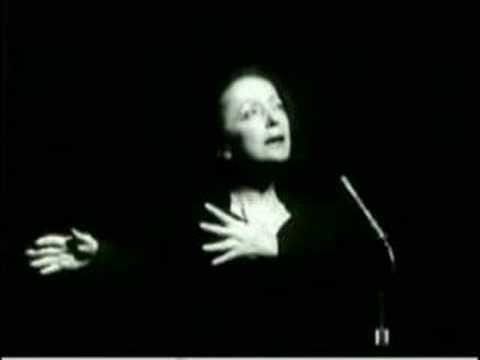
La bureaucrate - Guy Béart (1978)
La Bureaucrate by Guy Béart, an immigrant to France himself, and a singer-songwriter with a rare take on the rituals and beauty of French bureaucracy. He romanticizes paperwork and red tape, turning administrative life into an odd courtship of forms, stamps, and slow, indifferent seduction.
Thanks for reading! This post is public so feel free to share it.
digital paperwork, analog soul
Friends in the U.S. are always surprised by how paper-based things still are here. Even in 2025, we’re told to print out electricity bills and tape passport photos to forms, although this is changing - it has changed while we’ve been here.
Digital exists, but the heart of French administration still beats in ink and stamps and in-person appointments you book two months in advance.
The process isn’t cruel. It’s just precise.
It wants what it wants. It doesn’t care how long it took you to get the birth certificate translated. Or how the French bank took six weeks to verify your address because your name was missing an accent. Or worse, the signatures did not match.
You learn not to ask, unless you want to slow things down for some reason.
you do get used to it.
You stop expecting it to make sense - or it does make more sense, but you simply had no idea why it made sense 2 years ago.
You start bringing a book to read to appointments. You carry extra copies, just in case.
The goal isn’t to beat the system, it’s to become accepted by it - to become a functioning part of that system. To fit into a slot, at least a little. I mean, we’re all sparkling and brilliant individuals, but we all need to conform in some ways as well.
In the end, paperwork isn’t just paperwork. It’s the shape of you. Measured in margins. Filed in triplicate.
Spring is here. The sun is back, even if the mairie’s hours haven’t changed. We’ll scan the documents again. Reprint the ones we smudged. Say a little prayer to the gods of the attestation d’hébergement.
We’re still here. We’d still like to stay.
We’re still becoming legible.
have you done this before?
These are the types of posts that I feel like should be written more as practical guides, but there are a lot of good ones out there. If you want me to offer up some How-to guides, let me know in the comments.
If you’ve had any experience emigrating, I’d love to hear from you and if you have any questions, make a comment below! I’d love to hear from you.