Modern Light in Quiet Chapels of France
A birthday dispatch, a video post about countryside chapel, and the unlikely legacy of modern sacred art
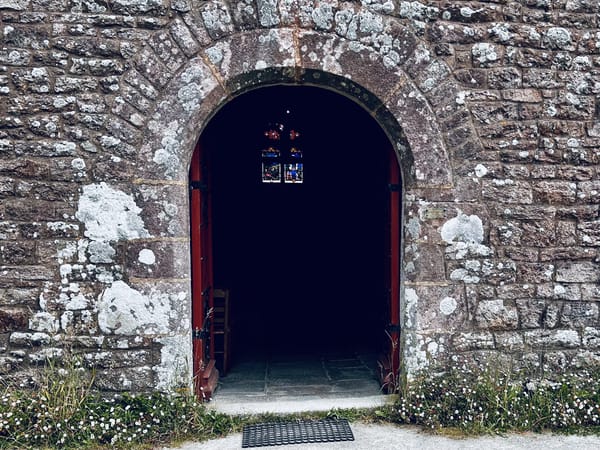
Hey all – it’s my birthday weekend, so I’m keeping things light: a few good meals, some time with my wife, catching up with friends. Today’s post is something I’ve been meaning to put up here for a while—a short, rough-cut video about a small chapel I visited near Saint-Gravé in Brittany earlier this year, but it plugs into a larger art and cultural movement of the 20th century. All in this little unassuming chapel near a small cluster of buildings that’s not even a town.
There are some cows nearby.
I’ve seen maybe a hundred of these now, and each has its own beauty. This one (La Bogerais) might look unassuming, but it’s connected to a larger movement. A postwar shift in how France imagined the sacred – or at least a handful of people did.
K
More curiosities in France ever week. Get some!
A small chapel & a big movement
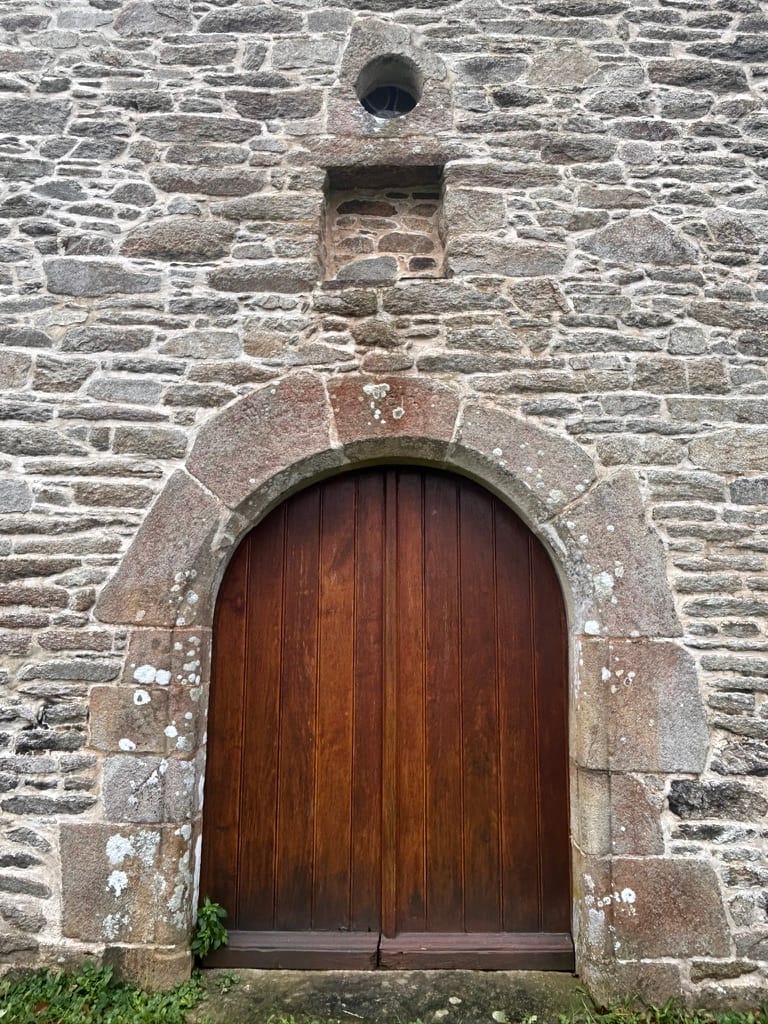
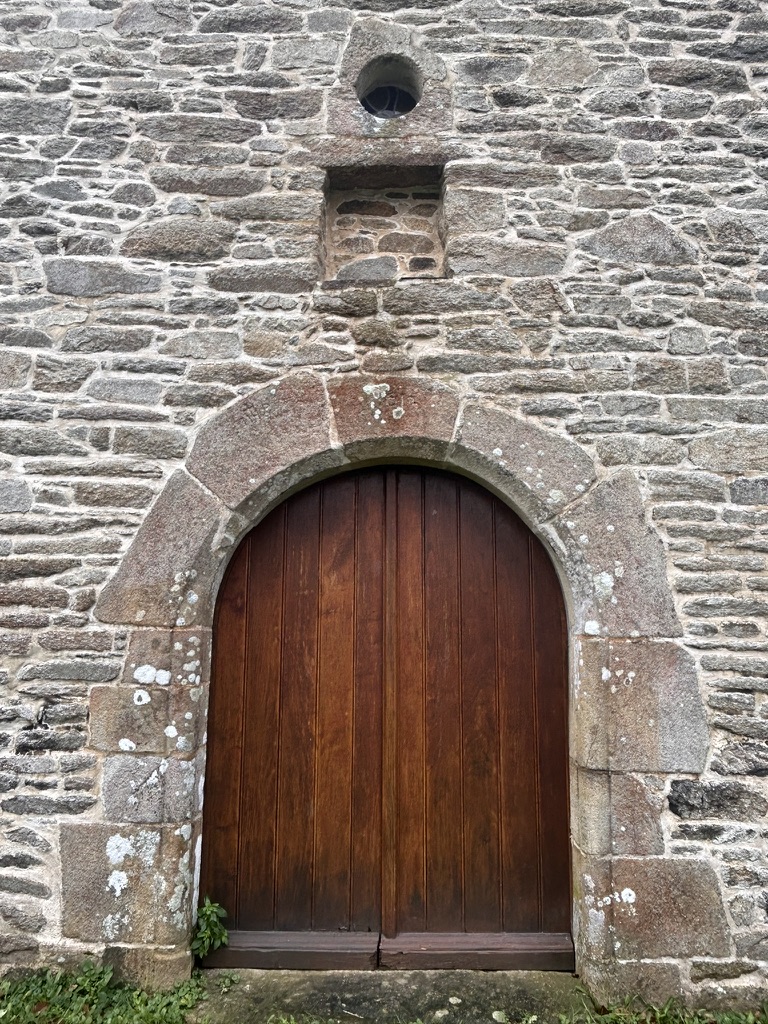
The small chapel at La Bogerais is a perfectly normal chapel, very unassuming. The style is very typical of the Morbihan countryside, this one is outside a very small town called Saint-Gravé. Sixteenth century. Dedicated to Saint Sixte (there are several Sainte Sixtes, it’s a bit confusing). You could drive past it without even noticing, thew small road to it looking like a walking path that has a small parking spot nearby.
But inside, there’s something quietly radical.
Post–World War II, France was gutted. Not just the buildings, although plenty of churches were crumbling. But also spiritually and culturally, they were looking for a renovation of the country, this was before Vatican II, but already religious spaces were being rebuilt and reconsidered around the Catholic world as religious leaders were looking to restore the Church’s community functions after the devastating of the early part of the century.
What was created was an unexpected blend of religion and modern art as stained glass windows, many of which had been destroyed and looted, but sometimes windows simply needed to be replaced.
Check out my video below.
I love spaces like this. I’d love to hear what you think!
Examples show up in surprising places. I still haven’t gotten a clear idea of just how many sites were modernized like this.
light after the war
After WWII, a quiet revolution swept through France’s chapels and religious spaces.
Starting in the 1940s and deepening into the 50s and 60s, churches weren’t just restored—they were reimagined. Dominican priest Marie-Alain Couturier said in 1943: “Better to call in geniuses without faith than believers without talent.”
I phrased it differently in the video, as well as incorrectly cited certain artists. Oops.
He commissioned Chagall, Braque, Léger—quality artists, not necessarily Catholic. There was some debate, but he won the debate
The idea wasn’t to restore Gothic glories, but to speak in the language of the present. Light. Color. Form.
Gabriel Loire, working out of Chartres, pioneered dalle de verre, thick, colored glass set in concrete, turning windows into glowing mosaics of light, changing the medium entirely with examples all over France, and many other countries, as a result.
Works by Chagal, Braque, Matisse, and others did similarly. The Matisse chapels are some of my favorites.
La Bogerais belongs to this movement, quietly.
religious purposes
The chapel is dedicated to Saint Sixtus, but which one, no one’s quite sure. There were at least three early popes with that name, including one martyred mid-Mass in the 3rd century. He’s the most likely of the Sixtuses as there were a lot of saints made in Bretagne by the Romans. And unlike many of them, this saint is recognized by the Vatican. Sainthood before the 10th century was a very local affair.
Damn! This is interesting!
a quiet place except for a few times a year
I am not sure which artist created these exact windows and haven’t found information on it yet, but most were designed by painters and sculptors who had never worked with glass before.
Rural chapels like La Bogerais became unlikely hosts for this transformation. In Brittany especially, there was openness to it. Villages kept their chapels alive through local associations, and this blend of old stones and modern glass felt like a way to keep the sacred breathing.
La Bogerais is maintained by Les Amis de la Chapelle de la Bogerais, who clearly know what they have - this is one of the better maintained chapels I’ve been in. It still draws people together: especially at Pentecost, when the community gathers for music, mass, and cider.
I love the peace of these spaces.
This chapel has a big event maybe 1-2 times a year – and by big, I mean that 40 people show up. Someone comes along to unlock it most days and it is just there, a part of the landscape.
Anywhere curious like this that you know about?
I’d love to hear about it. Let me know in the comments below!
you can only search the web for so much…
Musical Accompaniment
Ta Rolls, ta moto, ton bateau Caline (1973)
This is the closest to a French adaptation of "Chapel of Love" by The Dixie Cups I could find.
Get it? Chapels? Yep - not so clever, but I’m sticking with it.
While the original celebrates a bride joyfully heading to the chapel to get married, Caline’s lists off her lover’s flashy possessions (his Rolls, his motorcycle, his boat) as a twist on the original. Caline did a bunch of this kind of thing, keeping the upbeat, bubblegum spirit of the original but swapping church vows for material possessions. It’s a bit of a rarity, not on Spotify or YouTube that I could find - but if anyone else does, please send it along!
Check it out here.