Messe pour le Temps Présent: 1960s Ballet to the Futurama Theme
a 1967 Avant-Garde Ballet Soundtrack Shaped French Electronic Music and found new life in the Futurama Theme
In 1967, Messe pour le Temps Présent was considered a groundbreaking work that bridged avant-garde experimentation with cultural commentary. Well, considered groundbreaking by some. This type of music wasn’t popular appeal just yet.
Composed by Pierre Henry and Michel Colombier for Maurice Béjart’s modern ballet, the album is a standout piece in French music history, and the most popular musique concrète album made. Before this, musique concrète was hard to listen to or to enjoy, to put it simply, even though technically, it was very important.
“Psyché Rock” is the track that shows this best, experimental music, hypnotic rhythms, industrial tones, and playful sounds made a more approachable sound. Decades late, this was the inspiration for the Futurama theme, giving the song new life.
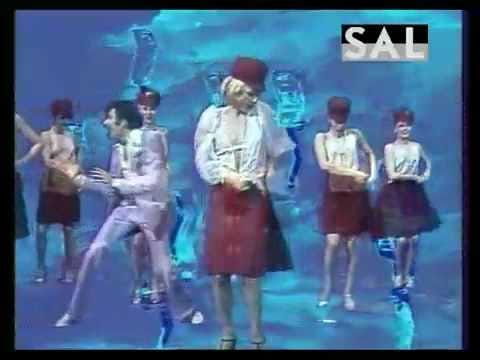
The video for Psyché Rock was likely supposed to blend surrealism and modernism… something, but it’s also a striptease performed by women dressed as meter maids. It’s meant to show the newly liberated woman, is my best guess.
What might have seemed edgy or provocative in the 1960s feels a bit cringe now, but it’s a great cultural artifact. The video captures the chaotic energy of the track and it is fun if you can look past these aspects of the era.
foreshadowing future techniques
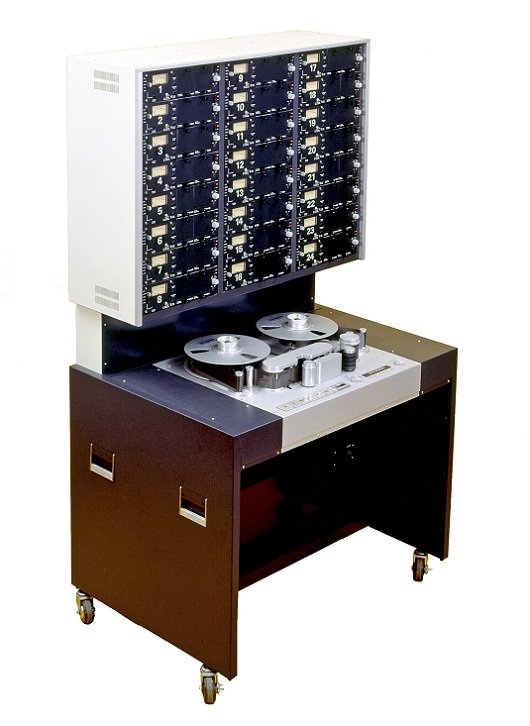
“Psyché Rock” was constructed using tape loops, recording raw sounds, distorted tones, machine noises and rhythmic pieces from pre-recorded orchestras, onto magnetic tape, then cutting and splicing them into loops. This was an earlier evolution of the techniques Jean-Michel Jarre employed a decade later.
These loops were layered and played simultaneously on reel-to-reel machines, creating with overlapping patterns achieved without MIDI or other modern synchronization tools. These techniques were increasing in popularity, but still nascent.
Steve Reich’s It’s Gonna Rain (1965) showed what intense sampling could do as these artists used new tools and techniques to push the boundaries of music itself could be at the time. Repeated phrases turned in cadences, breaking words and noises into abstract sounds that developed rhythm through repetition.
It was changing music.
The ballet of Messe pour le Temps Present itself was a disjointed plot-free avant-garde “exploration of themes of modernity," but Henry and Michel Colombier also created an electronic piece of danceable music that foreshadowed the future of electronic sound.
this one didn’t reach the top 10
Musique concrète’s academic nature wasn’t appealing to mainstream audiences yet. Even with counter culture movements of the 1960s, all of this was still a bit too far. Some of the most popular songs of the same year were still by Claude François, Johnny Hallyday, and Sheila, a long way from tape loops and repeated samples.
Although it’s no wonder Sheila had so many hits in the 1960s. Adios Amor (1967) is fantastic.
“Psyché Rock” was also dug out of the archives for an adaptation as the theme song for Futurama. Composer Christopher Tyng reworked the track for the opening sequence.
Messe pour le Temps Présent gained a cult following, largely thanks to “Psyché Rock” and its connection to the Futurama theme. A longer version of the track showcases the era’s technology—odd but worth exploring for deeper insight.