Le Scopitone Francais
France’s short-lived 1960s video jukebox that brought pop music to life in Technicolor
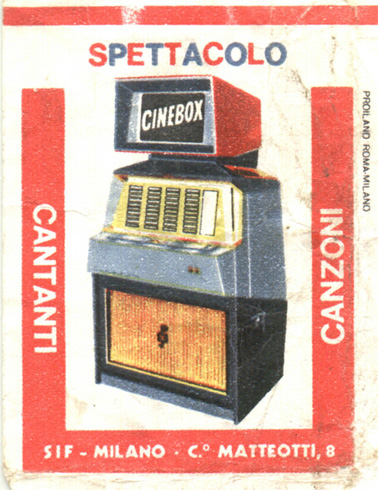
In the 1960s, French cafés had something you couldn’t find anywhere else—a video jukebox playing music videos of popular songs, decades ahead of MTV.
Instead of spinning vinyl, it had reels of 16mm film, projecting France Gall in go-go boots or Jacques Dutronc in velvet onto a private screen.
I’ve been writing a lot lately about music from the 1960s and early ’70s, and one thing kept puzzling me: why were there so many full-fledged music videos coming out of France - decades before MTV existed?
Le Scopitone.
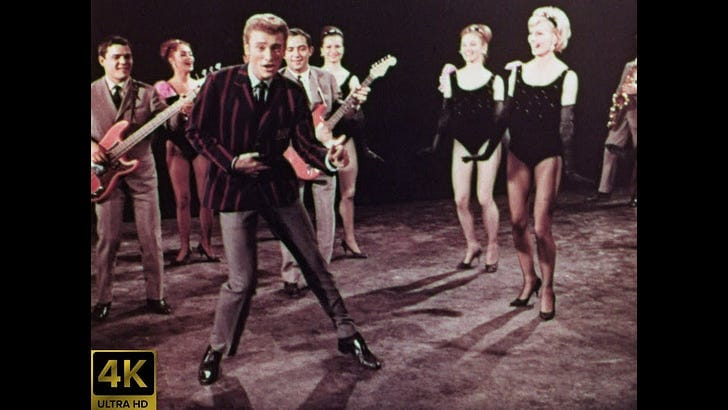
C’est le Mashed Potatoes Johnny Hallyday (1962)
The incomparable Johnny Hallyday, clearly cashing in on a dance craze import, tears through C’est le Mashed Potatoes(1962), a breathless rock-and-roll stomper whose Scopitone (they just call them Scopitones!) brims with raw energy - a French version of Little Bitty Pretty One, by Bobby Day (as Robert Byrd) in 1957, turning an American fad into a French youth anthem.
This is when Hallyday really started becoming a household name in France.
At this rate, I might just turn into a full-on Hallyday fan—I’m loving his early work.
Technicolor Jukebox
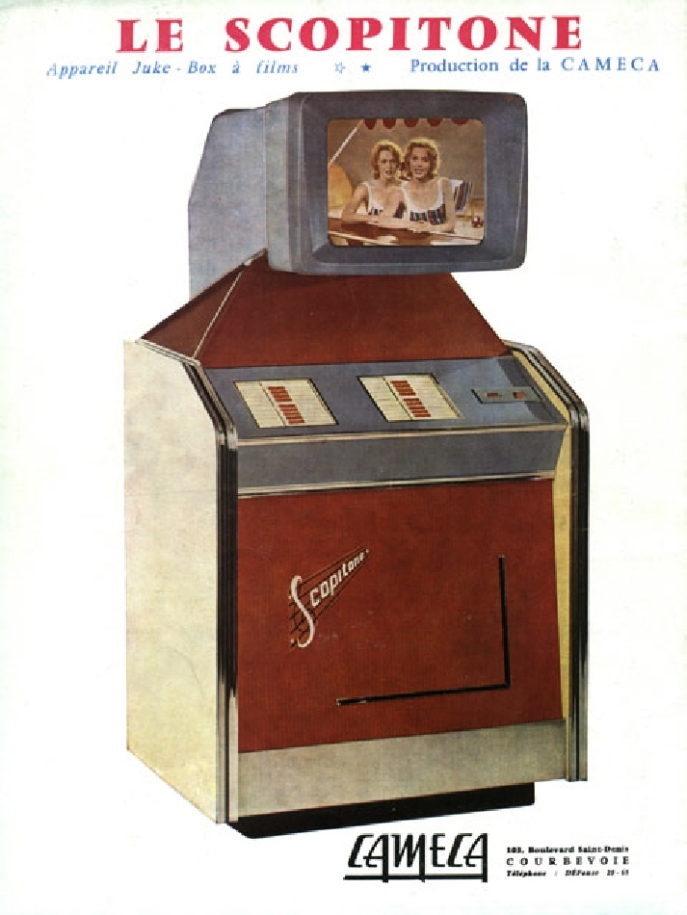
The Scopitone was part music player, part movie machine, part technical marvel and part maintenance nightmare. Each had 36 films loaded into a rotating carousel projecting onto the screen through a series of mirrors and full magnetic sound (why they still sound incredible today), filmed in rich Technicolor.1
For a single franc in France—or 25¢ in the US—you could watch your chosen clip in all its choreographed, costumed, and often wonderfully bizarre glory.
I’ll get into this more next week, but the French and US versions were worlds apart, and it’s worth giving this lost device two posts.
The Scopitone in France
For a single franc, you could watch your chosen clip play out in all its choreographed, costumed, sometimes wonderfully bizarre glory. It seemed like the French did get quite as racy as some of the American offerings that came later, but I have had a harder time finding the questionable French later ones.
The last known Scopitone in regular public use in was reportedly still spinning reels in “a Saint-Étienne bar into the early 1990s” reported on someone’s blog in French - but there is no information about what bar, or even what year beyond that, just a stubborn holdout long after the rest had disappeared in the 1970s.
It’s hard to even find these at auctions in France. Maybe they didn’t last, maybe the French just don’t have the same appetite for cinema kitsch, but I doubt it.
They invented Le Scopitone, after all.
Most of the Scopitone videos available are classics, showing some real style and a bit of exploration of what a music video could be. It’s kind of amazing how far ahead they were in the early 60’s with some of the perspectives and camera play.
Tous les garçons et les filles Françoise Hardy (1963)
A classic for Hardy, taking advantage of interesting angles to make a compelling little movie. If you read through the comments, they all seem to be in love with her.
Les Playboys Jacques Dutronc (1966)
Stylized and slick, Dutronc’s Les Playboys is just a cool little video. This one is a personal favorite, leaning more on Dutronc’s personality and the band’s Mod stylings to make a cool little video.
La Passionata Guy Marchand (1966)
Wow - different. In a few short years, a lot more artists were doing these videos and quality varied wildly. A bit overwrought - he hit some notes, in a way. It’s also a reminder of the minor, but really strange international matador kitsch going around in the 1960s. Or at least as big a trend as the Scopitones themselves, which was influential, but only 1,600 or so were made.
Agata Nino Ferrer (1969)
I am left wondering what Ferrer was after in this video.
Zoum zoum zoum Dalida (1969) Scopitone
The incomparable Dalida, clearly doing a song that helped pay the rent — this time with puppets — delivers Zoum zoum zoum (1969), a playful, repetitive pop number whose Scopitone video wraps her flirtatious performance in kitschy late-’60s style, turning nonsense syllables into a dance earworm.
Related posts
 Keith Christiansen
 Keith Christiansen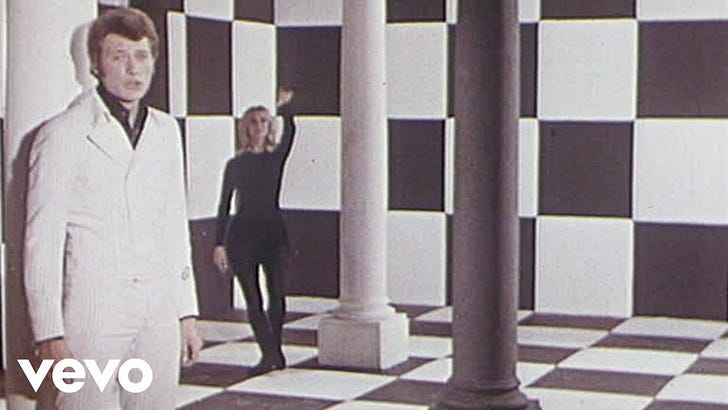
 Keith Christiansen
 Keith Christiansen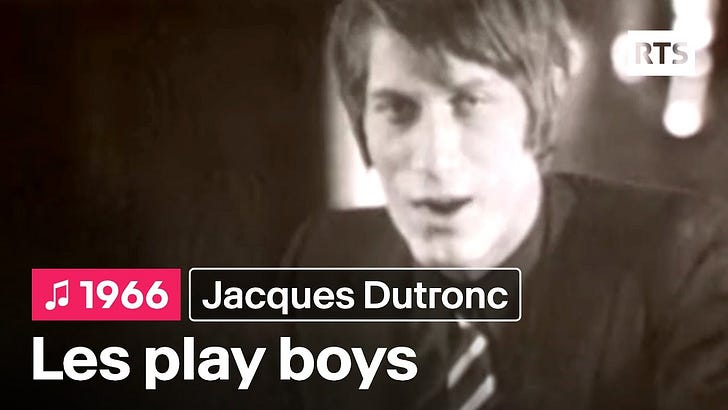
In France, most 1960s Scopitone films were not shot in Technicolor proper (the American three-strip process) but in Eastmancolor, a single-strip color film.
Technicolor was used loosely—especially in marketing—to mean “bright, saturated color,” even if the film wasn’t processed with the actual Technicolor method. ↩