A Jar of England Summer
Country lanes and hedgerow jams in suburban London
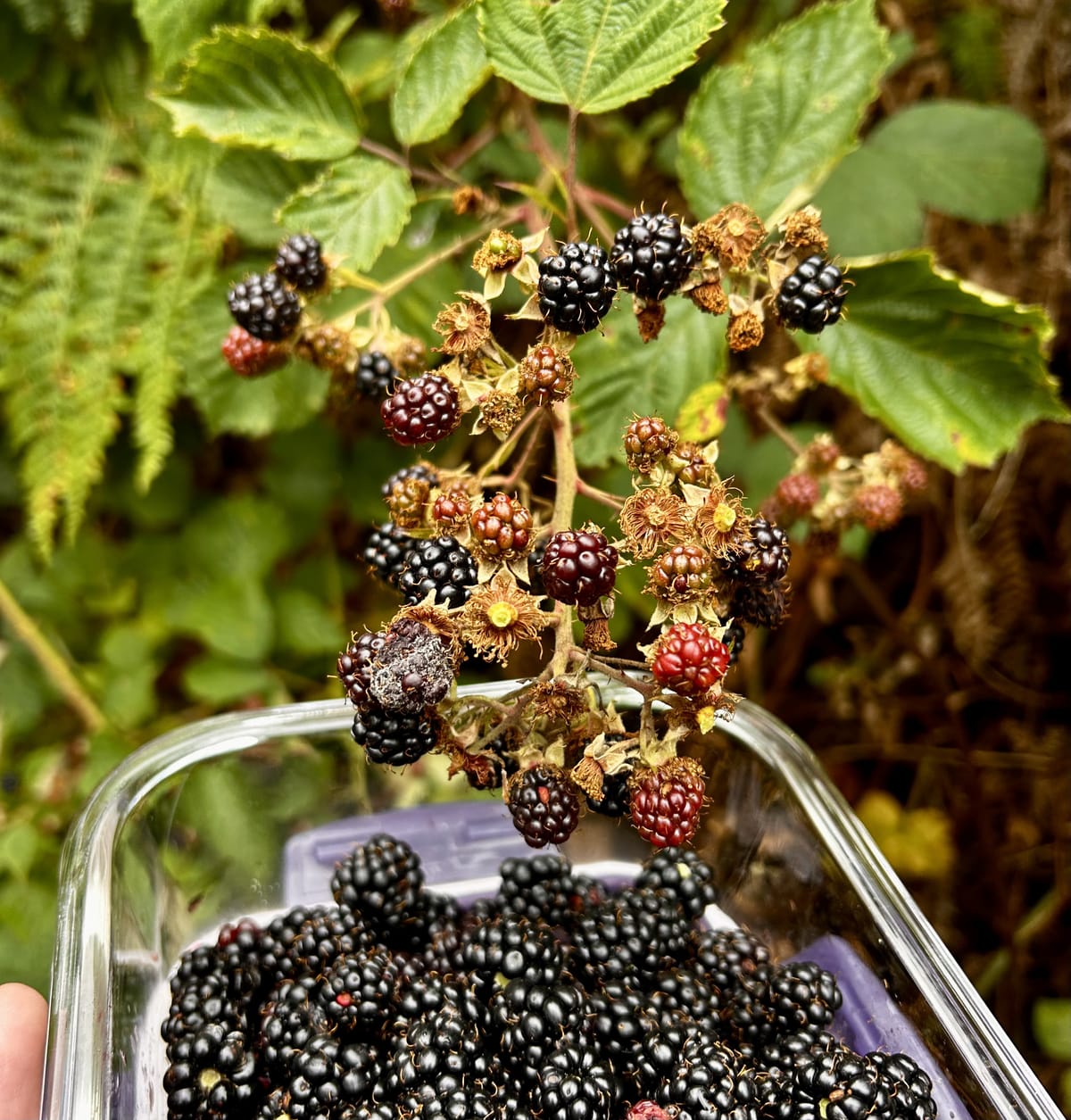
England in August tastes like blackberries and I have the arm scratches to prove it.
This started as a quick note about blackberries—jam recipes, really—but it turned into a kind of love letter to abandoned orchards and roadside fruit along the rural walking paths of England.
We’re in the UK for a few weeks, looking after a house near a canal. The narrowboat kind. The towpath is just wide enough for two people to pass without brushing arms, though one of you will end up in the nettles. We’ve been here in summer a few times now, been out in the country, and have had a chance to see some of the natural world of England – life beyond London.
Well, we’re deeply inside easy commuting distance to the city, but it can feel further away.
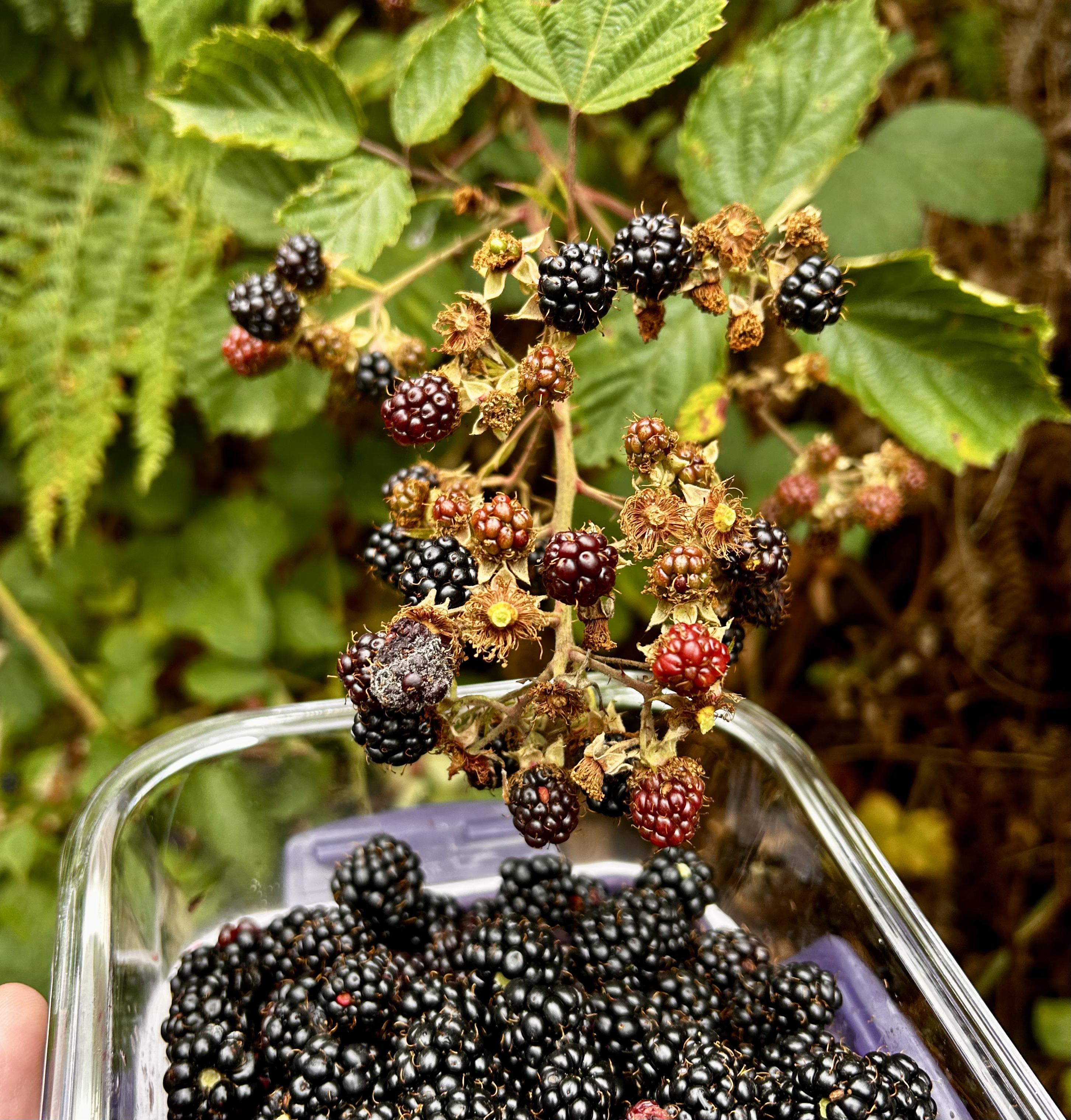
Blackberries, Footpaths
A longer trip like this starts to feel a little like home. You develop routines. You return to the same spots and notice what’s changed.
A lot of these grow in places in the US as well, but here a few varieties are dominant.
A very useful listing of what to eat – and not.
When we first arrived, the blackberries were hard and red. A few weeks later they were coming in more fully, and now—our last week—they’re at their peak. We’re picking them at the exact moment they taste best, then trying to trap that flavor in jars before it disappears. That’s really what jam is for me: an attempt to save a perfect flavor of summer, or close to it.
The jams don’t last long anyway. The sugar helps, but still. I’ll admit I like the French method better—something I’ll get to later—but staying here long enough to watch the shift from green to black has become a thing we look forward to.
We walk the dog along it most mornings, then cut into a public footpath that meanders through grazing fields, high endless hedges, and, oddly, a golf course. There’s a moment where you step from cow pasture into manicured green and you feel like you’re in the wrong place. No fences, no gate—just a faint track leading straight through the 8th fairway as if everyone has just agreed not to ask.
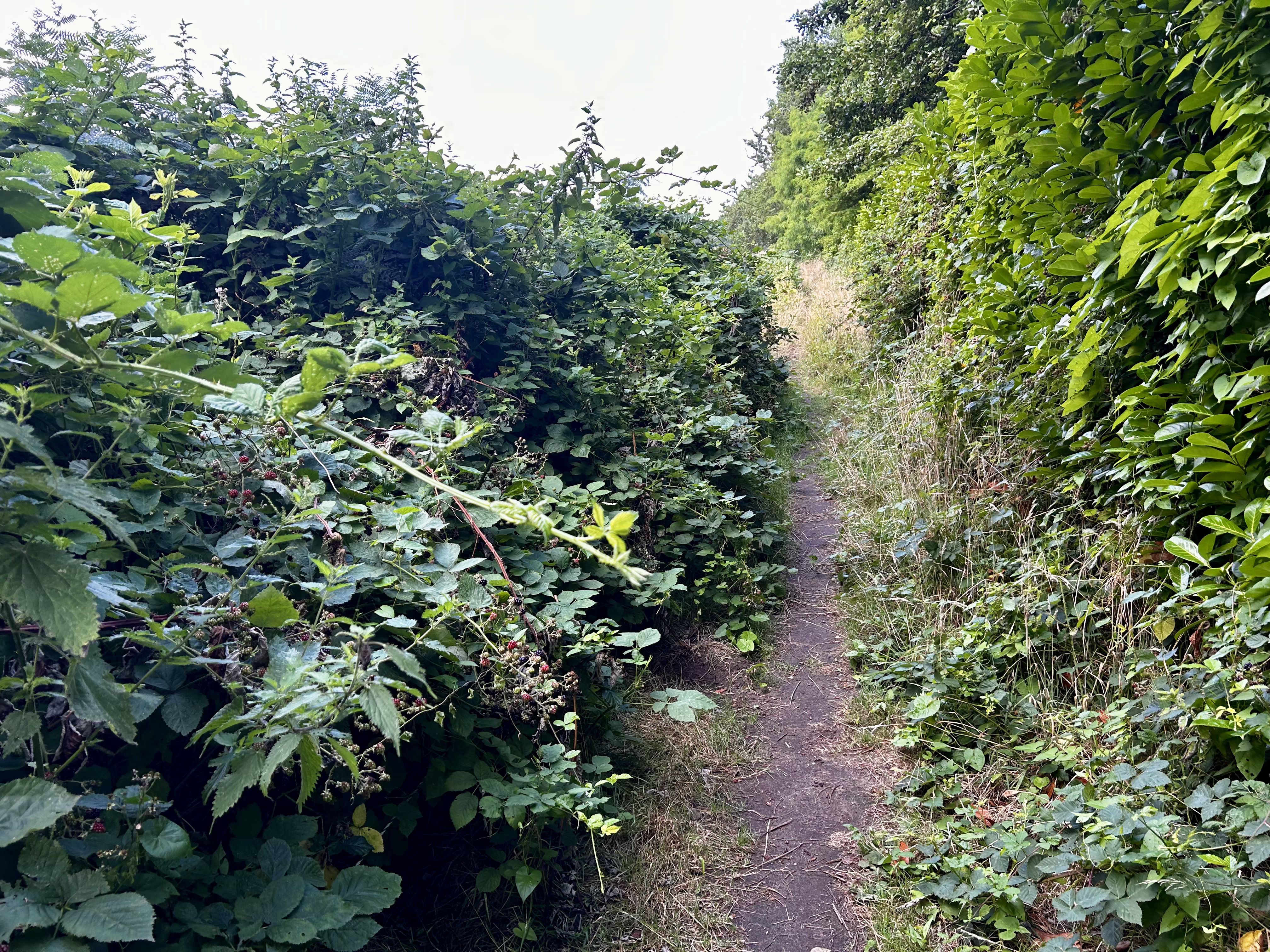
The right of way
In the UK, public right of way is law. The path came first; the golf course came later. The path stays.
Once recorded, it’s almost impossible to erase. Landowners have to keep it open, whether it runs through fields or past their front door. Some make it pleasant—wide stiles, trimmed hedges, clear views. Others let nettles and brambles close in.
It’s oddly normal here, unlike the “stay off my lawn” mindset I grew up with—though the towering hedges still clearly say you’re not welcome.
The Ordnance Survey marks every path in dotted green, so you can follow one even when it looks like you’re walking straight into someone’s driveway, only to see the path just to the left of it, next to a big PRIVATE sign.
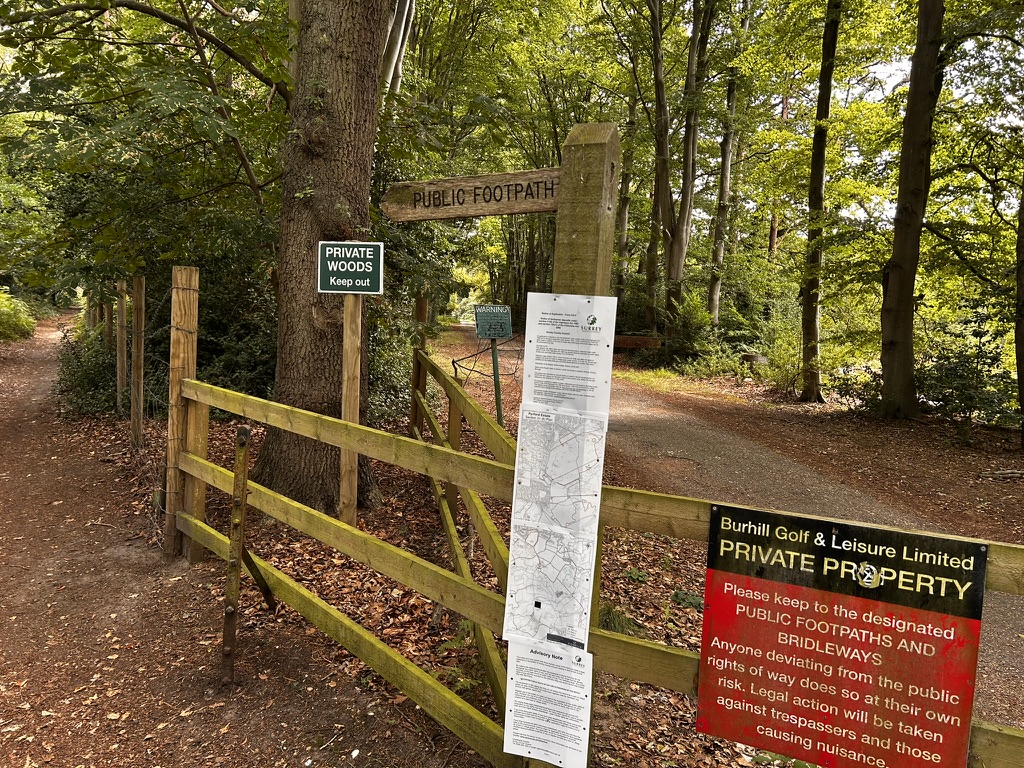
Le campagne
In France, this kind of access is rare.
Public walking routes exist, but they’re usually long-distance trails or marked loops, not these local stitches between everyday places. In rural areas, much of the land is either farmed or forested, and crossing it often means asking permission.
Here, you’re expected to walk through. Past cows. Through orchards. Along canals and behind garden sheds. All connected.
Sometimes the path squeezes into a tunnel so tight you have to turn sideways. Other times it opens onto a broad hill with nothing but sky and sheep.
The dog doesn’t care about the law—she’s just happy for the smells. But every time we cross a stile or follow a fingerpost, I’m struck by the fact that this patchwork still exists. A country where you can walk through a golf course on purpose and be entirely within your rights.
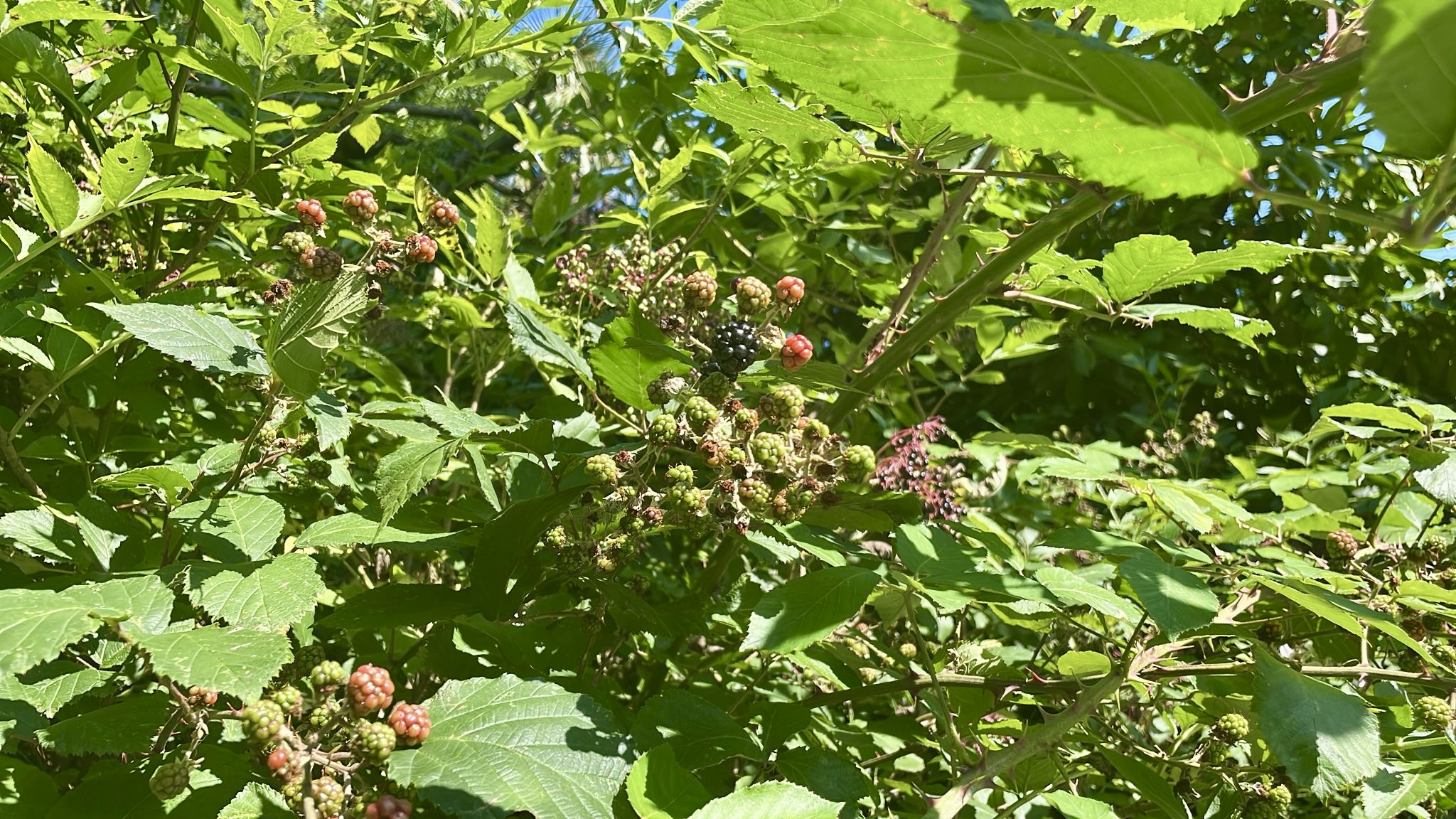
Right now, it’s blackberries in every hedge, tangled in fences, climbing over themselves in the corners of footpaths. Thorny, yes—several varieties, all called brambles—but at their peak now, and eating them warm off the vine in the morning might be my favorite thing in all of England.
I eat them with breakfast, drop them in drinks, freeze them as little ice cubes for wine, cocktails, or beer. Everything.
There is so much food.
It’s a hard thing to ignore once you see it. An a hard thing to see when there are people and places doing without.
But you can’t go walking around with a bushel of baking apples and soft berries and plums every day.
But you wish someone would - put them to use.
It’s the kind of abundance that’s a bit hard to see in a supermarket world. Brambles heavy with fruit, crabapples bending branches down so you have to duck under them. Damsons tucked in the shadows, baking apples bouncing off parked cars, their owners annoyed at the apples, but never making tarts. Elderberries pop up in odd places.
Rowans are ready. Sloes will come later, hawthorns too. The hedgerows are kept clipped and proper, and the fruit doesn’t care.
Gathering
A pint or two of blackberries in the morning, maybe another handful on the way back in the afternoon. Some get eaten straight off the bush, some frozen for later, and the rest go into jam once we’ve built up enough for a batch.
Yeah, we make jam when we travel. It’s a great souvenir – and I just mailed some to a friend.
We’ve been here for a few summers and the rhythm doesn’t change much. Walk. Pick. Eat. Freeze. Jam. Repeat. A bit of tourism in the middle. We get into London occasionally.
The kind of pattern that feels plain but has a lot of quiet satisfaction.
People
In France, foraging is both normal and invisible. People don’t make a fuss about it. If you live near fruiting trees, you’ll pick what you want.
Here, I’ve noticed a different reaction. Some people stop and comment—“getting a few blackberries, are you?”—in a way that’s approval, curiosity, like they don’t do that themselves, but they’ve heard hat people do it.
A couple have said they don’t really bother, but like to see someone else doing it. And then there are the polite pass-bys, the faintly wary looks when you’re reaching up in the hedge with a dog sniffing at passers by.
As I mentioned, the lanes are narrow.
Either way, there’s still so much fruit left uncollected. The same odd mix of abundance and neglect. It’s strange—how much food a place can produce without anyone taking it. Or maybe they notice, but don’t see it as theirs to take. Ot maybe they don’t know which are good.
Or maybe those who do still have tons of jam from last year.
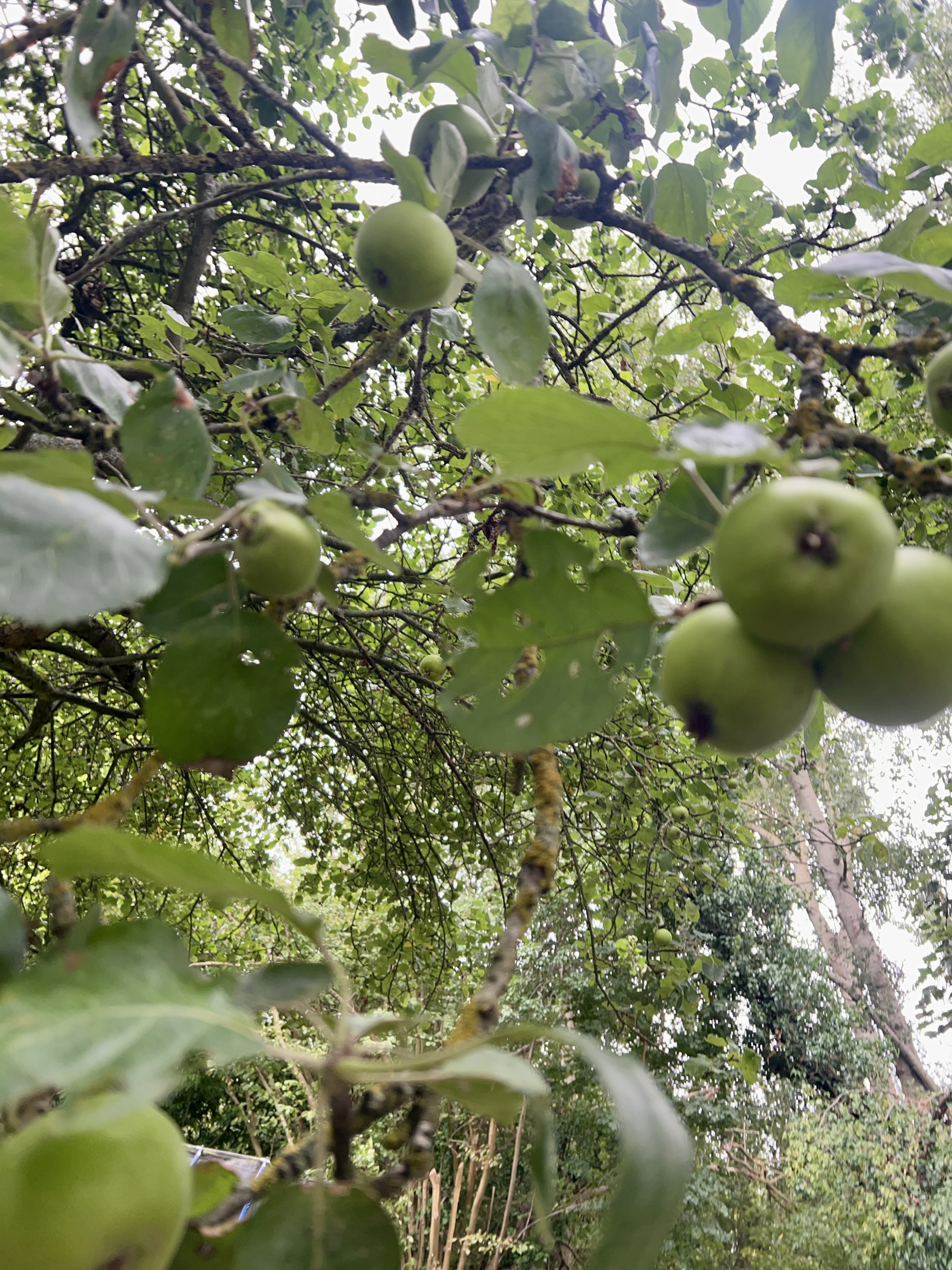
Hedgerow Jam, UK style
Pick what you can carry. In this case, blackberries and a Bramley or two. Aim for roughly 4 parts berries to 1 part apple by weight—the apple’s there for pectin and a bit of tartness.
Those apples also solve most of the problems with my jams – they set beautifully.
Bramley’s are very good for pectin, but I just use whatever apples I find. My Seek app said this one was a European Wild Apple. Whatever – works in the pot.
Wash the fruit, cut out the bugs, peel the apples if you feel like it. (The peel will soften in the pot, but many French would never leave it in. I peel them.)
For every 1 kg of prepared fruit, add:
· 750 g sugar (3 parts sugar to 4 parts fruit) – I try to do less, but then it will not keep as long
· Juice of 1 small lemon (or half if your apples are very tart)
· 50 ml water to help it start cooking without catching on the bottom
Add the fruit to a big pot with a splash of water, a squeeze of lemon, and sugar that’s about three-quarters the weight of the fruit, if you must measure.
Heat slowly, stir now and then, then boil until it looks thick enough to spread on toast without sliding off. The frozen plate test works if you’re not sure: a drop of jam wrinkles when pushed with your finger, it’s done.
Jar it hot.
Label it with the place you picked it, even if it’s just “England.”
A little homework
If you’re here in late summer, take a walk—towpath, lane, public footpath, whatever’s on the map in dotted green. Bring a small bag, maybe two.
Pick enough for breakfast or a jar, not so much you’re dragging it home like a sack of potatoes. Make something with it before you forget where it came from. Label the jar.
Then, next summer, open it and see if it still tastes like the place.
I’d love to hear about it.
Next time, we do the French version—same fruit, but in some different places, different philosophy about making it.
Musical accompaniment
English Rose The Jam (1978)
…A bit too one the nose.
English Rose is not one of their snarling, sharper Mod songs—it’s quiet. Just Paul Weller’s and an acoustic guitar. No mention of roses, really; it’s feels like a place and feel that place’s pull when you’re away. Written while the band was touring abroad, it feels a bit like a memory of a warm August morning you know will be gone soon. It’s England without the flag-waving—just hedgerows, sky, and the taste of blackberries.