Hidden Histories of France: The Cagots
Church Doors Tell a Story of France’s Untouchables
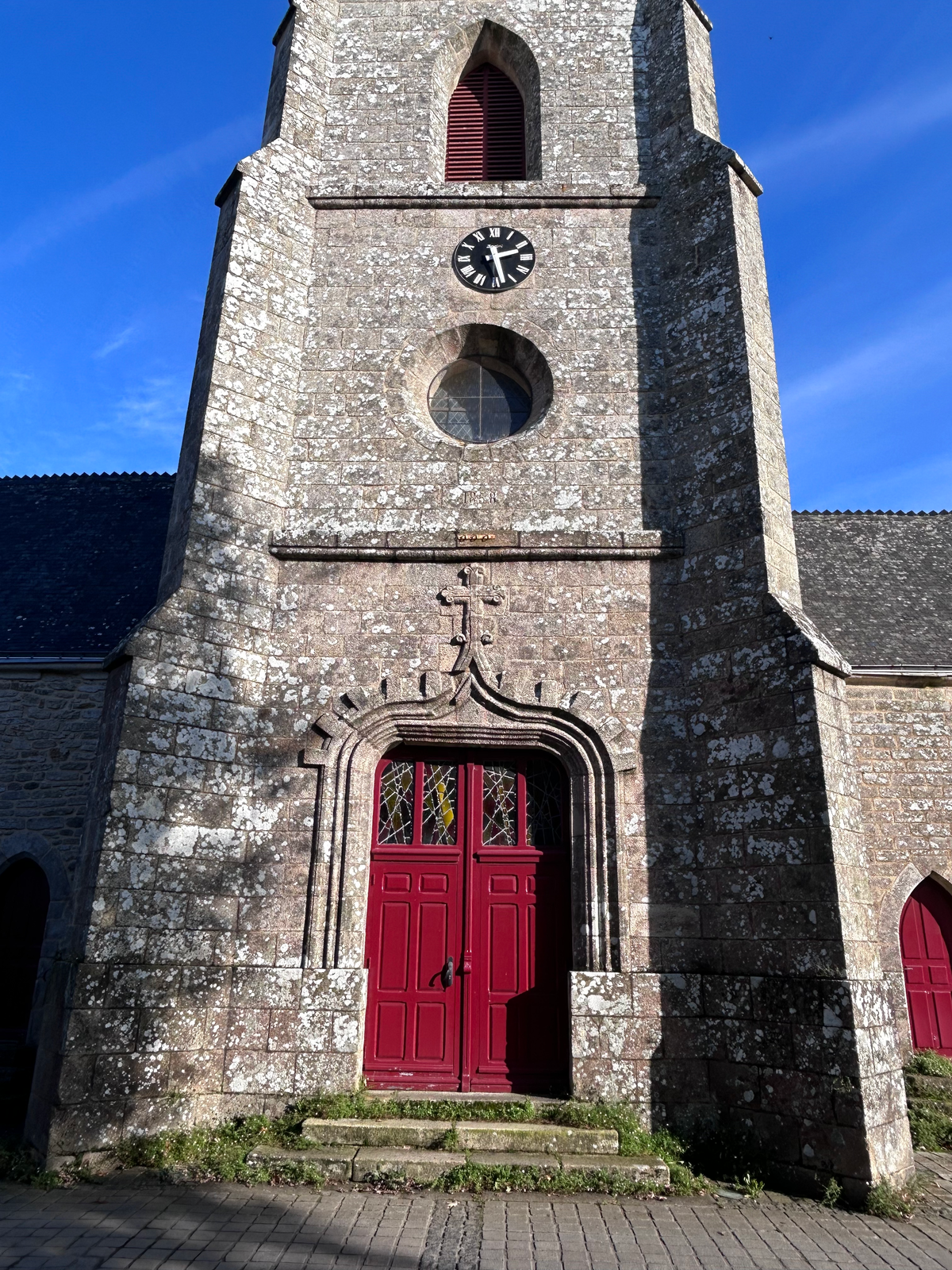
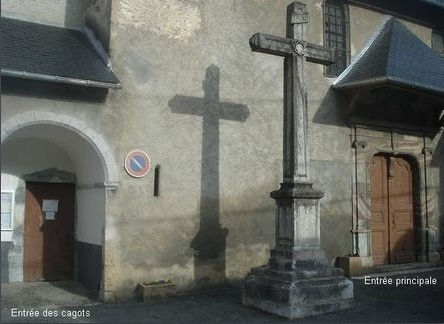
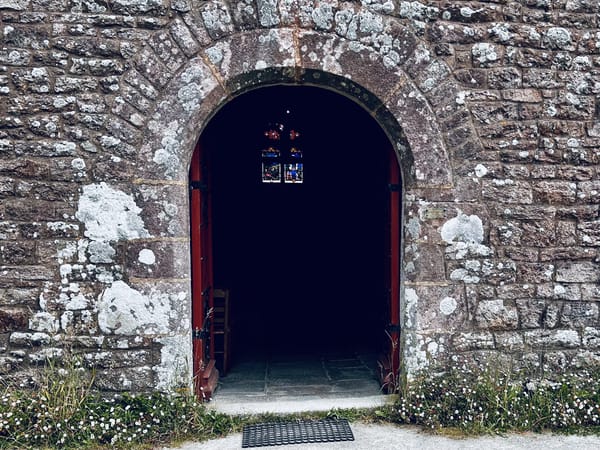
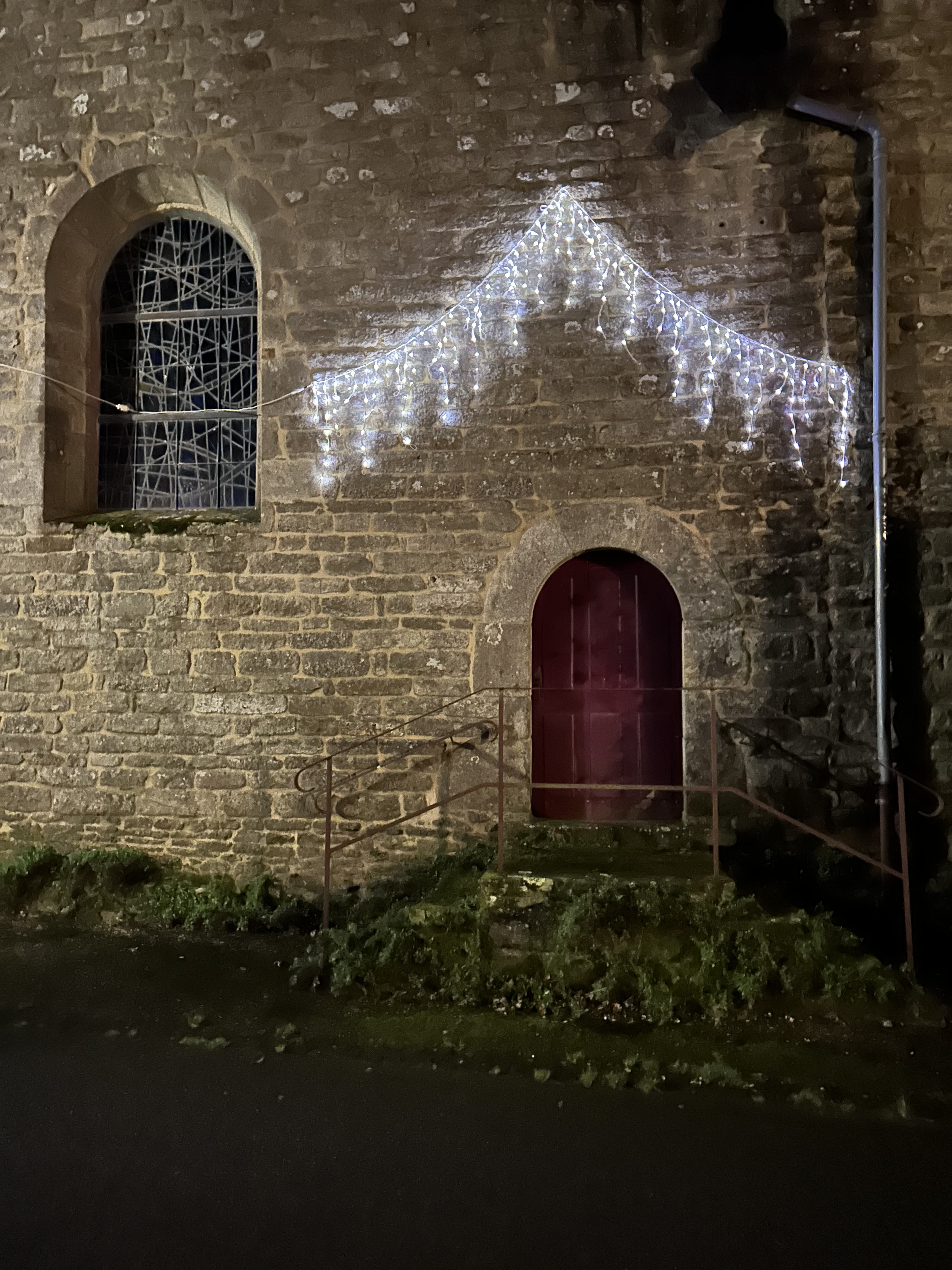
France’s medieval villages have more than picturesque charm—they hold histories written into the architecture, a good deal of which is even forgotten by locals. If you look closely, you may spot narrow, awkward doorways built into some church walls. Sometimes, these are bricked over, sometimes they are featured prominently, as small as they are. They’re in a tremendous number of churches in western and southern France.
These doors, often overlooked by visitors, tell the story of the Caquins – or Cagots - a marginalized group in Brittany. For generations, the cagots were Europe's forgotten caste, an underclass facing unexplained social, legal, and religious discrimination.
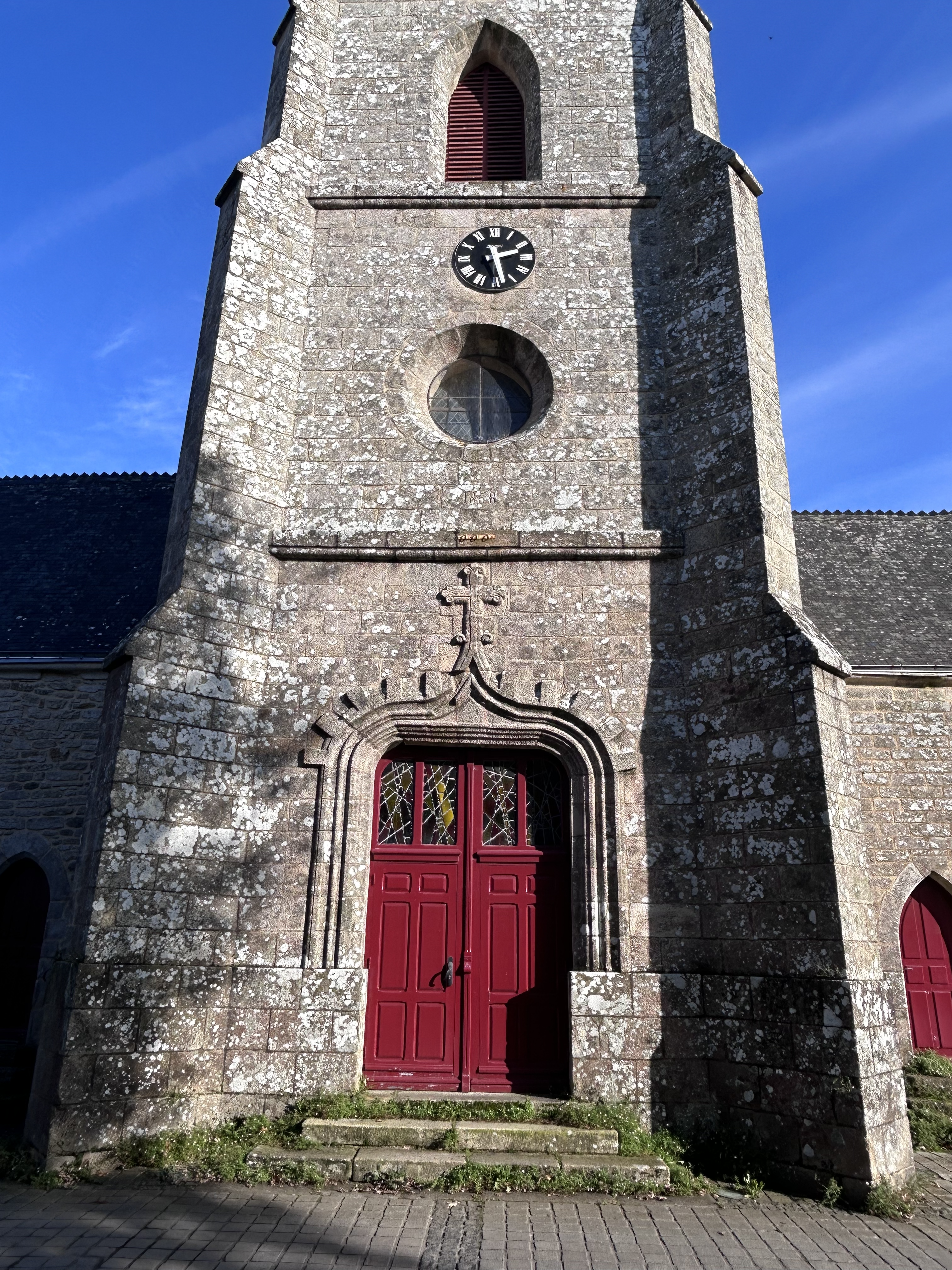
Persecuted for nearly a thousand years, Cagots were forced to live on the outskirts of towns, made to enter churches through separate entrances, unable to buy or trade food with others, even handed the eucharist at the end of a stick and isolated from all civil and religious life in the small communities of their neighbors. The only real mystery of the Cagot was that they had no distinguishing features from their neighbors at all: they were simply born into an assigned underclass with no explanations as to why.
France Forgotten People: the Caquins
We’re in Brittany for the holidays, doing another housesit at a country home. It’s a very pretty but an incredibly quiet village. This small town has about 2,000 people, but they seem a bit hard to find. The main plaza has a few shops, but I haven’t seen much activity as we come up to the holidays. They shut the shutters of every house and turns off all of the lights by 10pm. Driving in the country out here is a voyage into blackness.
Walking outside at night, the darkness is so complete it feels almost alive. It’s a small place where everyone says “bonjour” and there are really not enough people to ignore, if and when you manage to actually see anyone.
I’ve been visiting a lot of churches in this area over the past few years. I have photos of probably 75-100 chapels in eastern Brittany and Loire Atlantique alone, but we also spent time in Dordogne and in the outskirts of Bordeaux.
Every town has at least one church, and in many, off to the side, there is an awkward and small doorway: this hidden piece of France’s history. These small, narrow entrances are cagot doors built for the Caquins (as they’re known in Brittany), a group whose exclusion was so ingrained in French society that these people were seen as invisible.
Who Were the Cagots (and Caquins)?
They were known by various names in France (and into Spain), including Cagots, Chrestias, Gézitains, Agotes, Gahets, Capots, Gafets, Caqueux, and Christians of St. John, depending upon where they were. However, the reasons for their persecution has origins that have never been well explained.
The story of the Cagots spans nearly 1,000 years. Unlike other groups who faced persecution for their religion, language, or ethnicity, theirs remain shrouded in myth. In many places, it seems that they looked very much like their neighbors with nothing to tell them apart except “that family are Cagots.” After the French Revolution of 1789, many of these myths were debunked and laws overturned, but the stigmas remained. It wasn’t until the early 20th century that many Cagots were fully integrated into their villages, or died out.
By law, Cagots were required to live in segregated quarters on the outskirts of towns, known as cagoteries. Denied political and social rights, they were forbidden to marry non-Cagots, enter taverns, to “hold cabarets,” use public fountains, or sell and touch food in public markets. They were also barred from working with livestock (although they were able to be butchers) or accessing communal mills.
Religious discrimination was severe, especially as churches were the center of community life. Cagots were only allowed to enter through these smaller doors, tucked away and divided from other worshippers, confined to small areas within the church. In some places, they were given the Eucharist on the end of a wooden spoon, and separate holy water reserved solely for their use.
They were forced to wear distinctive clothing, sometimes with a goose or duck foot emblem, leading to their derogatory nickname, "Canards" (ducks). Their touch was considered so "impure" that it was a crime for them to walk barefoot on common roads or to drink from the same cup as non-Cagots.
This small town has about 2,000 people now, just as it did in 1800. I might assume that there were even fewer in years before, and yet they were segregating these people.
The Cagot were restricted to a small group of trades, most often carpentry, but also butchery, and ropemaking. These trades were seen as either impure or isolating as many rope-makers and carpenters worked apart from others. Yet at the same time, the Cagot became famous for their skill and quality of workmanship.
Laws against them were formalized in 1460 by Duke Francis II of Brittany, codifying their pariah status. They were able to lease land, but not to build homes, ironic as many were carpenters by trade and were even often sought out to build important buildings. Several market stalls in this region which are hundreds of years old, are very likely to have been built by the Cagots (this is just conjecture – I can’t find anything to support that), but it would be ironic as both markets and being in the middle of town were two things often forbidden to them.
It is documented, however, that they were preferred for the construction of churches, especially the Romanesque style built in the south of the country.
This kind of thing had happened in many societies.
Rumors painted them as lepers, religious heretics, or remainingVisigoths who had ruled in the region from about 500-800AD. Despite also being Catholic, speaking the same language, and working in similar trades as their neighbors, the Cagots were systematically humiliated. This is a part of the reason why the doors were so small, they would be forced to bow low as they entered the church.
Some of their earliest mentions start in the 11th century, when France and its kingdoms were highly fractured, rural communities were isolated, the Cagots—alongside lepers, heretics, and others labeled “impure”—were forced to live on society's fringes. Their homes lay beyond the edges of even the smallest towns.
This bigotry persisted into the 20th century, passed down through generations for reasons that were never fully understood or addressed. A 1911 encyclopedia Britannica entry about them provides a rough description, filled with the kind of eugenics thinking of the age, describing the Cagot as follows:
Their crania have a normal development; their cheekbones are high; their noses prominent, with large nostrils; their lips straight; and they are marked by the absence of the auricular lobules.
Etched into Stone
As France entered the Renaissance and exploration brought other continents into focus, persecution of the Cagots actually intensified at home. While thinkers in parts of Europe began to question old beliefs, Cagots in southwestern France and Brittany were still being denied basic rights, segregated in their villages, and still barred from communal spaces.
After the French Revolution dismantled laws against them, the stigma lingered in rural communities, where myths and whispers persisted. Even after many of the doors sealed up, the reasons for discrimination were simply that these people were the children of Cagots. It was enough.
Victor Hugo described a Cagot door in Journey to the Pyrenees in 1843:
“I turned around, between the church and the crenellated wall. There is the cemetery, sworn with large slates, where crosses and names of mountaineers dug with a nail are erased in the rain, snow and the feet of passers-by. A door, now walled, was the door of the Cagots. The Cagots or goitreux were pariahs. Their door was low, as far as we can judge by the vague line drawn by the stones that wall it.”
(Journey to the Pyrenees, 1843)
They're common here: doors designed to humiliate the Caquins, forcing them to stoop just to enter their community's religious center. It’s hard to overstate just how important the church and all of its rituals would have been for people in these times. In so many ways, the discrimination they felt wasn’t just to limit them in their lives, but also for all eternity.
It’s also hard to overstate just how rural France was until the 20th century. Areas like Brittany and the Pyrenees would have been incredible difficult to get to, making it all the more intriguing that this discrimination would persist in so many isolated communities that remained days and days, if not weeks apart from one another by the travel of the day.
Exclusion at Home and Abroad
Prejudice against the Cagot was deeply rooted in France, shaping society long before those same systems of exclusion were then exported to colonial territories. These church doors and segregated spaces reveal a time when bigotry wasn’t just tolerated—it was built into the very fabric of communities.
I have said for many years that colonialism begins at home ( and I am entirely sure that I read that idea from someone else – sounds like Frantz Fanon). This history isn’t as distant as it may seem. While France was spreading its influence abroad in the 18th and 19th centuries, prejudices persisted at home, and with groups like the Cagots well into the 20th century.
For the rest of the century and even today, France continues to wrestle with the idea of who can be truly “French.” For the Cagot who lived here for 1,000 years, well before France was called “France,” these people were called outcasts.