French History: the Great Cat Massacre
Echoes of Early Dissent: The Printers of Saint-Séverin Stage a Cat Massacre
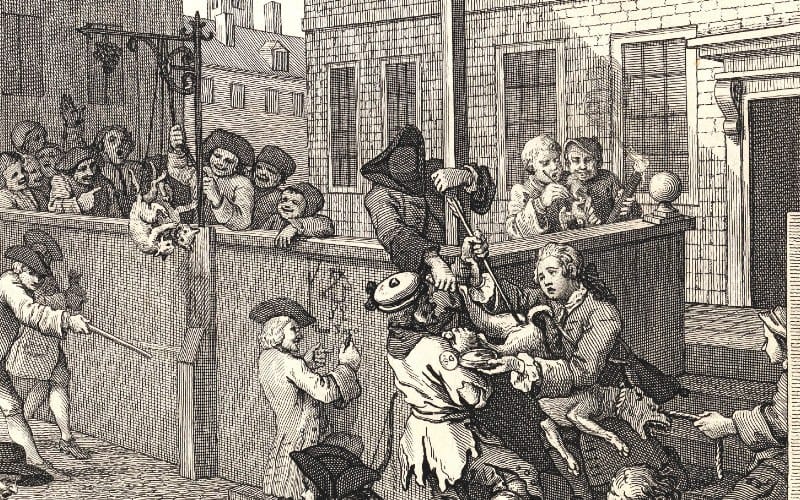
The French are known for their protests with a long history of demonstrations. The Revolution of 1789 is often cited as the beginning of this history, but workers resistance goes back a bit further. The Cat Massacre in Saint-Séverin is one of those stories of early resistance, predating the French Revolution by about 50 years.
In the 1730s, the neighborhood of Saint-Séverin in Paris was a printer’s district - the neighborhood itself is named after the impressive basilica based on a chapel first built there in the 9th century.
Printing was tough and dirty work and many of the journeymen printers worked under harsh conditions. They also lived and worked in their masters' homes, facing long hours, low wages, and often cruel treatment. The masters, meanwhile, lived relatively comfortable lives, a stark contrast that bred resentment among their workers.
And so did their cats, it seems.
The Massacre
The tipping point for these journeymen involved the printers' master's wife, who doted on her pet cats. I like to imagine that she had a lot of them. In an act of defiance and to vent their frustration, they created a plan to rid themselves of what they saw as the symbols of their oppression: the cats.
The master's wife showed incredible, fawning affection for the cats, while steadily mistreating the apprentices. The printers were eating either the same food, or what was left over from what the cats had eaten. While she heaped abuse upon the printers, she often doted on the cats.
This may have gone on for months, if not years, until they had enough. As described in one article, “killing the cats was a form of symbolic rebellion against the journeymen's harsh working conditions, lack of power, and the broader societal structures that they felt oppressed by.”
In truth, we don’t know how many cats were killed, but enough to be called a “massacre,” whatever that number might be.
The trial and hanging
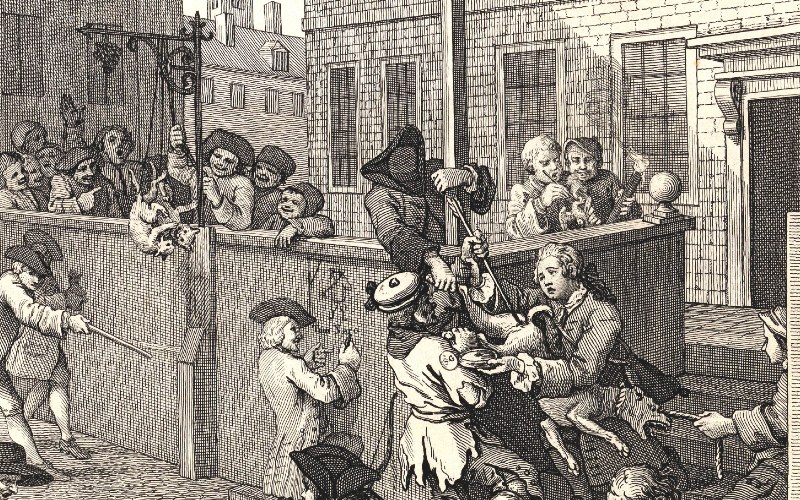
For some reason, the printers felt that they had to have a trial first. It’s worth mentioning that the cats in in this story didn't actually "do" anything wrong, really. Most of what is known about this comes from a version of the story written by and then printed by one of the cat massacring journeymen printers. According to him, the “prank” was hilarious.
The journeymen staged a mock trial for each one of the cats, accusing them of witchcraft and conspiracy against the journeymen. The verdict was, unsurprisingly, guilty, leading to the mass execution of many cats, including the favorite pet of the master's wife.
As odd as this sounds, putting animals on trial was not so unusual and the animals themselves were most often found guilty and executed, although there was a story of a female donkey on trial for bestiality who was acquitted for her “virtue” while her co-accused human was then put to death.
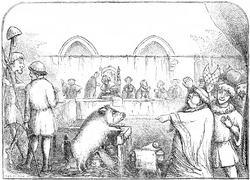
By killing their masters’ cats, the workers challenged their bourgeois employers, insinuating witchcraft and infidelity, and effectively putting their master on trial in a display of deep-seated class resentment.
And no one was going to get executed for killing a cat in those days. Or now, probably.
Historical accounts emphasize the massacre as a form of protest and a manifestation of the journeymen's frustrations, rather than on fate of the cats. The Saint-Séverin Cat Massacre is usually cited as one of the first workers’ protests in a country with a long history of workers’ protests. The fate of the cats was incidental.