Escaping the Anxieties of American Life: Our Transition to Europe
Why We Left, What We Found, and How We’re Learning to Stay
This is an update to a piece I wrote nearly 2 years ago. It’s interesting to see how much has changed. There’s a quiet recalibration that happens when you leave the United States. It’s not just about adapting to a new country—it’s about slowly realizing how deeply wired you were for stress.
Since moving to France in 2021, we’ve begun to untangle that wiring. Life here isn’t perfect, but it’s gentler in a lot of ways. Or at least the transitions are gentler, even if it’s sometimes frustrating.
You want to eat at 3pm because that is when you are hungry?
Non.
You get used to it.
stuff you don’t know you’re carrying
The anxiety that used to hum in the background of everything—health insurance, job security, gun violence, the constant mental math of American life—it’s just... less here.
“I mean, France has its own racism,” a guy said to me recently. “It’s bad here too.”
“Yeah,” I said. “But it’s a lot less likely to get my wife, students, or friends shot.”
He raised his eyebrows, registering it, and didn’t say anything.
After years of bracing for things, wanted to slow down.
We were ready to slow down, but it still took more adjusting than I expected.
Home, again
Our new apartment is starting to feel like home. Finally.
We moved in just over six months ago. The walls aren’t bare anymore—we’ve started putting up pictures, slowly, one at a time, in a way that makes the place feel less like a rental and more like a choice.
We’d never even been to this city before January of this year. Never heard of it before this year at all.
Now we can get around without Google Maps, most of the time. We have grocery store preferences. A favorite boulangerie. A market we avoid. Tiny hills we still curse on the walk home with heavy bags. People we don’t want to talk to, etc.
Our carte de séjour was extended for another year, which matters: we’re not just passing through anymore. We’d like to stay.
It takes time to adjust to a new place, but change does happen steadily.
It might be better to think of it in weeks or even months instead of days.
.

Anxiety was the baseline
I now feel a bit detached from the stress we experienced before we left the United States. It took time to even really realize it.
It had been exhausting.
It was the air we breathed.
The US was making us both really anxious. I dunno if there’s a clinical description that could be applied here, but yes.
I was confused a lot more than I realized.
A word of caution: if and when you choose to move to a new country, it is better to react as little as possible in the early days. You likely have no sense of the landscape that you’ve entered or its intricacies.
That didn’t matter that much for me: I was confused, overwhelmed, but I was also kind of dumbstruck.
Healthcare
A friend asked recently how we manage to live in Europe. He knows we’re not working at the moment - our visas won’t allow it.
I told him the truth: we don’t pay for U.S. health insurance.
COBRA alone would’ve cost us $36,000 a year. That’s not a typo: that’s a salary. You can live comfortably in a lot of places on that kind of money.
And beyond the cost, the whole setup—health insurance tied to your job—always felt strange. There are so many things that seem normal in the U.S. until you leave and realize they’re not normal anywhere else.
I like to think I’m a fairly intelligent person. I spent a ridiculous amount of time in the U.S. just trying to figure out how basics like this were supposed to work.
Tax codes. Insurance policies. Retirement plans. Investments.
It’s not that one or two of them are bad, it’s just that there’s this idea that you should forever be calibrating, adapting, doing something.
It felt like every life decision came with homework.
Now we’re doing that all over again. In France.
So at least that part’s familiar.
Worse still: I hardly ever used healthcare insurance. Every appointment came with fundamental questions. Would this be covered? When something was covered, it felt lucky.
I dreaded the dentist—not the work, the bill. You’re supposed to guess your dental future every December with your medical withholding plan. There is a strategy I liked: “thin years and thick years,” so that you plan to do more dental work one year, hit your deductible, possibly deduct it from your taxes, then the next year don’t do anything.
It’s a lot to think about. In the end,
Too Many Guns
I’m not against gun ownership, in principle. But if the logic is “more guns equals more freedom,” then why not a bazooka?1
Seriously. What’s the limiting principle? Why a semi-automatic rifle but not a grenade launcher? If the answer is, “That would be ridiculous,” then maybe we’re already past the line.
There are just too many. You feel it in the air in the U.S.—that tension, that hum of threat beneath everyday life.
The number of gun deaths each year is staggering. And still, nothing changes. No real reforms. Just thoughts, prayers, more weapons.
It’s hard to grasp how a country with that many shootings can still claim it isn’t at war.
My wife is Black. That’s not the core of our relationship, but it’s never not present. I’m a white, cisgender man. I’ve got my own set of blind spots. But watching her move through the world—especially in the States—has been… illuminating. And exhausting.
There’s racism everywhere. I know that. But back home, it’s just more likely to get you killed.

We’d planned to retire in the US.
That was the idea. Stay in the system, ride it out, get the pension. But when I turned 50 and looked at the numbers, the timeline hit hard—another 15 years to reach full benefits.
Fifteen more years of watching things unravel around us. It started to feel less like a plan and more like a sentence.
We were both teachers. The kind of job that used to mean stability. Predictability. But the ground kept shifting—burnout, budget cuts, politics creeping into the classroom. More and more people we knew were walking away.
Eventually, we joined them.
We had a beautiful old house just outside New York. Restored it ourselves. Every room had a story. Selling it was brutal. Out of everything we let go before the move—furniture, books, keepsakes—that house was the hardest. If we could’ve carried it with us, we would have.
But we couldn’t.
So we started over.
It’s cheaper here. Less frantic. The space we’ve gained—financially, emotionally—has changed how we live. How we think. I have more room to write. We both breathe easier.
In the U.S., money often wins the argument before the conversation even starts. That’s not a new critique, but living outside it makes it harder to ignore.
Too many policies designed to protect wealth over people.
I wish that felt temporary. I don’t think it is.
And yet here we are, on a different path than we imagined. Not early retirement, not exactly. But something close enough to start living again.
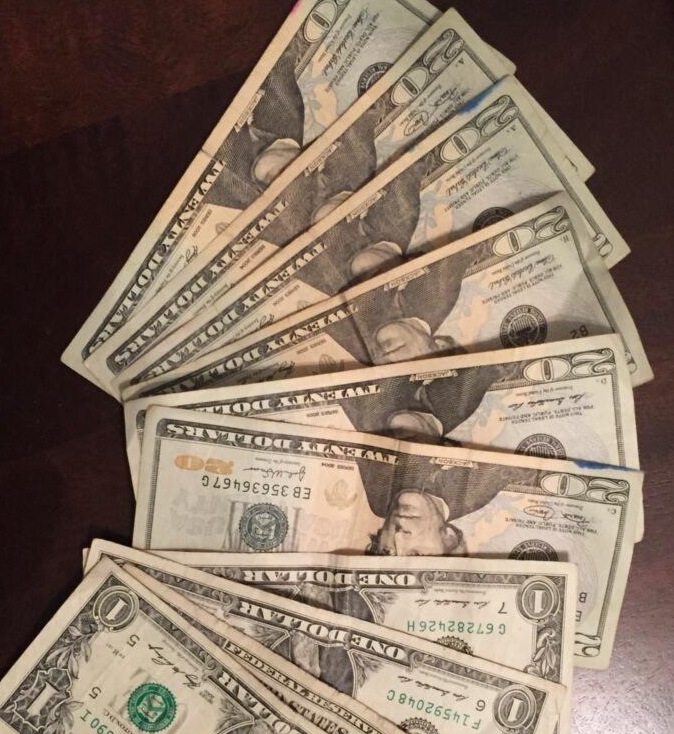
In the U.S., you can legally own a bazooka—but only if you register it as a “destructive device” with the ATF, pay a $200 tax per item (including each rocket), pass background checks, and navigate strict federal and often state restrictions.
I love how this article seems to treat it as a reasonable idea. ↩