Contact and the Strangeness of Brigitte Bardot
Brigitte Bardot, bad singing, curated rebellion, and what music taught me about France
Brigitte Bardot couldn’t sing, but France listened anyway.
I am not saying this is good music, but it is fascinating cultural relic.
I love exploring vintage things and France has an amazing archive. This is a country that does not erase its history. Well, it erases a lot of histories, but it keeps an incredible archive.
Some legacies stay bottled in time. Others keep going—shifting, warping, whether or not they should. And that’s Brigitte Bardot.
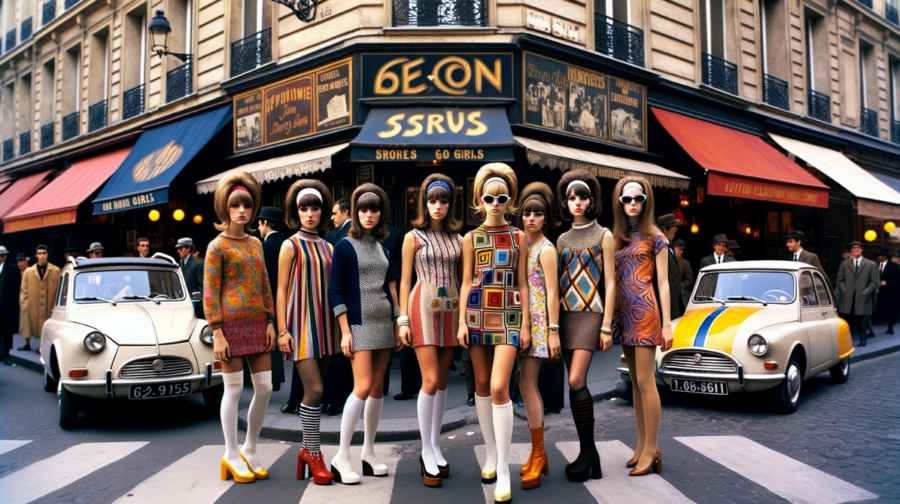
In the 1950s and 1960s, Vogue, Elle, and every major European fashion magazine chased her image. Designers dressed her to be seen in their clothing. She turned casual outfits into trends—long before Instagram or influencer culture.
Unlike Marilyn Monroe, Bardot’s fame wasn’t managed by a studio machine. She was messier, more self-directed. That gave her an edge that felt different.
Contact – Brigitte Bardot (1968)
Contact is one of those songs and videos that makes you ask: how the hell did this get made?
This, in my humble assessment, is not a good song.
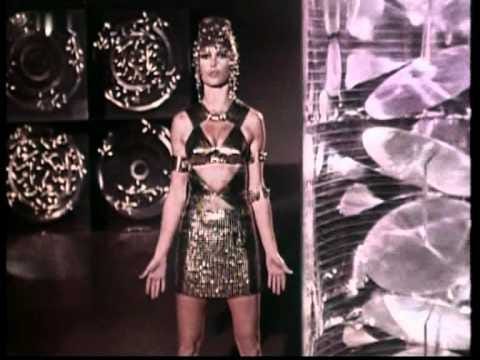
Released as the B-side to Harley Davidson, Contact was written by Serge Gainsbourg and performed by Bardot in 1968 as part of Le Show Bardot, a surreal prime-time TV special. In the video, she stands nearly motionless in a chrome set, surrounded by flickering lights. It’s cold, stylized, hypnotic—part sci-fi, part satire, part art installation. And part experiment, like they just wanted to see if they could actually get it on the air.
If you’ve never seen it, picture this: Bardot alone on a chrome-and-color set, wrapped in Paco Rabanne futurism, murmuring about meteorites and cosmic longing.
She barely moves while Gainsbourg’s lyrics spiral through space disasters. It’s pure 1960s pop theater—the kind that makes you stop and think, How the hell did this get made?
That’s Bardot. Never much of a singer. Half her acting was barely acting.
People love to credit Gainsbourg for all her weirdness, and yes, he was a big influence. But Bardot already had a taste for parody, for spectacle. She mocked her own image while feeding it.
Bardot wasn’t a great singer. Or a great actor.
Brigitte Bardot wasn’t just a bombshell—une vraie bombe sexuelle, as the French would say. Not just for the way she looked, but for the her impact.
She starred in 47 films, recorded over 60 songs, performed in musicals, and became one of the most photographed women in the world.
Her 1956 film And God Created Woman didn’t just make her a star—it redefined what a female lead could look like on screen: unapologetic, sensual, and untamable.
She worked with directors like Roger Vadim, Jean-Luc Godard, and Louis Malle. Fashion followed her. Politics reacted to her. She turned St-Tropez from a fishing town into a global fantasy.
And after all that, she walked away at 39—still famous, still iconic.
Or so people say.
[ed note: this piece kind of changes style after this, just like Bardot did. If you wanna keep it light, I’d suggest you stop reading, but Bardot’s legacy is problematic.
And by problematic, I mean she’s an asshole. ]
I’d love to hear what you think! Can you still manage to like performers despite their bullshit? Lemme know!
Not Exactly Peaking
Bardot was a global star. In the ’50s and ’60s, she was the French answer to Marilyn Monroe, only messier, wilder, more allergic to control. Monroe was tragic and polished. Bardot didn’t ask to be loved.
Of course, plenty of retellings make it sound like she walked away at her peak, retiring from public life in 1973 at age 39. But by then, most of her final films flopped.
She turned down major Hollywood roles—The Thomas Crown Affair, Belle du Seigneur, even a million-dollar offer with Marlon Brando.
Her popularity dipped, but her image stuck. She stepped away while she could still surprise people. Moved to Saint-Tropez and turned the sleepy fishing village into a global destination.
She took up animal rights—a noble cause, sure, but one that, paired with her later views, lands her in the same camp as anti-vaxxers and libertarian…whatevers.
Still Echoing, Unfortunately
She played at free. Lit the cigarette, said the thing, left the room. Her image helped export a certain idea of France: sensual, rebellious, sun-drenched—and maybe slightly unhinged.
But icons stay frozen in time: people don’t. Bardot kept talking.
And over the decades, she got louder with far-right/racist views. Said things—again and again—that got her fined for hate speech, like so many times it was clearly not an accident anymore.
Her legacy became tarnished. It’s hard to reconcile the barefoot rebel of the ’60s with who she became.
Liberté, for some
In that way, Bardot joins a sad little club—artists who aged into cranky, racist relatives. Or maybe always were, just got louder. John Cleese. Morrissey. The early work is still great, but harder to enjoy. I’d love to say I make a point of listening to The Smiths, but I don’t. There’s just a lot of other music.
And yet, Bardot is still around. Not front and center, but a faded face on vintage posters. A weird deep cut on a playlist.
The occasional headline when she says something stupid and hateful again.
Bardot won’t teach you French. But she might teach you something about France—the glamour, the grit, the contradictions. A country that fought the Nazis but still clung to its colonies. That celebrates liberté while wrestling with who exactly gets to claim it.
Maybe Bardot was just a product of her time: shaped by the postwar drift, the slow unraveling of empire, the myths a nation tells itself to hold together.
But those myths linger.
Bardot didn’t invent it, but she amplified it.
And because she was beautiful, and her image was everywhere, people listened.
Curated rebellion
The ’60s sold freedom, but also kept the old rules. It’s almost as if the 1960s really invented the marketing of freedom, not the actual thing.
And in France, this was especially true. The empire wasn’t ancient history—it was yesterday’s news. Algeria had only just wrested independence from France. But the old hierarchies lingered in the air.
Her image was curated, just differently than Marilyn Monroe’s but still operating within limits. Safe. Sexy, but not threatening. A performance of change, not the real thing.
Bardot could play the wild, liberated woman because she fit the mold: thin, white, blonde, desirable. Her freedom didn’t challenge the system—it reinforced it.
Rebellion was allowed, as long as it was easy on the eyes.
selective memory
Today’s reactionaries—the racist, faux-feminist (like Bardot), the nostalgia-drunk—still cling to the same kind of selective freedom. The kind that flatters power and calls itself resistance.
They’re still buying into the marketing myth cooked up in some agency in Paris or New York in the ’60s. A version of rebellion built for ads. It plugged into racist assumptions because that’s what sold—or what was allowed to sell.
In that way, Bardot is pure 1960s: an icon of a freedom that wasn’t for everyone. Thin, white, desirable, her rebellion fit the system it pretended to defy.
She didn’t invent it. But she became one of its prettier mascots.
And decades later, she still is.
And yet, even despite all of that, I find these videos to be just amazing cultural artifacts.
Harley Davidson Brigitte Bardot (1968)
Related posts
 Keith Christiansen
 Keith Christiansen
 Keith Christiansen