Charles Trenet and France's Start of Summer
How “La Mer,” a seaside anthem born inland, became the sound of French summertime
Summer is almost here in France. One gray weekend you’re bundled in a trench coat, and the next, café terraces are elbow-to-elbow with rosé drinkers. And then it’s as if everyone in France decided to join a band on the same weekend…
La Fête de la musique
Technically, summer begins on June 21, the solstice. But emotionally, it starts with La Fête de la Musique - a sprawling, buzzing chaos of amateur rock bands, roving DJs, accordionists, and choirs, all blaring from balconies, boulangeries, and parks.
This was described to me of casually by French friends, but is actually a BFD. Suddenly, every other person in the country is a musician.
There is music everywhere.
Quality might vary.
I was watching an aggressive karaoke artist set up downtown last night, nearly yelling his selections at the terraces at 1am. There’s a lot of questionably-placed karaoke in this part of the country.
Random acts of history, culture and music. Delivered.
This La Fête de la Musique coincides with Hellfest this year, possibly the worlds largest heavy metal festival - there’s a lot going on.
The sun lingers till nearly 11 p.m. Streets glow. Conversations shift toward les grandes vacances. It’s not just a seasonal marker—it’s a kind of psychic turning point. France collectively exhales, unwinds, dreams of sand and salt air.
La mer Charles Trenet (1946)
When the good days arrive
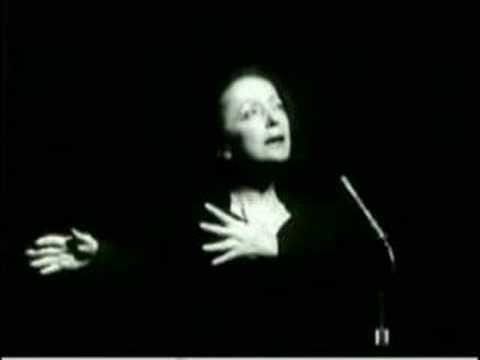
In 1933, a young Charles Trenet appeared in a short cabaret film, singing “Quand les beaux jours seront là” alongside his musical partner Johnny Hess. Set in a smoky club, the film captures a buoyant Paris before the war. It’ s simple, optimistic song that I think it charming and a bit of a rarity.
Share a little French summer with someone.
La Mer
In 1943, Trenet is on a train between Montpellier and Perpignan, looking at the Étang de Thau in German-occupied Vichy France. Trenet jotted some lines and thought it was too rococo (his words), and puts it aside.
When he recorded La Mer in 1946, it ttook off in post-war France in a country searching for optimism and recovery. It’s been recorded into over 4,000 versions and sold more than 70 million copies. In America, it became“Beyond the Sea” and Bobby Darin’s 1959 version hits #6 on the Billboard charts.
Vaudeville
Born in Narbonne in 1913, Charles Trenet was constanty working the way many vaudeville performers did: film set assistant, painter, poet, on stage any night he could with whatever paid the bills.
In a 1933 short film, Charles et Johnny—the musical duo of a young Charles Trenet and Swiss pianist Johnny Hess—are perfromed “Quand les beaux jours seront là” (“When the sunny days arrive”). This is one of his earliest appearances and captures the cabaret energy that defined his early career.
"Vaudeville" comes from "voix de ville", a type of satirical song from 15th century Normandy. These early “vaudevilles” were sung in the streets with satire and some kind of social commentary – that kind of show commentary goes way back.
By the 18th century, it meant light plays with songs mixed in. “Vaudeville” in the US became variety entertainment in the 19th century and those variety shows remained popular into the 1980s in one form or another.
Many performers wrote songs, performed multiple insturments and were constantly searching for work as shows never paid that much.
That work ethic defined Trenet’s career.
Trenet: “The Singing Fool”
Trenet wrote nearly 1,000 songs, starred in films, and received the Légion d’Honneur. From his early twenties, he was constantly writing, recording, performing, touring.
Many songs were light and quickly written. Some brilliant. Some forgettable. But it wasn’t perfection—it was presence. Staying in people’s ears: one hit, then another.
If you didn’t write fast, someone else would. Trenet never stopped writing, which might explain why he shelved his most famous song without a thought, even if the Bobby Darin version is more known today.
Got a memory tied to La Mer?
Or maybe a story about summer—here in France or anywhere it caught you off guard? I’d love to hear it. Tell me what summer sounds like to you.
Beyond the Sea Bobby Darin (1973 Live version)
Here is a 1970’s version of Beyond the Sea, with Darin drawing this out into a 10-minute lounge show act,.
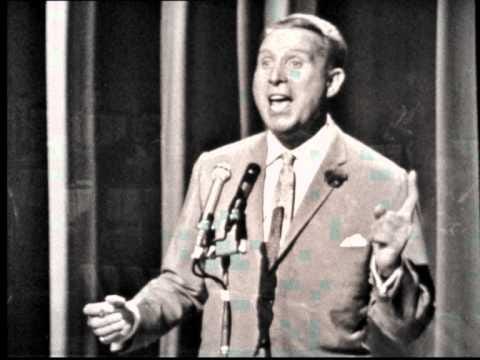
But this was also Darin – a kind of defining artist of that kind of act, perfomring on Dick Clark’s Saturday Night Beech‑Nut Show in 1960. The lounge show-style is a pretty direct descendant of vaudeville.
Hey!