Changing Default Options
Adapting to a new place doesn’t always mean starting over, it sometimes means waking up to what’s changed.
You don’t always realize something’s changed until you start tripping over what used to feel automatic. This one’s about that—what shifts, what doesn’t, and what it costs to pretend the defaults still make sense.
this piece is another one of those that is kind of discussions around a theme. I’d love to know what you think - it felt a little messy to me, quite honestly.
K
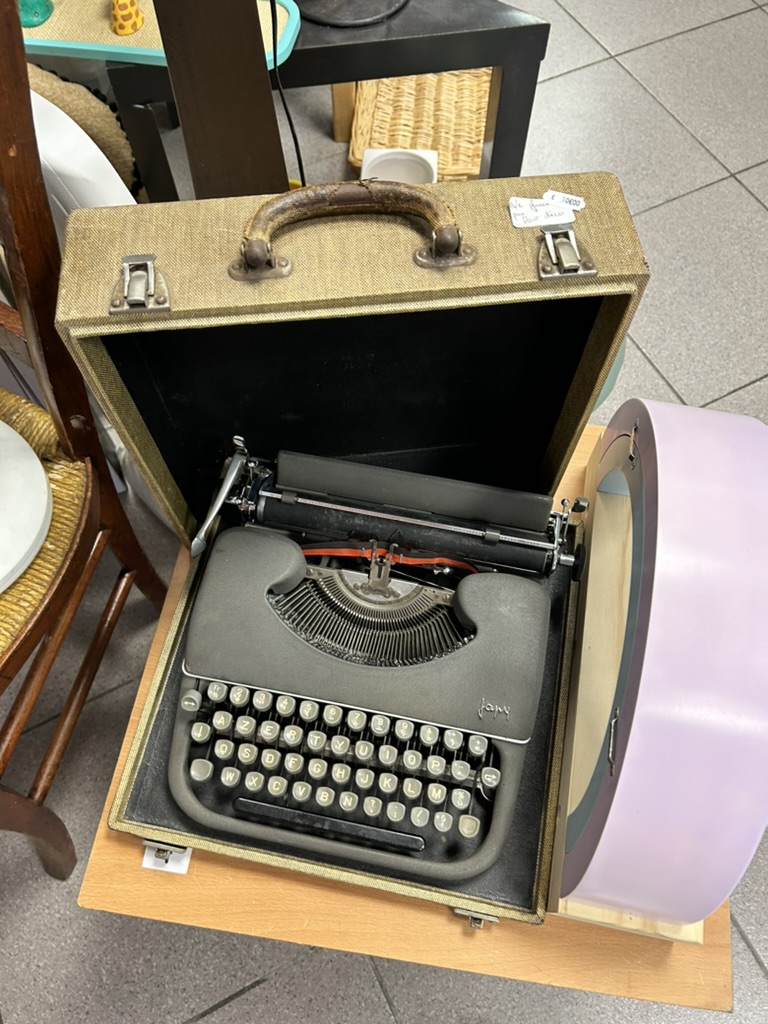
seen & unseen shifts
There are shifts that don’t announce themselves.
No big life event, no dramatic goodbye. Just a slow unraveling of what used to feel automatic—how you spend your mornings, what you expect from strangers, the way you move through your days without questioning the rules underneath them.
Sometimes, the biggest changes happen sideways. You think you’re just taking a new job, or figuring out how to ask for stamps in another language—but really, you’re learning to see differently. To notice the defaults you've inherited, and the ones you want to leave behind.
This piece moves through a few of those moments—some early, from my first week teaching in New York City schools, and others much later, while trying to find my footing in a new country.
It’s about building trust in both directions, being visible, becoming known, and staying awake to what happens when the new thing stops feeling temporary—and starts to become your life.
In the American political context—or in the mental recalibrations of expat life—“default” is a kind of warning: this isn’t necessarily what you wanted. It’s just what happened because nobody changed the setting.
And now, watching from the outside, the consequences of not changing course—or worse, doubling down—are impossible to ignore.
Subscribe or share it with someone who’s also trying to make sense of the noise.
Chaos is not a ladder
There’s a graph published by the IMF recently, showing trade policy uncertainty over time. It tracks along predictably for years, even through a few crises, starts getting wobbly between 2017 and 2020 and then in early 2025 it spikes—off the chart, literally.
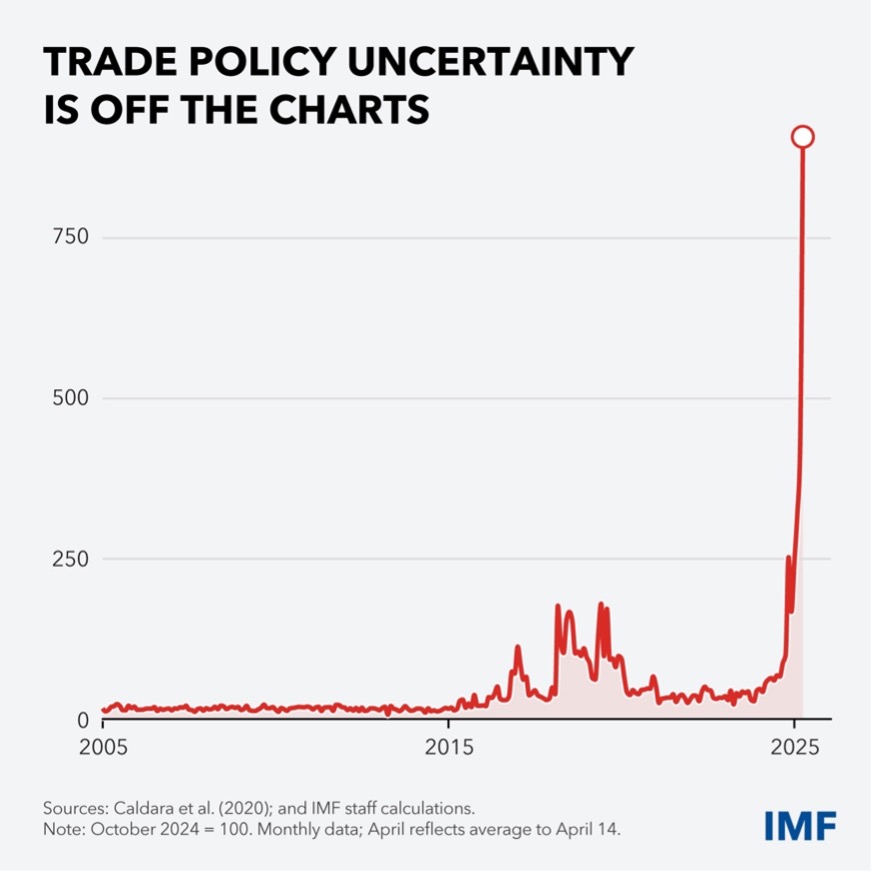
You could mistake it for a system failure if it weren’t so real.
That spike is more than a line—it’s a warning bell.
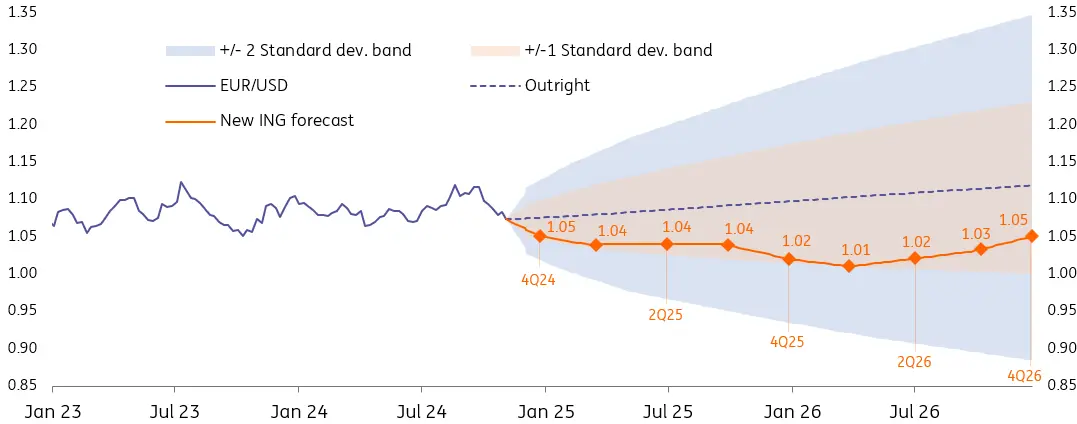
FX rates between the dollar and euro have been fluctuating wildly. Market stability has become a thing people reference in the past tense. I question the stability of some of these forecasts which seem to still rely on historical data.
chaos as a strategy
Even this estimates are based on old data.
There’s a new kind of volatility now, not just economic but existential: what happens when the rules of engagement—of diplomacy, trade, even decency—are rewritten on the fly?
This administration has taken a hard transactional turn: tariffs, enforcement, and strings-attached diplomacy.
The so-called “Liberation Day” tariffs dropped in April slapped massive duties on imports from 185 countries. It’s not just a shift in policy—it’s a dismantling of relationships. The idea seems to be: burn it all down, then call the ashes leverage.
Other countries will react to this. They have to. What that looks like exactly isn’t so sure, but as the US is causing problems for them, they won’t be looking to do the US any favors.
No matter the individual actions, the trend is almost always clear: when things are unsure, when they can’t be trusted, then value goes down. Or it is never built.
And yet even from here, even with all my pessimism about the next few years in the US, I’m still struck by the scale of it.
The speed. The audacity. You can almost admire the efficiency of the chaos, if you’re able to stomach what it’s costing.
But chaos is not a ladder for most of us.
Chaos is a lack of trust, a foundation of sand underneath a house on fire.
adaption is not surrender
What unsettles me most is the creeping normalization of it.
Because we adapt. We adjust. We calibrate our expectations downward, day by day, until dysfunction becomes default.
We all have plans – and I think all of our plans have been changed.
This should never have been possible, I like to think. The very idea of it has clearly taken years to build and these people have a plan.
And that’s where the moral danger lives—not in the overt spectacle, but in the quiet recalibration of what seems acceptable.
Adaption can be bad, too.
Tell them all about me.
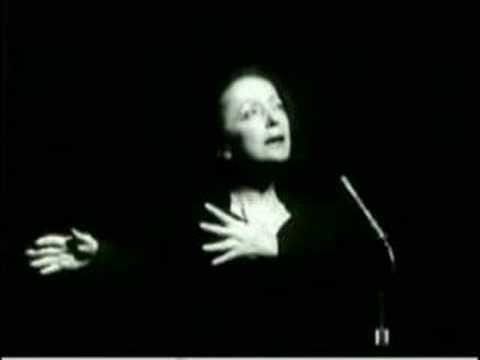
Le monde change de peau – Alain Souchon (1976)
Le monde change de peau is a laid-back piece that captures the feeling of living through a shift you didn’t ask for. With its steady groove and spoken-sung delivery, it reflects the disorientation of walking on the remnants of an old world while the new one forms beneath your feet.
“Le monde change de peau, et toi, tu marches encore sur l’ancienne.”
(The world is changing its skin, and you’re still walking on the old one.)
The new normals
I feel like it use to be different, that I adapted more quickly. In many ways, I know that I am adapting more slowly, but I also think I am understanding more deeply, the shifts are harder, but they are more stable in the process.
There are more connections to unplug and plug back in again. There are also just more connections to be made. More bridges to build, maybe better understanding, even.
I think…
My wife and I have this thing we say: the new normal. It’s not a mantra, not quite. Just something we use to name the moment when the weird thing stops feeling like an interruption and starts feeling like your life. It’s usually a good thing. But it always means: this is new. And it’ll take a while.
Just how long is anybody’s guess. Weeks. Months. A whole year, maybe.
The new normal was pandemic shorthand briefly, a kind of punchline for sourdough starters and elbow-bump greetings and learning how to unmute on Zoom.
But even after the masks came off, the phrase stuck around. Because it turns out we need a way to talk about what happens when something strange becomes familiar.
But also, because Normal had shifted. It was shifting, but we can look back now and maybe think of that as the time and the place.
Really though – that is the trouble with history: you never where you are in the story.
Resetting default options
When you uproot your life, start something unfamiliar, or suddenly develop a weird allergy to… something - it doesn’t feel like transformation at first. It just feels off.
As if you’re not calibrated quite right.
It’s too early to feel comfortable and too deep in to go back. So you fake your way through it. You build a little muscle memory.
You pretend until it becomes true.
Eventually, the interruption becomes rhythm. You build habits around it until the strange thing becomes the everyday thing.
I’ve lived through that enough times to know the pattern. Moving countries. Shifting languages. Learning new systems.
I remember it best from classrooms. There is a lot of starting fresh in teaching.
Brooklyn, then the Bronx. First as a new teacher with no idea what I was doing, then as an experienced one still thrown off balance by the borough code-switches, hallways, silences that landed differently, local subtle differences in the culture, even inside the same city.
Every time I started over, the surface facts looked familiar. Same job, same city, same clipboard. But the atmosphere had changed.
The rules underneath were new. the old defaults needed updating.
That takes time.
The work—the real work—was never about mastering the content. It was about making yourself legible. Trustworthy. Seen.
If you’ve had to recalibrate lately—or just noticed the defaults shifting around you—I’d be curious to hear what that’s looked like. Leave a comment if you’ve got a story, a moment, or even just a half-formed thought that’s been rattling around.
Okay – so then my draft also included a few bits of my life in teaching, which may or may not be so relevant to you, but they’re connected in my brain, so I’ll be adding them later.
K