Burnout, Bus Rides, and Figuring Out France
Exhaustion, adaptation, and why everything feels like a test when you’re somewhere new
Feeling Burnt Out This Week
It’s amazing how chaos becomes routine—always something to do, fix, or figure out. The move was a lot, deadlines were a lot, and the nonstop news from the U.S.? Also a lot. (Let me know if you want me to write about that—I’ve been avoiding it on purpose.)
I’m surprised I’ve managed to keep publishing on schedule, but routines help when everything else is being taken apart—and not quite put back together yet. So if this one feels a little scattered, that’s why.
Some weeks feel like the universe is stacking the deck, forcing everything to happen at once. In New York, Thursdays always seemed to be the night when everything had to happen. No idea why.
And then, suddenly, it stops. And you realize just how tired you are.
The past few weeks have been a blur—wrapping up loose ends, settling into the new place, wondering if we really need this much stuff. But yesterday, I returned our rental car, crossed the last few errands off my list, and finally felt done with the move.
Then I realized my brain was still in a fog—nothing major, just scattered.
For me, the first step in unwinding is recognizing I’ve been stressed. When it becomes normal for long enough, it’s hard to see it at all.
In any case, if these stories feel a bit less organized, it’s because I feel less organized writing them. But I also need the routine to clear my head—it’s a paradox.
The Noise, the Rush and the Quiet after
When I worked in restaurants, the mad, caffeine-fueled rush of the night would suddenly end. The place would go quiet. The shift ends, and the empty restaurant took on this strange, peaceful stillness. You'd walk to your car, head home—and then spend a few more hours trying to unwind enough to actually sleep.
Of course, some folks relied on more than just caffeine to power through the night, but even for those of us running purely on adrenaline and espresso, there was an unspoken agreement: after the frenzy, you had to wind down.
The occasional after-work drink—which, for many, wasn’t all that occasional—was as much about decompressing as it was about socializing.
One or two? Fine. But if you strung together weeks of that cycle, you’d start losing it without even realizing.
Everyone else would notice, of course—you just wouldn’t.
Teaching had a similar dynamic. Any single day spent in a building with 1,000 middle schoolers generates a special kind of exhaustion. The sheer sound of it—the endless chatter, the chairs scraping, the shouts across hallways. I didn’t mind it, not really. I think I even liked it, in a way.
But now that I don’t hear it every day, I notice how rare it is, that natural chaos.
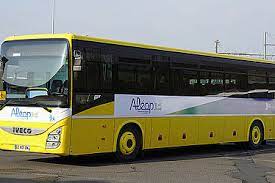
We’ve moved to a small town at the far end of Nantes’ transit system—the last stop is right at our block.
On a bus back from wrapping up errands at our old apartment, I hit school rush hour—kids piling onto public transit, filling the space with their usual noise. Our new place isn’t far, but it’s about an hour by bus, a ride that reminded me of New York, where students commute just as long to get home.
The kids were just being kids—loud, playful, animated. I tuned it out instinctively. A bus isn’t a classroom. Kids talk, they laugh. It’s not my problem.
Maybe it’s different in France, but from what I saw, they weren’t being rude, they weren’t being awful—they were just being kids.
No one else seemed to care, either.
Except one woman.
The Shushing Lady.
At first, I didn’t think I even heard what it was. It was just a gentle, deliberate “Chut.” A single, precise note of disapproval.
(And yes, even the French shush differently. It’s pronounced differently: dogs go ouaf ouaf, sheep go bêêê, cows go meuh, pigs go grouik grouik, roosters go cocorico, ducks go coin coin, horses go hiiii, frogs go croac croac, and so on.)
"Chut!"
Okay. Yeah. Someone is definitely shushing somebody. Who?
Then, another. And another.
"Chut!"
It sounded... strange.
I mean, how often do you actually hear someone shush another person? Outside of childhood, outside of cartoons? No wonder the kids ignored it—it felt oddly out of place, almost theatrical.

There was a woman at the front of the bus, seated. She was turned sideways, glaring over the children. She had taken off her sunglasses and put them on top of her head. This was getting serious, children.
She looked around expectantly, waiting for someone to reinforce her crusade. Her gaze landed on me.
She squinted.
I knew that look.
It was a teacher look.
There was something about the way she held herself, the way she observed the kids—not just hearing them but assessing them. She had to be a teacher. Or maybe Somebody’s Mom. Or both.
She gave me another look, this time more pointed.
Do something.
Shush them with me.
Shush the children!
I looked back, utterly unmoved. Nope. Pas mes moutons.
Not my monkeys, not my show.
Ce n’est pas mes oignons. I thought, returning her look with my telepathic subtext.
She huffed, looked away to the children then took it up a notch.
Targeted intervention.
“Toi!” She snapped her fingers and pointed to a seat near her. A 13-year-old boy, who had been mid-laugh, froze. His shoulders slumped as he dragged himself to the designated seat, looking back longingly at his friends.
Another kid laughed too loud.
“Toi aussi.” Same treatment. Same slumped shuffle.
They sat together, exchanging miserable glances. The universal silent language of kids everywhere: This is bullshit.
I agree, kids. I’m on your side. You’re refereeing in the wrong ballpark, lady.
The bus rattled on. The Shushing Lady, now satisfied, sat upright in righteous authority, perhaps seeking more infractions, but she had given up her only seating. The bus was full – would I be standing near a crowd of middle schoolers if I had any choice?
I had seen teachers do this in New York, but mostly on field trips, where there was still an official dynamic at play. But out here, in this context? This was rare. She must have thought I was also a teacher, just slacking on my civic duty.
A child laughed loudly near me.
Her eyes darted toward me once more.
Well? Aren’t you going to do something?
Nope.
The Nickel Standard
It's surprising how familiar things feel now. It took a while to get here.
Dropping off the car this time was easy—no stress. I walked through town, passed familiar spots, and sat at a café on a plaza I know well.
It wasn’t always like this. Errands like these used to be confusing, sometimes even embarrassing. I used to dreadreturning rental cars. Some French agencies scrutinize them with a level of detail that feels almost personal—like they’re offended the car was actually used. In my first months, a woman at the supermarket agency insisted my car had to be nickel—a word I didn’t yet understand, repeated so many times it only made things more confusing.
(Nickel = spotless, flawless, perfect. Shiny—like the metal, I suppose. Nickel-plated?)
At the time, I was baffled. Why was my perfectly fine, slightly dusty car unacceptable? What did they want from me? Did I need to detail it?
She repeated the word nickel with increasing annoyance as she looked over other part of the car. The word, which had little meaning for me, was starting to lose whatever meaning it had.
“Nickel!” She repeated, looking away from the car and to me, pointing, wielding the clipboard.
"Non, vous devez le laver. Je ne l’accepterai pas."
"No, you have to wash it. I will not accept this."
This whole review of the car and the experience went on for a while, well past my fledgling Cognitive Load for French at that time.
I’d love to say I handled it gracefully. At least I didn’t argue.
In reality, my shoulders slumped, and I trudged back to the car, resigned to my fate. Probably with the same defeated energy as the loud kids on the bus, being pulled aside by the Shushing Lady.
Fine.
I stepped outside, muttering a quiet curse to myself—just as the kids had sighed and rolled their eyes, but ultimately obeyed. Then, I pulled out my phone, looked up the word for car wash, then searched for the nearest lavage.
Super Cool Douche.
That had to be it.

And so, just like the kids reluctantly taking their seats, I followed orders, driving through an unfamiliar city to an unfamiliar place to clean a comically small car. A simple task, but, much like the bus ride, it turned into a whole other set of lessons.
And then, some poor car wash attendant took pity on me as I fumbled my way through what should have been a very straightforward process.
In theory, it was simple—get the tokens, wash the car, vacuum it, done.
But this was one of those overwhelmed times: they really did used to happen more frequently when we first got here. And so I found myself, was standing there, mildly overwhelmed, operating at about 30% cognitive capacity after an hours-long drive, a frantic search for a car wash, and the lingering, silent judgment of the Nickel Lady looming over me like every lecture that I had ever gotten from any teacher. Ever.
To be fair, the car wash guy seemed genuinely concerned.
I must have looked like someone who had never seen a self-service car wash before—which, to be clear, I had. Just not in French. Not while trying to decipher the specific rules of cleanliness that would satisfy a woman who had already declared my car unacceptable.
Still, with his help, I managed. Got my tokens, fed the machine, washed the car, vacuumed everything, wiped down the dashboard—all the while trying to predict whether it would be nickel enough for the Nickel Lady. I vacuumed that car so well, I probably wore out the carpet in places.
The stress of this was not insignificant. What if I missed a spot? What if the dust particles on the air vents were unacceptable? Would I be sent back again, like some kid who failed an assignment?
Eventually, though, I had done all I could. I navigated my way back to the rental agency, returned the car, and braced myself for inspection.
And suddenly, the Nickel Lady was... pleased.
She glanced over the car, nodded approvingly, and—miraculously—smiled.
"Nickel," she said, signing off on her clipboard, now the very picture of satisfaction.
It was one of those small but definitive moments. Somewhere along the way, over these last few years, I had stopped feeling like I was stumbling through someone else’s world.
Honestly, it was frustrating—not because of the Nickel Lady, but because of my own disorientation. Just another reminder of how much effort it takes to adapt, even to something as simple as returning a rental car. And that’s not the case with every place, but it is with some of them for sure, just as not every apartment goes through the inspection process.
The rules might still be overwhelming at times, but they’re no longer unfamiliar. I know them now—at least enough to move through the day without second-guessing every step. And that, in itself, takes an extraordinary amount of mental energy. Nobody tells you how exhausting it can be to simply learn how to exist somewhere new.
From Nice to Have → Need to Have
Living somewhere new isn’t just an adventure—it’s a constant lesson in adaptation. If you’ve ever felt like an outsider trying to decode an unspoken set of rules, you know how essential it is to have a guide, a roadmap, or at least a reminder that you’re not alone in figuring it out. That’s what I write about: the small, often ridiculous moments that turn a place from unfamiliar to home.
If this resonates with you, consider supporting the work—buy me a coffee here. It helps keep this going (and, occasionally, funds emergency car washes).
More importantly, stick around. Subscribe, share, and let me know what you need to make navigating this world a little easier. There’s always more to explore.