Breaking Point: From Teacher Burnout to a New Life Abroad
How Teaching in America Pushed Me to Leave Everything Behind and Start Over in Portugal, then France
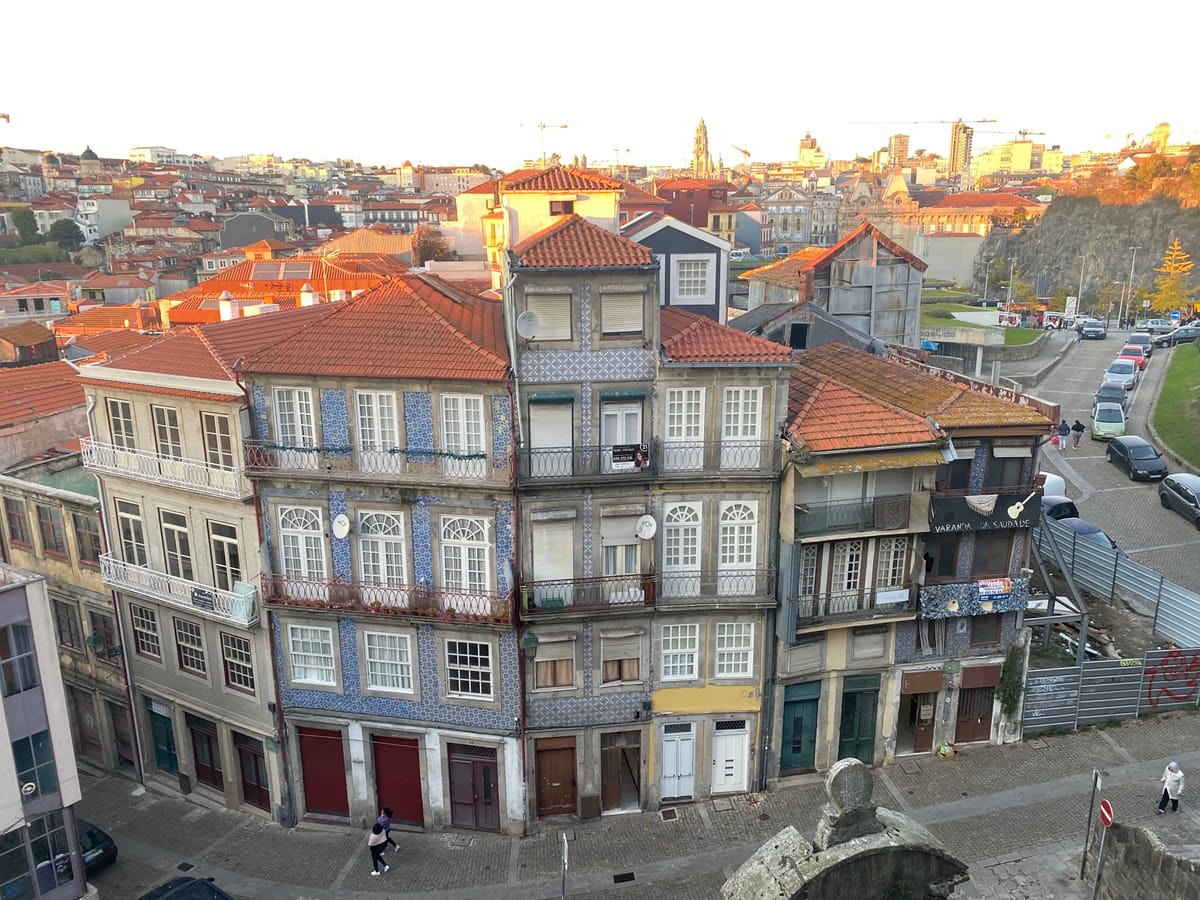
After years of teaching in America, I reached a breaking point that led me to leave everything behind and start over in Portugal, then France. Teaching burnout, relentless spreadsheets, and a flawed education system just pushed me OUT, but I wasn’t sure where to just yet. In this post, I share the challenges of moving abroad, navigating the chaos of selling a home in New York, and unexpected lessons learned along the way. Leaving the U.S. changed my life - and it’s still changing it.
The Hangover of it all…
Nothing is really settled yet. I’m still not sure if France is where we’ll wind up, but it’s where we are for now.
Three years ago, I had thought we’d be somewhere entirely different. And three years before that, I never thought we’d leave the U.S. at all. In the middle, it’s likely something has switched, something was taken away and I’m not sure what will take its place - but it’s better.
As I’ve said to a lot of people over there years, I may not know if I’ll be content with the next thing, but I know I am miserable here. No matter how much I was trying to make it work for nearly 20 years in education, it kept getting harder, more complicated and I needed more time to recover, if I ever did.
It’s difficult to recall exactly what I was thinking back then—what state of mind I was in. Thinking back about our move from America in 2021, I now know that I wasn’t able to make a lot of the decisions I might choose today. I didn’t even know what was available, what I would discover.
Every country is much different than you expect it to be, at least some of the time. Leaving the country changed so much for me, and these past few years have been filled with intense learning.
I’d love to help others avoid the headaches and stresses that we experienced, but I also know that I might not have had the necessary information at the time. I don’t think I fully understood what questions to ask. Even if I had, I’m not sure I would have been clear-headed enough to make better decisions.
Our goal was to leave by October 15, thinking that everything back home would be wrapped up and we’d start fresh in Portugal. Even then, I said that I would need at least 6 months to kind of get over my New York Hangover, as I was calling it. That made sense at the time, but it didn’t happen that way. It took a lot longer for a lot of different reasons. Selling a home is stressful for anyone, from what I’ve heard, but selling a home in New York felt like pure chaos—far beyond what I expected.
At one point, someone involved in the sale even had a breakdown and ended up in a mental care facility. I don’t think it was directly related, but it was definitely part of the chaos surrounding that period. With everything up in the air—selling, packing, letting go of so much—I don’t think I could have considered any other options at the time. Even the guy who had the breakdown became a footnote in the end. Not for him, obviously, but for us—well, we just had too much on our plate.
If I could change one thing, it would be to slow down.
We were in a frenzy—selling furniture, saying goodbye to friends, clearing out our lives. We ended up getting rid of 95 to 99% of everything we owned. These were things we had accumulated over the years, some of which we loved, though not all. It felt like deciding on our inheritances before we died, which, in a strange way, wasn’t the worst way to think about it.
In the middle of all of this, we were also quitting our jobs – our careers, really – and not at an ideal time, but I couldn’t have imagined it another way either.
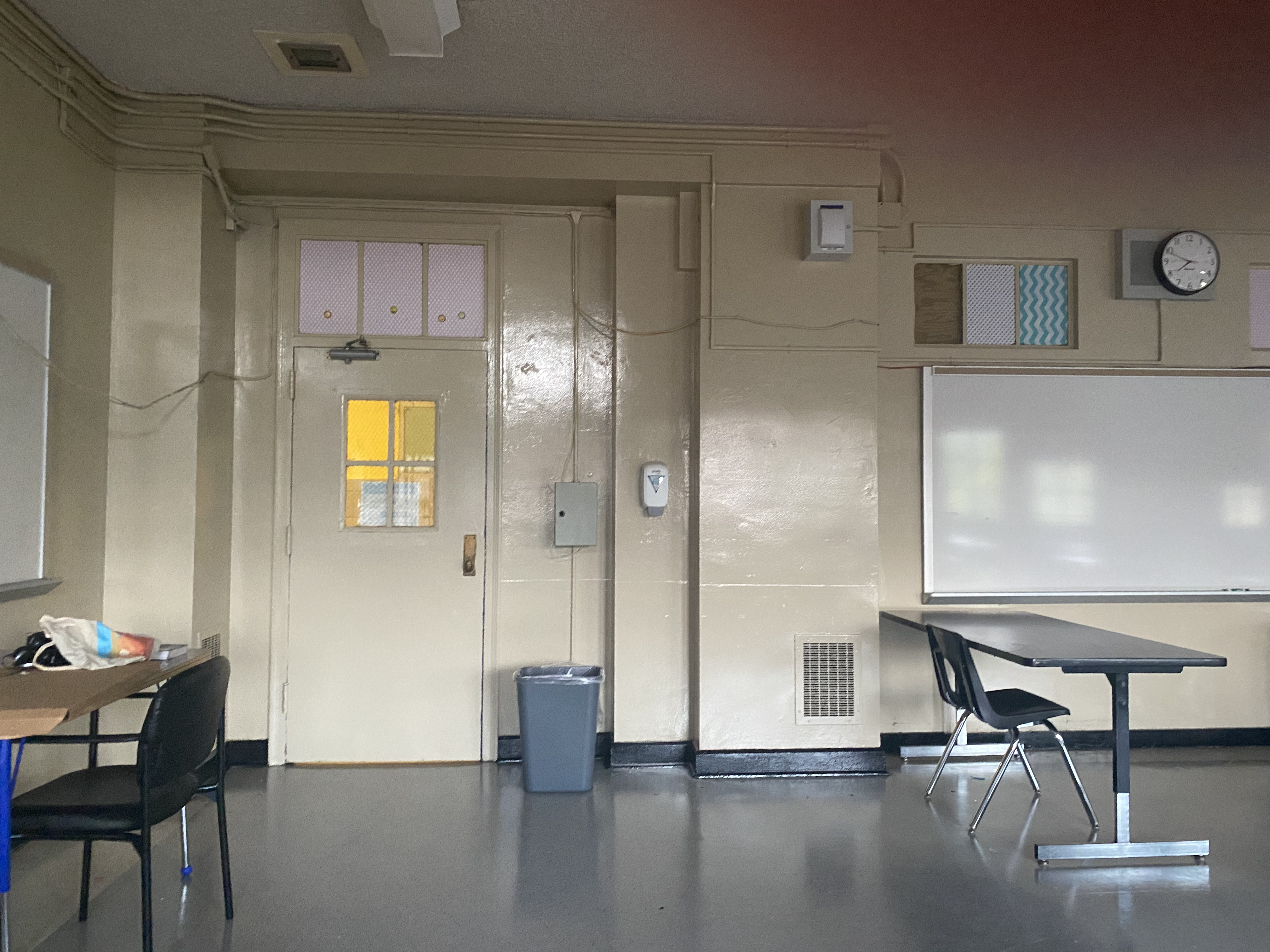
I was a teacher.
I still think of myself as a teacher, which is part of the reason I think I did so poorly in Education.
It might sound strange, but being inside the system meant I could see all of its flaws up close, and those flaws frustrated me deeply. I have heard about this from many, many teachers over the years. It’s a country-wide problem. For years, I felt like I was under constant assault. Of course, there were a lot of great memories as well and I think that I did really great work for many children for many years, but it was so much work to sustain that beyond just preparing, teaching, taking care of children.
Dealing with difficult adults is a big part of what makes Education such a hard business. The kids are alright - really. I’ve said it for years of teaching in Brooklyn and the Bronx – the overwhelming majority of kids are actually great and curious young people. It’s just true.
People outside the education might blame the system or even the teachers, but in truth, teachers are some of the most accountable people in society. We’re the ones who face the relentless questions of children, their struggles to understand the world we’ve handed them, and their attempts to make sense of it all.
Of course, parents share this responsibility, but it’s a fundamentally different relationship. These are their own children. Very few people are held accountable for someone else’s kids. Yet, there are always those who point fingers at the few flawed individuals in the profession—punching down on teachers seems to be a popular sport.

Society builds an education system, but it often uses the wrong metaphors—military, business, competition. These frameworks are not suited for teaching children. Education should be expansive, a process that fosters growth and exploration, not something to be commodified or confined. It feels almost cliché to have to say this, yet so many argue otherwise, and they argue loudly.
That said, outsiders rarely caused problems in my day-to-day work. Most of my experiences with the kids and their families were positive.
It was never the kids, even if they could be challenging at times. It was the adults. Always.
The data value of children
One of the last conversations I had with my last principal summed up a lot of the problems I’d experienced. She had just drilled me for ten minutes about a spreadsheet I hadn’t filled out correctly, yet never once asked about what I was actually teaching my students. She was clearly frustrated because beyond the usual Hello and Good Morning exchanges we might have had, the overwhelming amount of our conversations that I remember were about these kinds of spreadsheets.
After 15 years of these types of conversations with one principal or another, I had learned to gloss over them. As she went through her speech, explaining to me the information, pointing to specific boxes and then colorful charts, the importance of it, and so on.
What the spreadsheet actually required was that I have post-lockdown students, who were having trouble before Covid hit, to sit down on a laptop and take a kind of basic reading quiz for 4-6 or more teaching periods each week until it was done. At least, this is how long it was taking my slow readers to do it. Of course, they were not engaged in the task, glossed over, and several would just sit at the screen and stare at it for 43 minutes at a time, with bathroom breaks. I had read so many of these tests - there was a database of hundreds that switched and adjusted depending on how students performed. They all had one thing in common – they were boring as hell.
What kid wanted to wake up in the morning to go to school and stare at a reading tests for 90 minutes, which could be an eternity for young kids in those conditions.
We were doing one every few weeks, it seemed. I can’t remember a month in my last year that wasn’t punctuated by some kind of bubble-filling test for the kids and a spreadsheet-filling assessment for me.
These kids were traumatized and it’s worth saying, the school was not able deal the issues that children had in February 2020. Then the lockdowns made everything more difficult for the same reasons that were hard for most people, but more so for kids who had no coping mechanisms, who didn’t understand what was happening, but were taught to fear it.
By February of the following year, when we were trying to bring students back into the classroom, to get them used to being around other people in a learning environment, trying to get them excited about reading when they were so far out of practice, to subject them to these tests seemed like abuse.
We knew the levels of many of our students: they were down. In lockdowns, many of my kids had slipped a year behind or more – and were behind already. The tests we gave them the last month showed that - the ones from the month before that showed the same. They were taking tests; they were not reading.
The moment I knew
It was like no one knew what to do anymore. But something really should have changed and when given the chance to stop, to reassess it all – we stopped the WORLD for while there – my bosses and their bosses decided that the best thing to do was to get back to it all like nothing had happened. And I am still not sure that it’s been dealt with.
I had been in so many disciplinary meetings about spreadsheets during my career. To be fair, I either didn’t fill them out or didn’t do it right most of the time. It had to be frustrating for my bosses. Somebody was telling them they needed those sheets as well.
My principal continued, I was somewhere away in my mind, making sure to make eye contact as I listened, probably nodding along, but I was miles away. I remember that she had put a small lava lamp in her office, for some reason. A gift from her son, I think. It moved in slow blobby colors as she spoke about… I think she was talking about the spreadsheets still.
Yes, she was still talking about the importance of the spreadsheet. The motivation. They needed the data. I’m the only person stopping them from getting all the data they needed (I wasn’t the only one, I knew that). The lava lamp glooped slowly from purple to magenta to orange to blue.
Then my assistant principal chimed in, offering me further solutions for my reporting issues (more boxes! More charts!), and I tried to listen. I think this was a practiced and prepared discussion. They had a meeting about this meeting, it was clear.
Then something inside me snapped – not even snapped, but just kind of didn’t connect the way it used to, like when you can’t quite line up a ziplock bag the way it’s supposed to. Yellow and blue were not making green. I couldn’t get the cork back into the bottle.
“This isn’t what I signed up for,” I blurted out. It wasn’t a phrase I’d rehearsed or even thought much about before, but in that moment, it was all I could say. I tried to explain myself, but I was also realizing that my teaching career was over. We had been planning our move, though we hadn’t mentioned it at work—or even to most of our friends and family. But in that instant, I knew it was time to leave it all behind: the career I’d built for nearly 20 years, the home we loved, the country we grew up in.
They both said it at the same time, “’Not what you signed up for’?? What does that mean?”
They hadn’t rehearsed that part. Neither had I, but it was something I knew.
It was time to go.