Escoffier: The General of the Kitchen
From Humble Beginnings to Militarizing the Modern Kitchen with Mother Sauces and Peach Melba
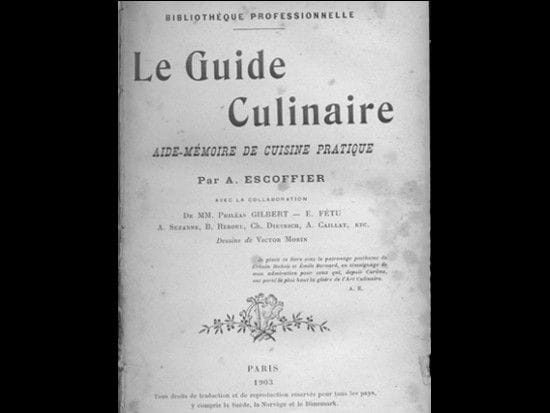
Auguste Escoffier is often called the father of modern cooking. He systematized French cuisine, created the brigade system, and laid the foundation for fine dining as we know it today. It’s hard to imagine what kitchens looked like before him—chaotic, inconsistent, and often improvisational.
TL;DR: Escoffier brought order to chaos with the brigade system, codified the mother sauces, and turned Peach Melba into both a swan-carved spectacle and a timeless dessert.
commis chef
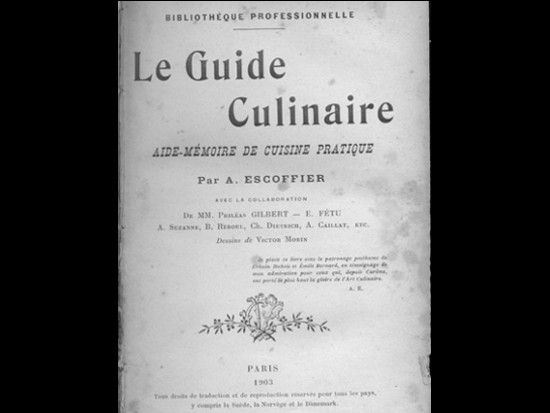
Escoffier started young, working in his uncle’s trattoria in Nice at thirteen. From there, he moved on to some of the grandest hotels and restaurants in Paris, Monte Carlo, and London, including the Petit Moulin Rouge and the Savoy.
After a stint as a military cook under Napoleon III, he partnered with César Ritz to take control of the Savoy Hotel in London. Together they turned it into a symbol of luxury and precision, a place where the elite came to dine and be dazzled.
garde manger
Escoffier’s true legacy, though, was order. He introduced the brigade system, dividing the kitchen into specialized stations—sauces, roasting, fish, pastry—each with a clear chain of command.
It was literally militarizing fine dining.
On one hand, it gave kitchens consistency and efficiency. On the other, it also cemented a rigid, top-down culture that could easily slip into abuse, something kitchens still wrestle with today. (Carmy wants a French brigade, indeed.)
Judy McMahon wrote a fine piece about the many problems of militaristic kitchens and the damaging environments they created.

sous
Then there were the recipes. Escoffier codified the five “mother sauces”—Béchamel, Velouté, Espagnole, Tomato, and Hollandaise—which became the building blocks for thousands of variations.
His goal was uniformity: no matter the day or the chef, the sauce should taste the same. It sounds obvious now, but in his time it was a radical shift.
And he wasn’t afraid of spectacle. His most famous creation, Peach Melba, was made to honor the Australian soprano Nellie Melba.
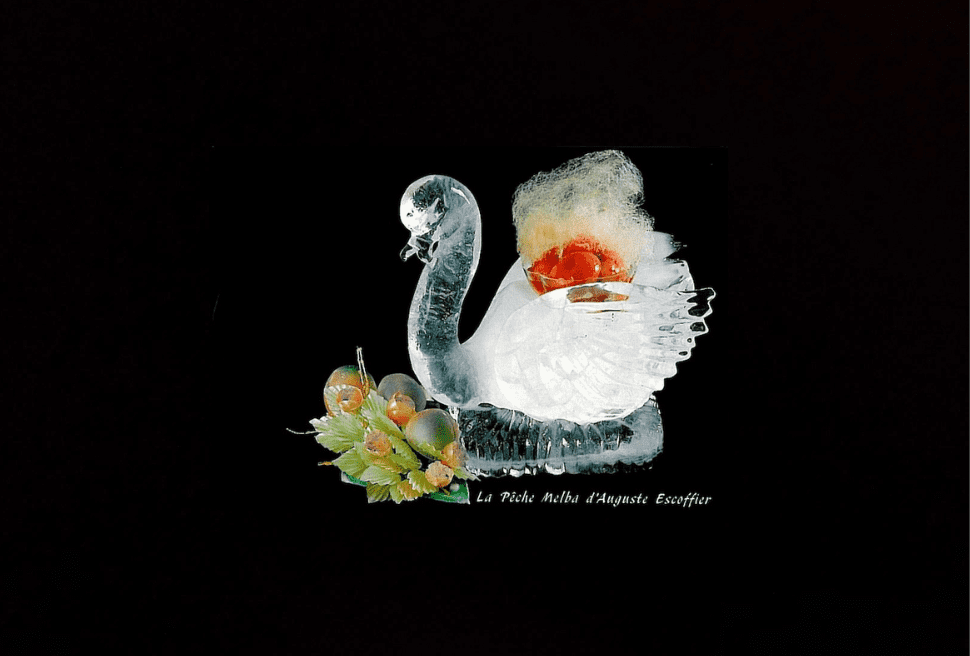
The dessert paired poached peaches with vanilla ice cream and raspberry purée—simple on the surface, but at the Savoy, it also arrived nestled in a swan-shaped ice sculpture, a nod to her role in Wagner’s Lohengrin.
At the turn of the century, it was a showpiece for the world’s most privileged diners. Today, we make it with canned peaches and supermarket ice cream, a far cry from its origins but still a nod to Escoffier’s genius for elegance through simplicity.
chef de cuisine
Escoffier left behind more than recipes.
He left a system— admired and contested—that still defines how we think of fine dining. To this day, when you walk into a kitchen that runs like a machine, with stations firing in rhythm, you’re walking through Escoffier’s blueprint.
Escoffier started his culinary career at thirteen, working in his uncle's trattoria in Nice. He discovered his passion for cooking early on and soon moved to work in some of the best hotels and restaurants in Paris, Monte Carlo and London, including the Petit Moulin Rouge and the Savoy.
After a brief stint serving as a military cook during the reign of Napoleon III, he and César Ritz took control of the Savoy Hotel in London, considered the most prestigious and beautiful hotel of its time. Their partnership helped elevate the hotel’s reputation as a beacon of luxury and fine dining.
Peach Melba Wasn’t So Simple in 1892
An amazing amount of things have changed since then: canning, freezing, heck - plastic. What looks like a simple trio—peaches, ice cream, raspberry sauce—was anything but simple in Escoffier’s day:
Peaches were seasonal luxuries, grown in hothouses and carefully selected for perfect ripeness.
Poaching had to be exact, softening the fruit without letting it mush.
Ice cream was hand-churned, packed in ice and salt, requiring constant work to get it smooth.
Raspberries were strained by hand, multiple times, to remove every seed.
The finale was theatrical—served in a carved ice swan1, referencing Nellie Melba’s role in Wagner’s Lohengrin.
So while we toss together canned peaches and supermarket ice cream today, the original Peach Melba was a showcase of precision, luxury, and spectacle.
I grew up with a very different version.
Recipe: Peach Melba (Modern Shortcut)
- Dole canned peach halves
- Breyer’s Natural Vanilla Ice Cream
- Smucker’s Seedless Raspberry Jam
- Fresh raspberries & mint (optional)
Drain the peaches or fish them out of the can. Warm ¼ cup raspberry jam until pourable. In a bowl (or a big coffee cup), place one peach half with a scoop of vanilla ice cream. Drizzle with warm jam and garnish with raspberries and mint.
Tip: Escoffier served his in an ice swan. I use a big mug, a no to the fact that I have more coffee mugs than ice swans in my home.
Musical accompaniment
Lohengrin - Elsa's dream (Wagner) Nellie Melba (1910)
In 1892, Escoffier honored soprano Nellie Melba—then dazzling Paris with Wagner’s Lohengrin—creating the Peach Melba in her name. Her 1910 recording of Elsa’s Dream preserves the same ethereal voice that once inspired a dessert likely more famous than the diva herself. Beloved in Europe, America, and her native Australia, she was a star at Covent Garden in London, the Paris Opéra, and the Metropolitan Opera in New York, becoming one of the first opera singers to achieve true international celebrity.
Related posts
 Keith Christiansen
 Keith Christiansen
At the time, blocks of ice were shipped in from places like Norway or New England and stored in vast icehouses, even though the Savoy had its own ice plant by the 1890s - it was still new and incredibly rare. Carving frozen birds was part of the spectacle, making it even more ostentatious. ↩