An Obituary for the Living
What One Man Taught Me About Working, Connection, and Showing Up
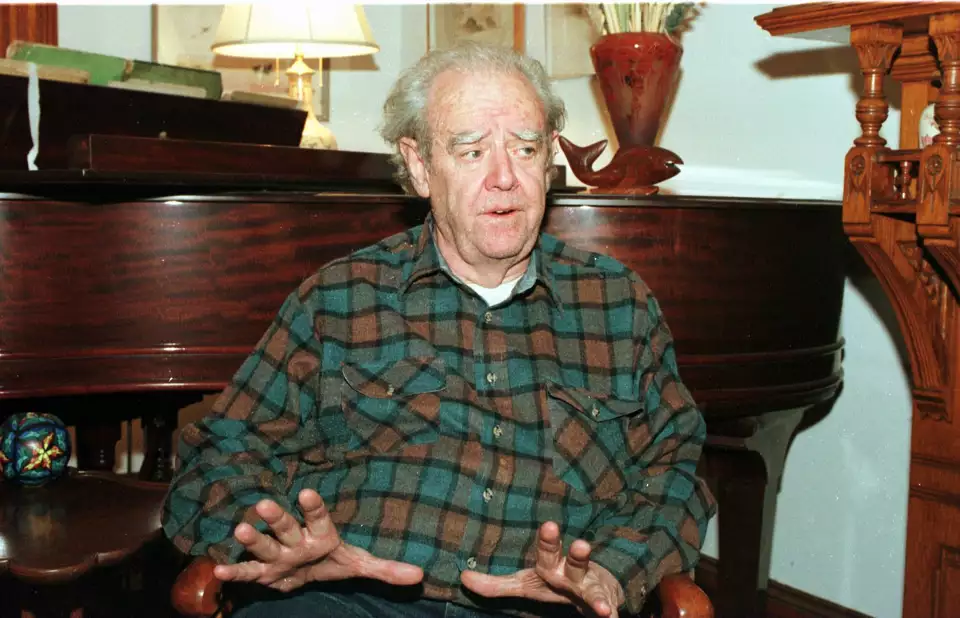
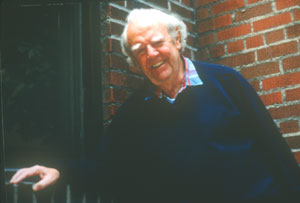
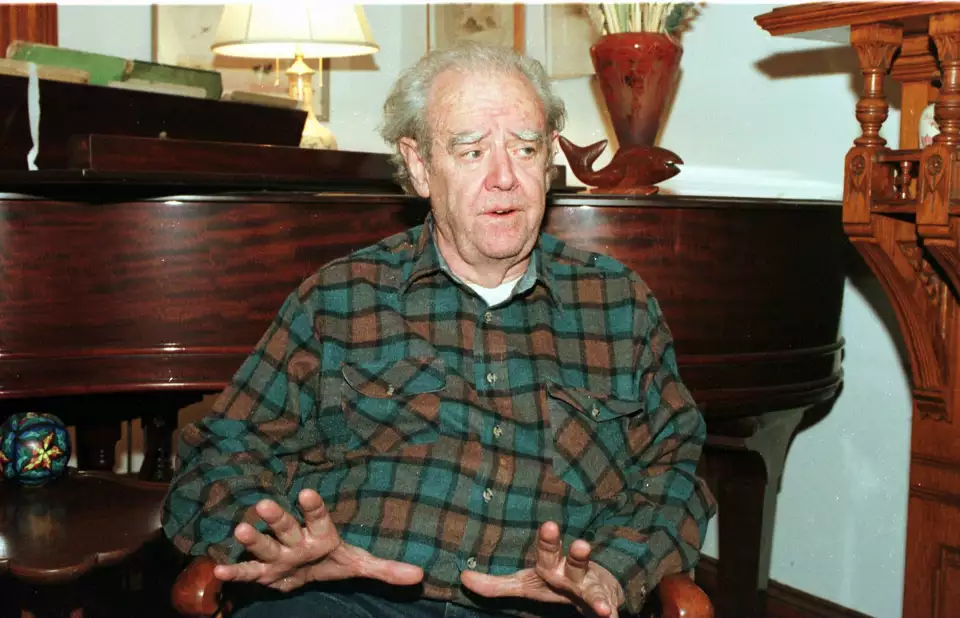
Living in France has taught me a lot about distance and connection. Even far from familiar faces and places, I’ve found that some people stay with you no matter how far away they are or how long it’s been since you last spoke. Harry Staley, a professor, poet, and James Joyce scholar, is one of those people.
Though Harry passed away in 2018 at 94, I often find myself thinking of him and lessons he left behind, even though we hadn’t spoken in 20 years. Sometimes connections deepen long after daily interactions fade. Living far from many people I know and navigating challenges here in France, it’s no surprise that my thoughts return to one of the most influential men in my life.
We often think we could do more, maybe be more a part of others’ lives. At the same time, we are, no matter how far or how distant it may sometimes seem.
We learn our stories from others.
Storytelling is at the heart of how we make sense of the world. From cultural myths to the narratives we tell about our own childhoods or what just happened yesterday, stories give shape to our experience.
[It’s also one of the reasons I like to include dialogues in some of these stories.]
But stories, like memories, are slippery things. They do hold truths, but they shift, reframed by what we’ve lived and learned. It’s often only years later that I recognize how deeply someone or something has shaped me. Memory is funny that way.
There’s a scene in Citizen Kane where Bernstein talks about seeing a woman on a ferry, and even though he saw her for only a moment years before, he’s thought about her every week since. It’s said better in the movie:
It’s hard to predict what the mind will hold onto. You can look one way and see beauty, another and see filth - without moving your feet.
Harry Staley was one of those people: a professor, poet, and James Joyce scholar known for his wit, intellect, and kindness. I could ask for no better memory myself.
Why Harry Is on My Mind
Though we hadn’t spoken in years, I often think of Harry.
He was the first person to make James Joyce - and much of literature - feel accessible, even as his teaching pushed me to wrestle with the complexity of the text and myself.
Now we live in France, and far from so many connections, but I still feel tethered to many people, even if we don’t talk often. Harry was the kind of person who reminds you it’s good to just know that some people like him exist, even if they are not right there in front of you.
…and I also recently found out that among other places, Harry had taught at the American University in Paris. an American professor teaching an Irish writer in France. This makes sense for him.
I’ve been fortunate to know a few teachers like Harry - rare men with sharp intellects, incredible humor, and a kindness that showed me that masculinity was both sensitive and strong. Harry’s intelligence went hand in hand with his kindness.
Of course, I’ve also had many brilliant female mentors, patient professors who guided me as I wrestled with ideas and philosophies they had spent lifetimes mastering. But still, Harry stood apart.
Exceedingly average
In the fall of 1994, Harry had just retired from the University at Albany—or, rather, officially retired. Retirement for him simply meant fewer classes.
A teacher I respected urged me to seek him out: “Never mind your major: whatever he’s teaching is worth learning.”
Harry’s classes were legendary and filled up within minutes of registration. I missed my shot initially—work, forgetfulness, some excuse—but somehow I maneuvered my way in.
I can’t remember the exact details of our first meeting, but the cringeworthy embarrassment still lingers in my body.
I sought him out in the offices of the English Department, a strange tower of a building that gave you a sense of going further underground the higher that you went.
It was the first time I had ever gone to see one of my teachers outside of class. I tried to be invisible, to say enough for participation credit and disappear. I was an average student – or less than average. Exceedingly mediocre?
But I tried to impress Harry to get him to let me into his class.
I lied to him.
I got caught.
Then I lied again.
He seemed to think it was funny.
I mentioned Cliff Notes—Harry brought it up at least a dozen times later, gleefully making me relive the moment. Somehow, he managed to be kind about it, even though it was at my expense.
I like to think that he “saw something in me,” but in truth, Harry was like that with everyone - gracious, curious, while endlessly entertained and charmed by people.
Learn to lie better
Harry didn’t have much of an office.
A few chairs wedged against a giant metal desk under dim fluorescent lighting, books piled high and looming: it smelled of old coffee, stale air and claustrophobia. And yet Harry made the place feel welcoming, though I was glad that he kept the door open.
With his “retirement,” they’d reassigned him. He didn’t seem to mind.
Harry: “So, you’ve read Joyce! Brilliant! Dubliners?”
His voice had an Irish lilt even though he had lived in and around Albany for nearly 50 years and was born in Brooklyn. He didn’t sound like either of those places.
Me: “Yes! Yes I have! I enjoyed it!”
Harry: “Dubliners…?”
Me: “Enjoyed!”
Harry: “Did you take Dr. [Somebody]’s class?”
Me: “Yes!”
I later found out that only one other teacher at the school taught Joyce and she hadn’t done it in 5 years....
Me: “Yes! Well… I read it in a survey course.”
…and she had never taught it in a survey course.
Me: “I failed that class…”
This was true: I had failed a few survey courses by that point.
Me: “...but I mean, not because of Dubliners. Dubliners was great! Great stuff. It was other stuff. Totally unrelated.”
Harry: “Unrelated. Of course. So, you’ve read it?”
Me: “Well, parts? Then the Cliff Notes to, uh, get a better grasp. Paralysis, epiphanies, snow falling—very symbolic.”
Harry : “Paralysis and snow. Fascinating. What do they have to do with each other? In the context of the story, of course.”
Me: “Well, they’re both, uh… cold? And maybe unifying? Like, the snow falls on everyone, and paralysis is this universal condition. Like… Catholicism?”
Harry: “Catholicism is a universal condition?”
Me: “Maybe? Maybe it is in Ireland?”
Harry: “Not bad. Not correct, but not bad. Are you a Catholic?”
Me: “No, but… can you even ask me that? Is that allowed?”
Harry: “In this office? Absolutely. And it matters. Joyce’s Dublin is steeped in Catholic guilt and rituals. Without it, you’re reading blind—which, by the way, seems to be your specialty. ‘Cliff Notes,’ you said?”
It’s CliffS Notes. I missed the ‘s’ too. He noticed, of course.
Me: “I flipped through them in a bookstore! I don’t own them!”
Harry: “That’s not better. Let’s make this simple: what’s the first story in Dubliners?”
Me: “Uh, the one with the boy? The priest and the… chalice?”
Harry (he did seem to be enjoying this): “The story is ‘The Sisters.’ You haven’t read it, have you?”
Me: “…No. But I will! All of them! It! Can I take your class?”
Harry (laughing): “Lying and overpromising. Very Joycean. Fine. You’re in. But read it - no shortcuts, or I’ll know and I’ll fail you.”
And just like that, I was in.
Harry moved on to his next appointment, his laughter echoed in the narrow halls as I left, his parting words: “…for God’s sake, leave the ‘Cliff Notes’ at home. Think for yourself—or at least learn to lie better.”
Reading Joyce, but studying Harry
Harry didn’t lecture; he provoked. He wove humor into his teaching, drawing connections between life and the text, always returning to Joyce. He read Ulysses like a short poem, understood it on a level I could barely access, yet was still listening for other ideas.
Ninety minutes with Harry felt like seconds. It was never enough time.
Almost all of his students in a packed classroom described Harry the same way: he stayed with you. You thought about him and his class when you didn’t have to.
Years after his passing in 2018, a year after the death of his lifelong companion and equally brilliant wife, Helen, I find myself returning to his lessons. Not just the lectures, but the offhand comments—the throwaway lines that revealed how deeply he’d considered so many things that were all brand new to me at the time.
During a meeting, he brought up Cliffs Notes again. I had a backpack full of books and one of them was a pretty, embossed collection unlike the others: Harry asked to look at it. It was a ‘Condensed Book,’ a term I can’t believe helped to sell them.
“Reader’s Digest Condensed Books are anti-democratic,” he said, letting the words settle. “They decide for you. They tell you what to think.”
Reader’s Digest Condensed Books were shortened versions of popular novels, often four or five in each volume. For Harry, it wasn’t just about critiquing abridged books—it was about the principle. Wrestling with the hard parts, he believed, was the whole point.
Growth, he believed, comes from discomfort, from grappling with complexity and ambiguity.
“Because life is hard,” he said. “And literature, at its best, prepares you for that. Would you rather practice with a book or with your own mistakes?”
Effort builds bridges
The same year I graduated high school, Harry had been invited to lecture about James Joyce at Xiamen University in China.
Harry decided his opening lecture would be in his students’ language. Not because he spoke it, but because it felt like the right thing to do.
“I learned it phonetically,” he admitted later, with a grin that made it hard to tell if he was joking. “It was like singing a very long, very difficult song, but without knowing most of the words.”
The lecture was over an hour long. He had to take questions afterwards with atranslator, but the lecture itself was reportedly flawless. Harry admitted that he barely grasped what he’d said, but the effort spoke volumes.
That captured Harry’s ethos: effort matters more than perfection. The act of trying builds the bridge - between people, ideas, or even cultures - not the results. And the way that you try to do it matters as well. Harry was considering his students.
It’s worth repeating, though: there were few people who knew his subject better, if any.
It’s a lesson I’ve held onto here in France, where my attempts at speaking French often felt as clumsy and phonetically awkward as Harry’s lecture. Even if I know what I am trying to say, I am not 100% sure that it’s being delivered.
But the willingness to try - however imperfectly, helps to create that connection.
His Chinese students recognized it instantly and the lecture also reflected his approach to literature. He didn’t demand mastery of Joyce’s dense prose; he encouraged you to get lost in it, to stumble.
“You don’t have to understand everything,” he once told me. “Just keep going. Understanding will find you.”
It wasn’t about perfection. It was about showing up, trying, and letting the journey do its work. And so, I keep learning from Harry still.
So thank you again, Harry.
I promise, I’ll think of you soon.