Slow and Popular Food Options
Snail racing in 2 countries: In England, they race for sport. In France, they race for survival—and sometimes end up as dinner.
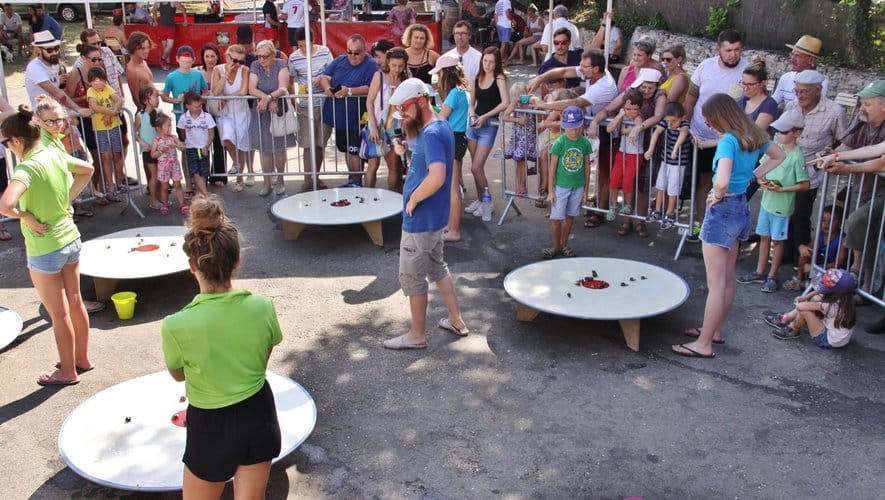
We’re in the UK this month and I was disappointed to learn we’d just missed the World Snail Racing Championships in July. But there’s still time to catch the original - in France, where this strange tradition began and the snails are racing for their very lives.
In England, nobody eats the losers; in France, eating them is the whole point.
Somehow, this says a lot about both places.
[ed note: warning - this entry kind of rambles all over the place…]
TL;DR – Snail racing is weird, not wildly popular, but yes, it’s real—and here’s a whole article about it.
I meant to just write about racing snails, but I can’t separate that from the fact that some countries eat way more snails than others. So then there’s a detour through the culinary history of southern France and Catalonia, before we get to the recipe (and a song worth hearing).
France and the UK both host a World Snail Racing Championship—one inspired by the other. In France, the race ends with an escargolade: a rich Catalan-style stew of tomatoes, ham, wine, and herbs. The winner lives. In the UK, it’s glory only. No one gets eaten. Supposedly.
This is the Championnat du Monde de Course d’Escargots.
Congham, UK’s Tournament
In the 1960s, a British visitor to Lagardère took the idea home and in 1970, the UK’s World Snail Racing Championships began, held annually in Congham, Norfolk—on the third Saturday of July. Like their French counterparts, about 350 people attend the races each year.
The UK one definitely gets more press coverage.
Congham’s races also start at the center of a damp cloth circle and race 13 inches to the edge. Their shells are sometimes decorated with stripes or names like Snailey Cyrus or Bilbo Sluggins, the current champion (in the video, the winner explains their strategy).
The French tend not to name their competitors. You don’t name your food.
The UK version, unlike the French one, doesn’t eat the losers.
An interview with French competitors at Congham.
“Traditions”
French snail racing began over 40 years ago in the village of Lagardère.
Every August, this tiny town of 70 swells to over 350, drawn by the double allure of racing snails and eating them.
Still, it’s worth asking what we really mean by tradition. Each race pulls in about 350 spectators—a delightful crowd, sure, but hardly a groundswell.
Compare that to Spain1, where 200,000 people gather in Lleida, northwest of Barcelona, for the largest snail-eating festival in the world: l’Aplec del Caragol. That’s not a typo—caragol, not escargot2. Catalan, not French.
Spain eats nearly twice as many snails as France each year. Yet we’ve somehow handed the escargot crown to the French. Blame the branding. Escargot sounds French because it is—or became that way.
The word came into French via Old Occitan (escaragol) and from territories that predate our current maps of the region.
Snail consumption is highest not in Paris or Lyon, but in the areas that straddle the French-Spanish border. Catalonia on one side. Occitanie on the other. Two cultures that share more with each other than with their respective capitals: linguistically, historically, even gastronomically.
This is the real heartland of snail enthusiasm.
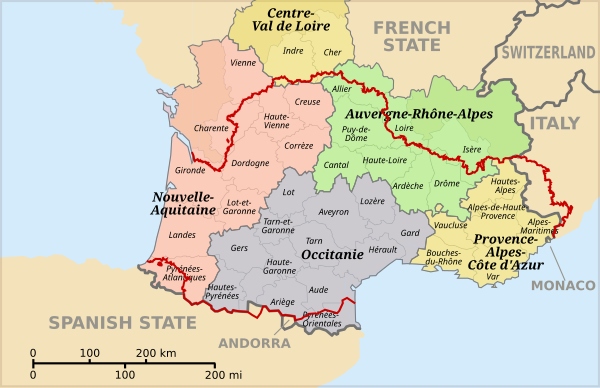
Occitan is arguably France’s second major historical language group after French, thanks to its wide reach and long history.
France was a linguistic patchwork long before it became a centralized nation. Modern French came out of Île-de-France and spread through schooling, bureaucracy, and, let’s be honest, the suppression of everything else.
France loves to claim deep roots, but the stories it tells—about culture, identity—often diverge from the lived, shifting reality.
National identity is mostly myth. Every country’s messier than its exports.
Always has been.
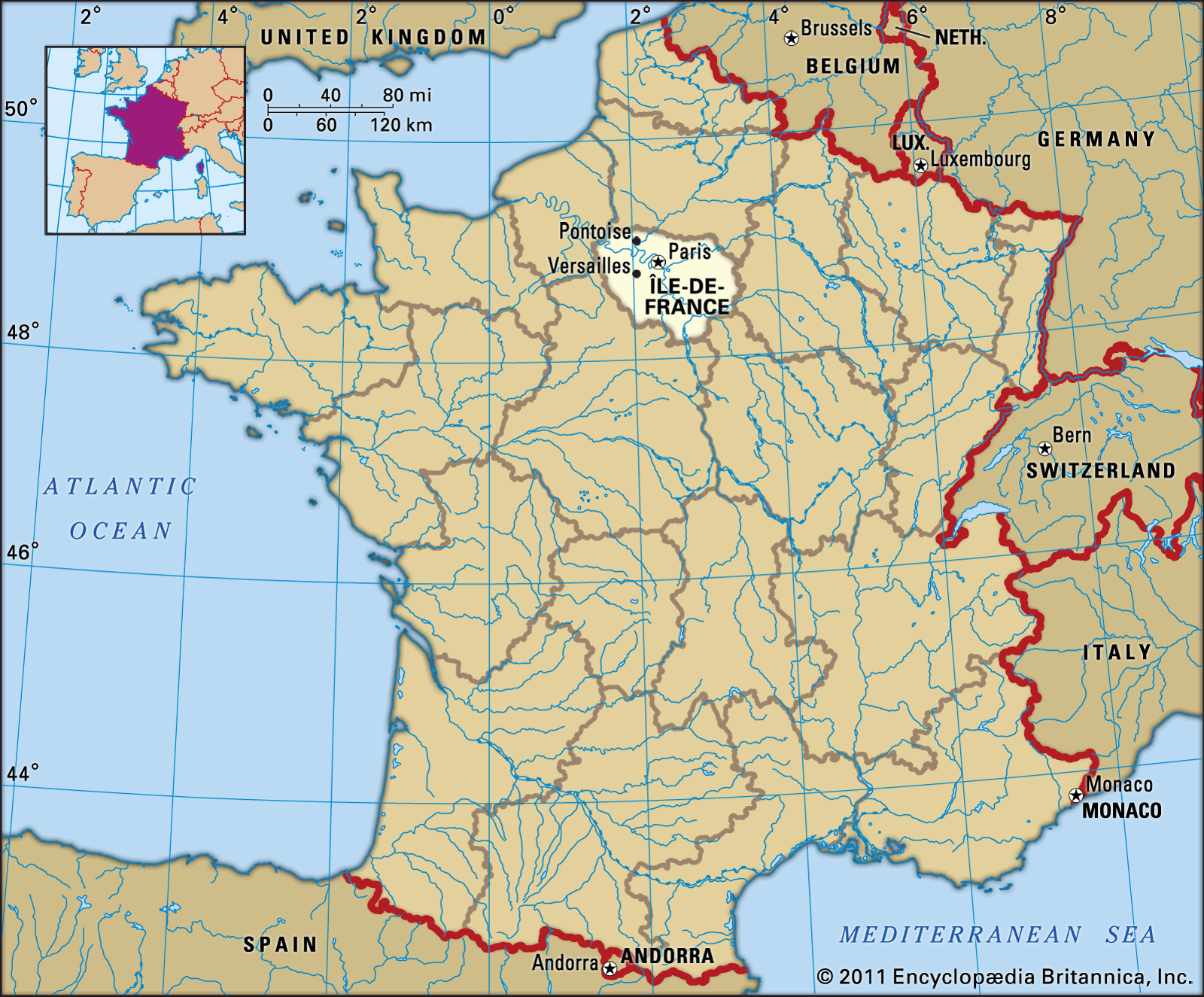
Food, history, sometimes snails.
consumption at a snail’s pace
[ed note: not my best title]
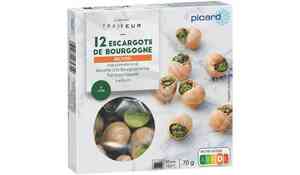
Despite France association with escargot, snail eating is rare these days—mostly only eaten around Christmas or New Year's.
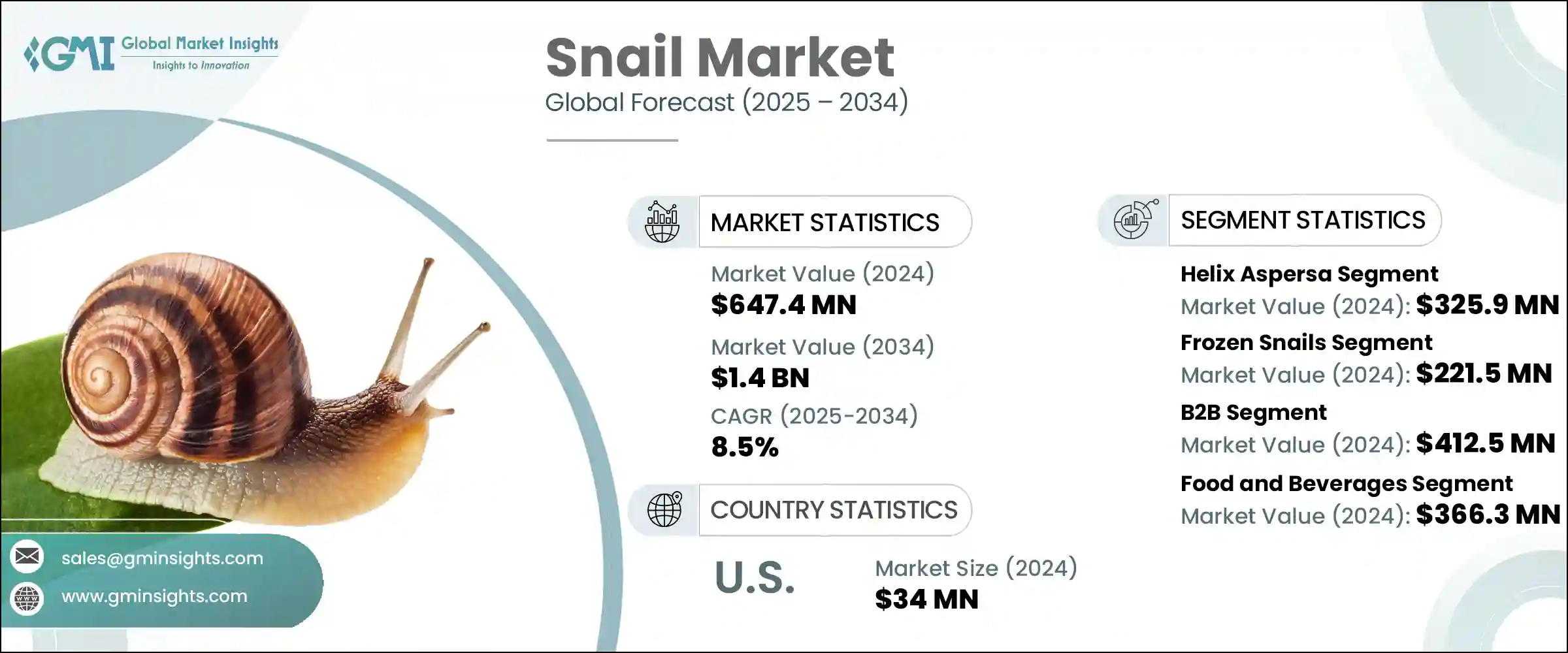
Snails have a bright future. At least, eating snails does, at least according to the Global Snail Market Outlook.
France still claims the title of top snail consumer—though some French sources admit the Spanish might actually eat more. The UK, meanwhile, remains a niche market, even as interest has grown. From 30,000 snails in 2000 to over 750,000 today, they’re slowly catching on.
Garden Champions
Some racers bring their own snails—usually petit-gris or gros-gris plucked from home gardens3—while others can lease a competitor on site.
While the species are technically edible, British snail-racing rules disqualify any snail that’s been prepped for the table. Properly edible snails must be purged for days, starved, and scrubbed clean—often with vinegar and salt. Probably not ideal training conditions.
It makes sense. Dehydration slows them down—slugs and salt, you get the idea.
British racers, by contrast, are kept hydrated and active. They’re garden athletes, not appetizers.
Still, the French hold their own: the snail racing record in Lagardère was set in 2005 by Thibaud Morello’s unnamed gastropod, finishing in 2 minutes and 3 seconds—a time just shy of the British record set by a snail named Archie in 1995: exactly 2 minutes.
Rules
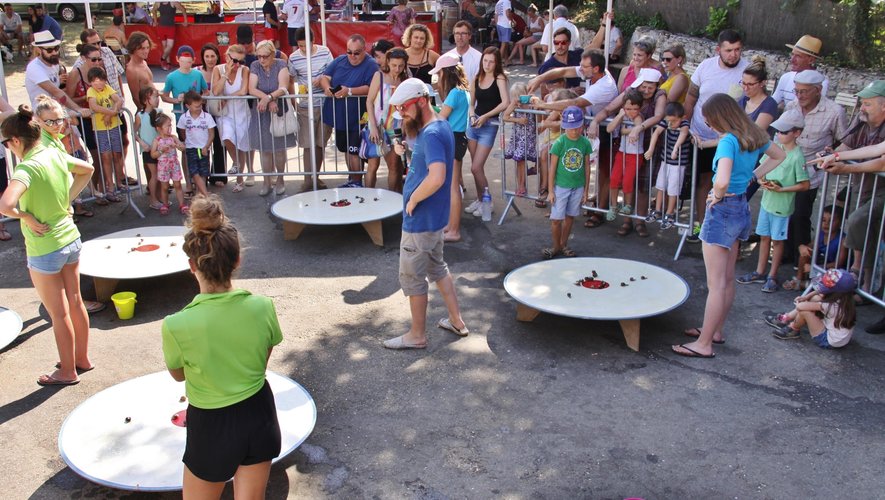
Numbered or color-marked snails are placed in a red circle on a tabletop (l’escargodrome). First to the edge wins.
The top 15 go into a playoff bracket until one champion emerges—and that snail is officially pardoned by the mayor to race again next year.
The rest? Cooked.
About 16,000 snails are simmered into escargolade—a rich stew of tomatoes, cured ham, vinegar, white wine, garlic, and herbs—then served to the 350 attendees.
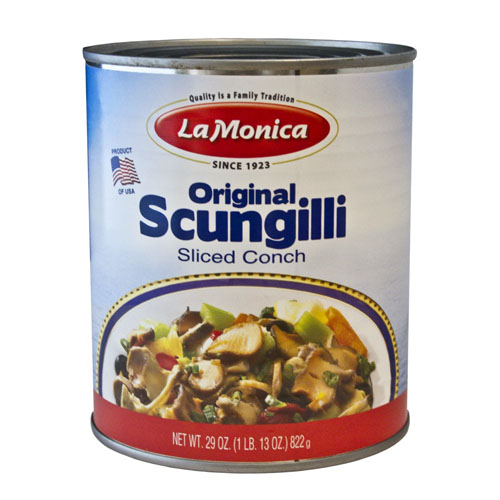
If you ever get a chance to try barbecued snails, go for it. I grew up eating them now and then—we’d find them while digging for clams. Scungilli fra Diavolo is still a comfort food of choice.
[Editor’s note: she plugs LaMonica canned snails hard in that video, but honestly, she’d fit right in on Long Island, NY.]
I would love to hear what you think!
Do you eat snails/escargot/scungilli/whatever?
Seasonally or year-round? Ever raced snails competitively? I wanna know.
Musical Interlude
Escargot Blues Guantanamo Bay Surf Club (2017)
Escargot Blues is an instrumental surf-rock track with a distinctly lo-fi aesthetic, nostalgic, and made to sound unpolished. The song layers twangy, reverb-soaked guitar riffs over a slow, rhythm, evoking the feel of an old westerns, retro 1960s and seaside sounds. This is their top track on Spotify, but the whole album is worth a listen for some chewy baselines, mellow and atmospheric keys and low-key aesthetic.
Recipe: Escargolade à la Lagardère (Festival Stew Version)
Stewy, saucy, and cooked in absurdly large quantities, escargolade is prepared in giant cauldrons and served to hundreds—echoing other regional fête dishes like cassoulet in Languedoc or garbure in Béarn. it also echos the even longer tradition of eating what you have around.
serves roughly 350
Although many people now buy snails pre-cooked4, it’s hardly economical, 5especially considering how this started as cucina povera.
Preparing Snails for Cooking (Home or Festival Scale)
Purge (3–5 days)
Keep live snails in a ventilated container without food, on a bed of damp cloth or lettuce. Rinse daily.Rinse & Scrub
After purging, rinse snails thoroughly in water. Scrub shells gently to remove dirt or slime.Salt or Vinegar Soak (Optional)
Some soak snails briefly in salted water or water with vinegar (10–15 minutes) to help clean and draw out mucus. Rinse well afterward.Parboil (5–10 min)
Boil snails for 5–10 minutes. Loosens them from their shells and kills bacteria.Final Rinse
After boiling, rinse again. At this point, you can:Remove them from shells if making escargots à la Bourguignonne
Or leave them in for dishes like escargolade, where they stew whole
Ingredients:
- 16,000 snails (parboiled, cleaned, pre-treated)
- 10–12 kg tomatoes, peeled and chopped
- 5 kg cured ham, diced
- 3 L white wine vinegar
- 5 L white wine
- 3 kg onions, finely chopped
- 3 heads garlic, minced
- 1–2 L olive oil
- Fresh herbs: bay leaves (20 leaves), thyme (1/4 kg), parsley (1/2 kg)
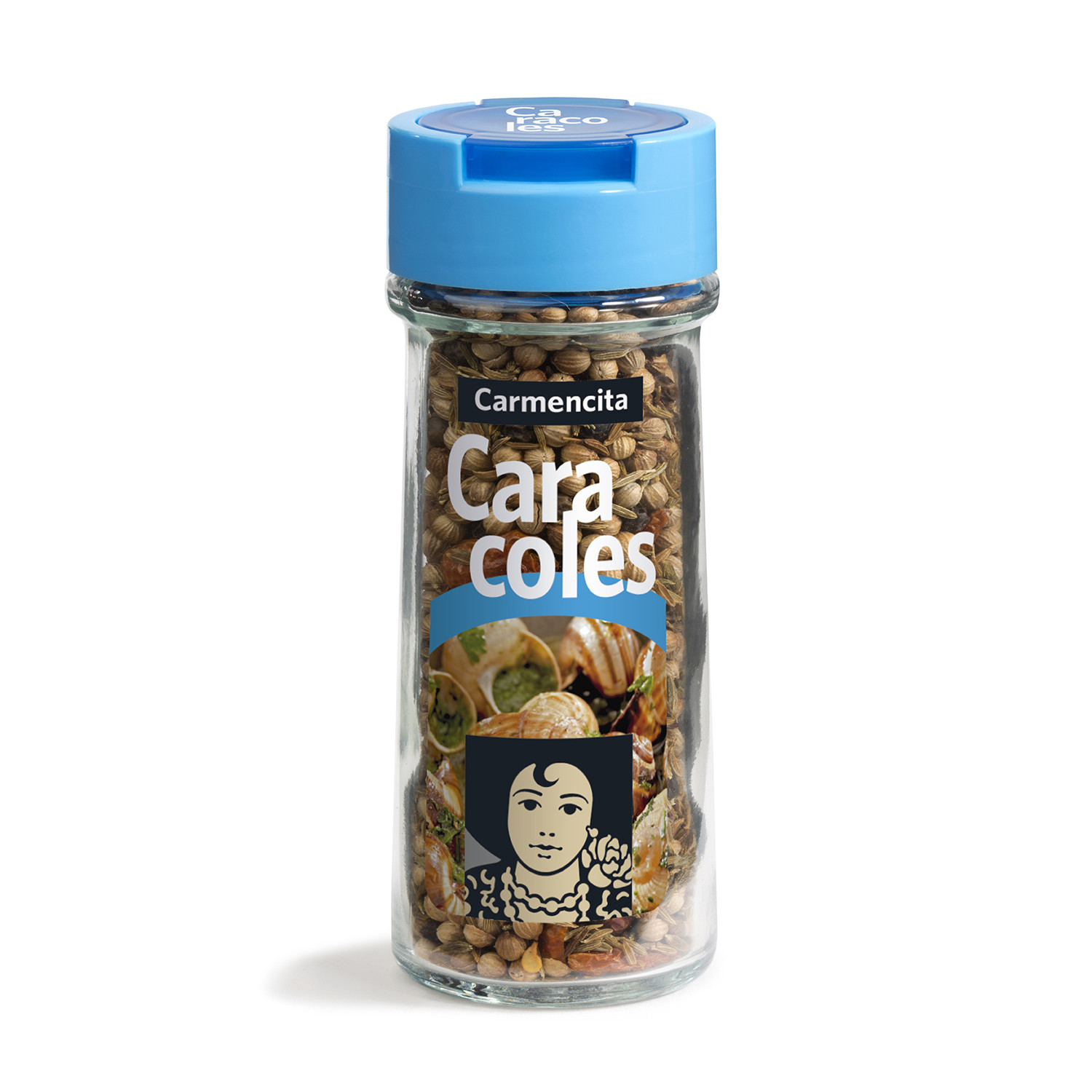
- 9-10 containers of Snail seasoning (!) - if you can find it
- Salt and pepper, to taste (or 1.5 cups of salt and 3/4 cup pepper, roughly)
Instructions:
- Sauté onions and garlic in olive oil in roughly 200-300 Liter stew pot (or several 100L pots) until translucent.
- Add ham, stirring to render and caramelize.
- Stir in tomatoes, vinegar, and wine, then add herbs, salt, and pepper.
- Simmer for 20–30 minutes until sauce thickens slightly.
- Add snails and gently stew for 1–2 hours, stirring occasionally.
- Serve with bread and wine to hundreds of lucky guests.
Notes: For a home version for 4 people, simply divide everything by 90.
Spain doesn’t seem to race snails, at least not competitively. ↩
“escargot” comes from Old French, specifically Provençal, a dialect of Occitan. https://www.etymonline.com/word/escargot ↩
Gordon Ramsey did a whole bit on how to make your garden snails edible. ↩
In the UK, you can buy pre-cooked snails in several places, but Dorset Snails is closest to where we are right now. https://dorsetsnails.co.uk/shop.html ↩
at these prices, the village dish would cost about €10,000 to make, or €28pp. Whereas when they started, the dish would have been effectively free. There are snails everywhere in this country. ↩